In summary:
- Master the ordering rituals: ‘medium-fat’ smoked meat is the local standard, and your bagel choice depends on your taste profile (sweet vs. salty).
- Always carry cash for old-school spots like Schwartz’s and the bagel shops; it’s a key part of the authentic, time-capsule experience.
- Embrace the rules as part of the culture, like accepting the no-modifications policy for the Wilensky Special.
- The real strategy isn’t just about using takeout lines; it’s about navigating these spots with the confidence of a local by understanding their unwritten rules.
You’ve seen the photos: the snaking line outside Schwartz’s Deli, the steam rising from a mountain of smoked meat, the perfectly stacked bagels at St-Viateur. You want to experience these legendary Montreal food institutions, but the thought of long queues and tourist crowds is daunting. The common advice is to simply “go at off-peak hours,” but that barely scratches the surface. What if you get to the front of the line and don’t know how to order? What if you don’t have the right form of payment?
The anxiety is real for any food tourist wanting an authentic experience. Many guides list *what* to eat, but they fail to explain *how* to eat it. They miss the cultural context, the unwritten rules, and the small rituals that separate a tourist from a local. This isn’t just about food; it’s about performance. It’s about participating in a piece of living history.
But here’s the local secret: navigating these icons isn’t about finding a magic, line-free time slot. It’s about understanding the cultural shorthand and embracing the process. This guide moves beyond the platitudes to decode the rituals of Montreal’s most famous eateries. We’ll explore why some choices are non-negotiable, how to order with confidence, and why certain “inconveniences” are actually the very heart of the experience. By the end, you’ll not only know what to eat but how to do it with the quiet confidence of a Montrealer, turning a potentially stressful meal into a memorable cultural immersion.
This article will walk you through the essential rituals for each of Montreal’s food landmarks, from the great bagel debate to the strict etiquette of its oldest diners. You’ll learn the practical tips that allow you to enjoy these meals as they were meant to be enjoyed: with flavour and without fuss.
Summary: A Guide to Montreal’s Food Rituals
- Fairmount vs. St-Viateur: Which Bagel Shop Fits Your Taste Profile?
- Fatty, Medium, or Lean: How to Order Your Smoked Meat Sandwich Like a Local?
- Cash Only: Why You Must Bring Physical Money to Montreal’s Old School Spots?
- The Wilensky Special: Why You Cannot Ask for Mustard on the Side?
- Orange Julep: Why Drinking Orange Juice in a Parking Lot is a Cultural Ritual?
- Summerlicious vs. MTLàTABLE: Which City Offers Better Value During Restaurant Weeks?
- Halifax Donair: How to Eat the Official Food of Halifax Without Making a Mess?
- How to Enjoy the Quebec Winter Carnival at -20°C Without Freezing?
Fairmount vs. St-Viateur: Which Bagel Shop Fits Your Taste Profile?
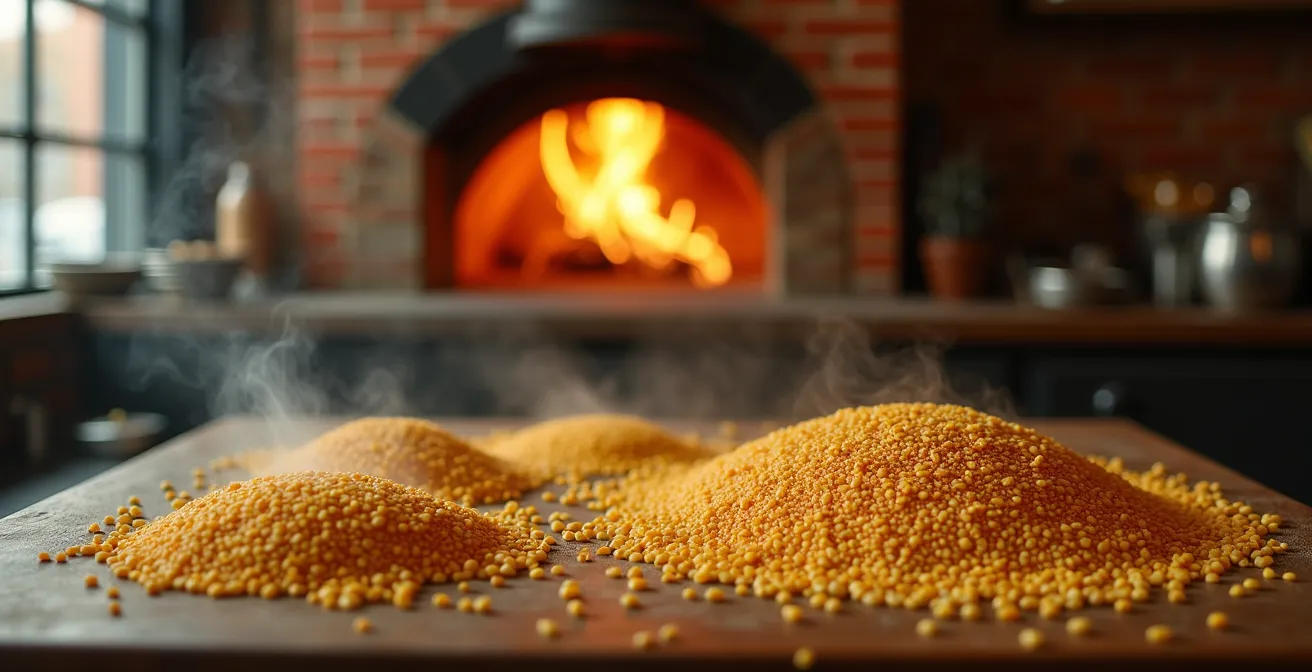
The first pilgrimage for any food lover in Montreal is to the Mile End neighbourhood, the epicentre of the city’s great bagel debate. Choosing between Fairmount Bagel and St-Viateur Bagel isn’t just about picking a shop; it’s about understanding two different philosophies. Your choice says something about what you value in a bagel experience. St-Viateur, with its 24/7 operation and multiple locations, is the industrial powerhouse. Their sesame seed bagel is the quintessential Montreal bagel: slightly salty, less sweet, and always available. The main location on St-Viateur Street offers a view of the massive wood-fired ovens, a spectacle in itself.
Fairmount, on the other hand, is the neighbourhood original, a smaller, more intimate bakery that has been operating since 1949. Their poppy seed bagel is often described as slightly sweeter and denser. Visiting Fairmount feels like stepping into a local institution that has remained largely unchanged for decades. The best way to decide? Visit both. They are only a block apart, making a side-by-side comparison an easy and essential Montreal ritual. For a true test, eat them fresh and plain, right out of the bag. When they are still warm, no cream cheese is necessary.
This isn’t just a local obsession; it’s a cultural export of the highest order. The deep connection Montrealers have with their bagels is perhaps best exemplified by a unique case study in culinary devotion. Astronaut Gregory Chamitoff, a Montreal native and nephew of Fairmount Bagel’s owner, couldn’t imagine a six-month mission on the International Space Station without his favourite food. He brought three bags with him, making the Fairmount bagel an interstellar treat. This elevates the bagel from mere bread to a cultural artifact, a taste of home worth launching into orbit.
Ultimately, there is no wrong answer in the bagel debate. The “best” bagel is the one you prefer. The ritual lies in the act of choosing, tasting, and taking a side, even if just for a day.
Fatty, Medium, or Lean: How to Order Your Smoked Meat Sandwich Like a Local?
After bagels, the next stop on any Montreal food tour is a smoked meat sandwich. While many delis serve it, Schwartz’s is the benchmark. As the oldest deli in Canada, it has been serving its legendary sandwiches since 1928. Walking in is like entering a time capsule, but the ordering process can be intimidating for a first-timer. The key to ordering like a local lies in one word: “medium-fat”. While “lean” and “fatty” are options, medium-fat (or just “medium”) is considered the only correct way. It offers the perfect balance of tender, flavourful meat and melt-in-your-mouth fat that defines the Montreal smoked meat experience. Lean can be dry, and fatty can be overwhelming; medium is the sweet spot.
Your sandwich will arrive as a towering pile of hand-sliced brisket on simple rye bread with a smear of yellow mustard. Do not ask for any other condiments. The essential accompaniments are a sour dill pickle and a can of Cott’s Black Cherry soda, which cuts through the richness of the meat perfectly. If the dine-in line is daunting, use the takeout counter next door. It’s much faster, and you can enjoy your sandwich in a nearby park. For an equally exceptional but less chaotic experience, Main Deli Steak House, just a few blocks away, serves a fantastic sandwich in a more relaxed setting.
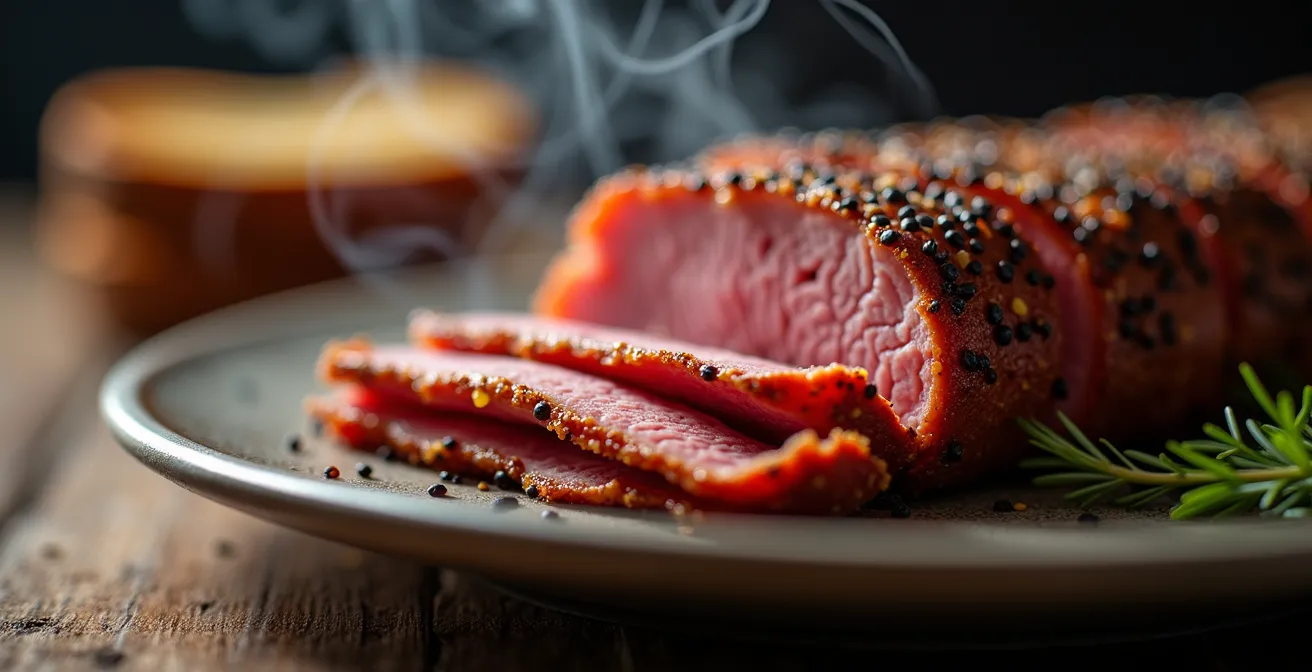
The beauty of the Montreal smoked meat sandwich is in its texture and simplicity, a testament to decades of tradition. The glistening layers of peppercorn-crusted brisket are the result of a long curing and smoking process that has been perfected over nearly a century. This isn’t just a sandwich; it’s the culmination of history, craft, and an unwavering commitment to a specific, perfected flavour profile.
By ordering “medium-fat,” you’re not just choosing a cut of meat; you’re participating in a shared cultural agreement and signaling that you understand what makes this sandwich an icon.
Cash Only: Why You Must Bring Physical Money to Montreal’s Old School Spots?
In an increasingly digital world, arriving at a bustling restaurant and seeing a “Cash Only” sign can be a shock. At many of Montreal’s most cherished food institutions, including Schwartz’s and the iconic bagel shops, this is the norm. This isn’t an oversight or a failure to modernize; it’s a deliberate choice that forms a core part of their identity. The cash-only policy is the first unwritten rule you will encounter, and it serves a purpose beyond simple transactions. It contributes to the “time-capsule” atmosphere, preserving the experience as it has been for decades.
Handing over physical bills for a warm bag of bagels or a smoked meat sandwich connects you to the generations of Montrealers who have performed the exact same ritual. It slows down the transaction, making it more personal and less automated. While the Canadian restaurant industry has embraced modern technology, with post-pandemic data showing a strong return as sales reached $8.2 billion in a single month in late 2024, these heritage spots defiantly hold onto their traditions. Their success proves that authenticity can be a powerful business model.
The persistence of this practice is a statement. It says that the experience they offer is valuable enough to warrant this minor “inconvenience.” The queue snaking out the door of a cash-only establishment is the ultimate proof of this concept. People are not just willing to wait; they are willing to come prepared. So, before you head out on your Montreal food pilgrimage, make a stop at an ATM. Having cash on hand is not just a practical necessity; it’s your ticket into a tradition that has resisted the homogenizing force of modernity.
Think of it less as an inconvenience and more as a small price of admission for an authentic taste of Montreal history. It’s a simple act that aligns you with the local way of doing things.
The Wilensky Special: Why You Cannot Ask for Mustard on the Side?
If the cash-only policy is an unwritten rule, the etiquette at Wilensky’s Light Lunch is scripture, carved in stone. Founded in 1932, this lunch counter is perhaps the ultimate example of a time-capsule experience in Montreal. The main event is the Wilensky Special: a grilled sandwich of all-beef salami and all-beef baloney with a mandatory smear of mustard, pressed flat on a roll. The most important thing to know before you walk in is the house rule: you cannot ask for the sandwich to be modified. At all. No asking for it without mustard, no asking for extra mustard, and certainly no asking for it on the side.
This rule is so famous it has become part of the city’s folklore. It’s not about being difficult; it’s about preserving a product that has been served the exact same way for over 90 years. Ordering The Special is a ritual of acceptance. You are there to experience a piece of history, not to customize it to your personal preference. The experience is completed by ordering a classic egg cream or one of their homemade sodas. The charm of Wilensky’s lies in its steadfast refusal to change, from the menu to the vintage cash register and the well-worn counter stools.
For visitors, especially those with dietary restrictions, this rigidity can be a challenge. The establishment respects this but does not bend its rules. The experience is about observing and participating in a tradition as-is. Approaching it with this understanding is key to enjoying its unique, unyielding charm.
Your Action Plan: How to Order at Wilensky’s
- Accept the no-modifications rule as the core of the experience before you even enter.
- Order “The Special” exactly as it is designed—with mustard already applied by the staff.
- Complete the ritual by pairing your sandwich with a traditional beverage like an egg cream or a homemade soda.
- Respect the long-standing counter etiquette; it’s a system refined since the founding.
- If you have dietary restrictions that conflict with the sandwich, consider observing the history and enjoying a drink instead of attempting to change the order.
Embracing these constraints is the only way to truly appreciate what Wilensky’s represents: a delicious and stubborn piece of Montreal’s living history.
Orange Julep: Why Drinking Orange Juice in a Parking Lot is a Cultural Ritual?
Away from the historic delis and bakeries of The Main, another Montreal food ritual takes place in the parking lot of a giant, three-story orange sphere. The Gibeau Orange Julep is a fast-food landmark that serves a famously frothy, creamy orange drink. But like all great Montreal institutions, it’s about more than what’s on the menu. The “Julep,” as it’s known, is a drive-in restaurant that has become a vital community gathering space and a monument to a bygone era of roadside architecture.
The building itself is a rare surviving example of Googie architecture, a style of futuristic, car-centric design that flourished in the mid-20th century. Its whimsical, retro-futuristic look makes it an icon. The ritual here is simple: you drive up, order a “Julep” and perhaps a hot dog or poutine from car-hop servers, and enjoy it in your vehicle in the vast parking lot. It’s a social activity, particularly in the summer.

The Orange Julep’s role as a community hub solidifies its cultural importance. It hosts weekly classic car meetups on Wednesday nights, attracting hundreds of vintage automobile enthusiasts. On other nights, it’s motorcyclists who take over the lot. For families, a stop at the Julep on a warm weekend evening is a long-standing tradition. It represents a form of public life that is uniquely North American, centered around the automobile and casual social gathering. Drinking this sweet, orange concoction in a parking lot is to participate in a living piece of 20th-century Americana, preserved and celebrated right here in Canada.
So when you visit, don’t just grab your drink and leave. Linger for a moment, take in the scene, and appreciate this quirky, beloved Montreal ritual.
Summerlicious vs. MTLàTABLE: Which City Offers Better Value During Restaurant Weeks?
Once you’ve mastered the rituals of Montreal’s historic institutions, you might want to explore its modern dining scene. Both Montreal and its friendly rival, Toronto, host popular restaurant weeks—MTLàTABLE and Summerlicious/Winterlicious, respectively—offering prix-fixe menus at a fraction of the usual cost. While both events provide excellent value, they reflect the distinct culinary personalities of their cities. With Montreal boasting nearly 4,698 restaurants, MTLàTABLE is an excellent opportunity to dive into one of Canada’s biggest restaurant hubs.
Toronto’s events often feature its roster of high-end, internationally acclaimed, and Michelin-starred establishments, making it a great opportunity to experience fine dining. Montreal’s MTLàTABLE, by contrast, tends to place a stronger emphasis on its creative, chef-driven local bistros and “apportez votre vin” (BYOB) restaurants. This often results in a more uniquely “Montreal” experience, showcasing local Quebec ingredients and the city’s signature blend of European technique and North American flair.
The choice of which city offers “better” value depends on your goal. If you want to tick off bucket-list fine dining, Toronto might have the edge. But if you’re looking for creative, locally-focused cuisine with an unbeatable atmosphere, Montreal’s vibrant bistro scene during MTLàTABLE is hard to beat. The data on restaurant density provides some context for their different styles.
| City | Restaurants per 1,000 residents | Restaurant Style |
|---|---|---|
| Toronto | 2.9 | Michelin-starred fine dining focus |
| Montreal | 2.7 | Creative local bistros emphasis |
Ultimately, both events are a fantastic way to explore Canada’s top culinary cities on a budget. For the visitor to Montreal, MTLàTABLE serves as the perfect gateway to the vast and creative dining scene that exists beyond the classic institutions.
Halifax Donair: How to Eat the Official Food of Halifax Without Making a Mess?
If your Canadian food journey takes you further east from Montreal, you’ll encounter another iconic, and notoriously messy, street food: the Halifax Donair. While it has no connection to Montreal’s food scene, understanding its eating ritual is just as important for a successful experience. Declared the official food of Halifax, the donair consists of spiced ground beef cooked on a vertical spit, sliced onto a warm pita, and topped with chopped onions, tomatoes, and a signature sweet, garlicky donair sauce.
The sauce is the main challenge. It’s thin and plentiful, guaranteeing a mess for the uninitiated. Locals, however, have perfected a technique to minimize drips. The first step is to master the “Donair Stance”: lean forward at a 45-degree angle, with your elbows on your knees if you’re sitting. This ensures any drips land on the ground or wrapper, not on your clothes. Next, hold the donair with purpose. Grip the bottom corners of the foil-wrapped pita tightly to create a “sauce pocket,” preventing the liquid from escaping out the bottom.
Authenticity is key when ordering. Never ask for lettuce; locals consider it sacrilege. The classic order is “the works,” which includes the meat, onions, tomatoes, and a generous ladle of sauce. Napkins are not optional; they are essential. Part of the donair ritual is embracing the fact that a little bit of mess is inevitable. It’s a badge of honour, a sign that you’ve properly engaged with this beloved Haligonian specialty. It’s a completely different experience from a Montreal smoked meat sandwich, but it’s governed by its own set of equally important local customs.
While far from Montreal, the Halifax Donair serves as a perfect example of how regional Canadian foods develop deep-rooted cultural rituals that are a joy to discover and participate in.
Key takeaways
- Understand the Rituals: Montreal’s iconic foods are about more than taste; they’re about participating in decades-old cultural rituals, from ordering ‘medium-fat’ smoked meat to bringing cash.
- Embrace the Rules: The “no modifications” policy at Wilensky’s or the specific accompaniments for smoked meat aren’t inconveniences; they are the experience itself.
- Choose Your Bagel Profile: The Fairmount vs. St-Viateur debate is a personality test. Decide if you prefer the sweeter, denser original (Fairmount) or the saltier, classic workhorse (St-Viateur).
- Go Beyond the Classics: While institutions are essential, use events like MTLàTABLE to explore the city’s vast and creative modern bistro scene.
How to Enjoy the Quebec Winter Carnival at -20°C Without Freezing?
A winter trip to Quebec often includes a visit to the famous Quebec Winter Carnival. Braving the festivities in temperatures that can plummet to -20°C or lower requires a specific strategy that Canadians have perfected: the art of layering. Enjoying the ice sculptures, night parades, and outdoor activities without freezing is a ritual in itself, and it starts with the right clothing. The key is the Canadian layering system, which focuses on moisture management and insulation.
It starts with a base layer of merino wool or a synthetic, moisture-wicking fabric—never cotton, which holds sweat and makes you colder. The mid-layer is for insulation; a fleece or down jacket from a trusted Canadian brand like Arc’teryx works perfectly. The final piece is a windproof and waterproof outer shell, like those from Canada Goose or MEC, to protect you from the elements. This system allows you to regulate your temperature by adding or removing layers as you move between outdoor events and heated indoor spaces.
Beyond clothing, strategic warming is part of the experience. Take advantage of Quebec City’s underground pedestrian network to move between sites without constant exposure to the cold. And of course, embrace the official warming drink of the carnival, ‘Caribou,’ a potent and sweet alcoholic concoction. Montreal itself has adapted its own vibrant food culture to the harsh winters. With one of the highest numbers of restaurants per capita, the city’s dining scene thrives by offering cozy, warming comfort foods, turning a meal out into a delicious refuge from the cold and creating a unique winter dining culture.
By adopting these local strategies, you can fully immerse yourself in the joys of a Quebec winter, transforming a potentially bone-chilling experience into a comfortable and unforgettable adventure. For any food lover, the next logical step is to apply this “embrace the local way” mindset to your culinary explorations across Montreal.