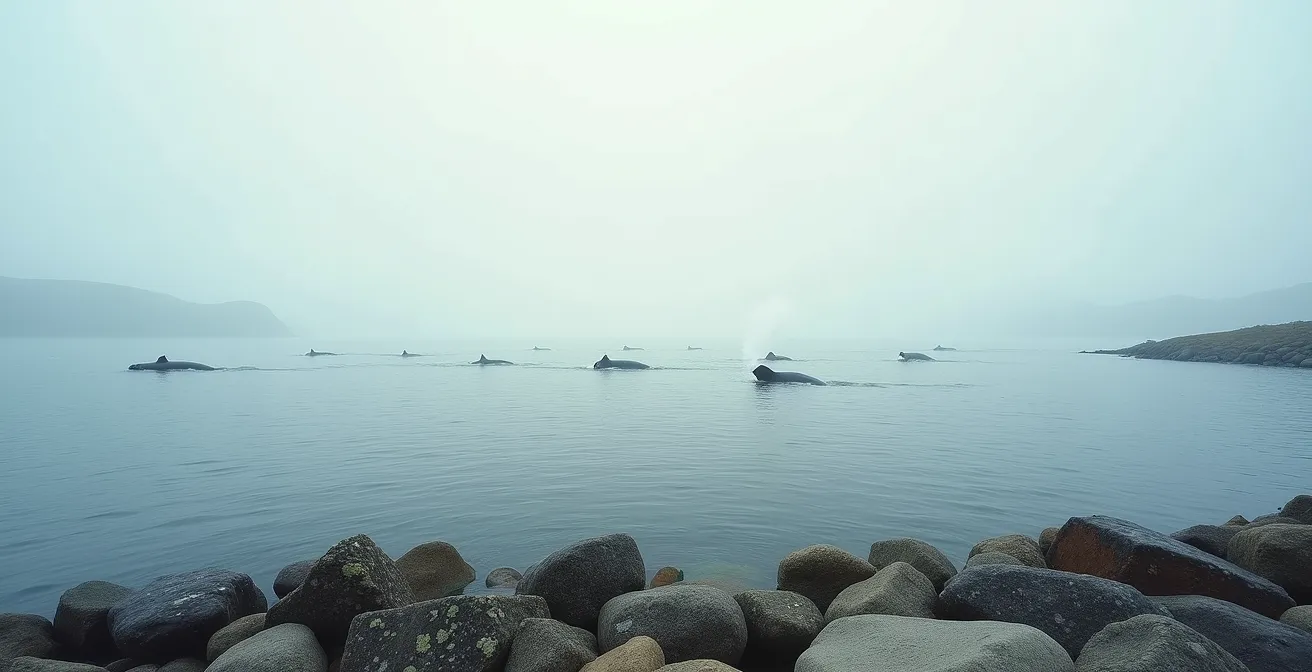
The key to ethical whale watching is shifting your goal from getting close to the animals to understanding their world and minimizing your impact.
- Regulations like the 400-metre distance for belugas exist to protect their critical communication and navigation abilities from our acoustic footprint.
- The “best” vessel isn’t a simple choice; it’s a trade-off between different types of sound that impact different species in unique ways.
Recommendation: Prioritize land-based observation or tours with a proven commitment to conservation science, and always be prepared to act as a steward by reporting animals in distress.
The first sight of a whale breaking the surface of the St. Lawrence River is an unforgettable moment of pure awe. It’s a powerful connection to the wild, a glimpse into a world far removed from our own. This feeling often sparks a natural desire to get closer, to extend that moment. Many guides and tours simply promise to put you “in the heart of the action.” But as a conservationist, I urge you to ask a more profound question: what is the cost of that proximity to the animals themselves?
The common approach to whale watching often focuses on the human experience, overlooking the profound sensory intrusion we create. The discussion revolves around which boat gets the best photos, not which one has the smallest acoustic footprint. True ethical observation isn’t about following a simple checklist; it’s about fundamentally understanding the biological needs and sensory world of these marine giants. It requires moving beyond the role of a tourist to become a respectful steward of their environment.
But what if the most responsible way to watch whales was also the most rewarding? What if understanding their behaviour allowed for more predictable and meaningful sightings? This guide is built on that principle. We will explore the science behind the rules, turning you from a passive passenger into an informed observer. We will delve into why distance matters, how to choose a vessel based on its acoustic impact, how to predict a whale’s surfacing by reading the water, and even what your role is if you encounter an animal in distress. This is your path to transforming a simple tour into a genuine act of conservation.
To help you navigate these critical considerations, this article provides a comprehensive overview of responsible whale watching practices. The following sections break down everything you need to know to ensure your experience is as respectful to the wildlife as it is memorable for you.
Summary: A Conservationist’s Guide: How to Watch Whales in the St. Lawrence Ethically
- The 400-Meter Rule: Why You Must Keep Your Distance from Endangered Killer Whales?
- Zodiac vs. Large Vessel: Which Tour Vessel Has the Least Acoustic Impact on Whales?
- Blow, Dive, or Breach: How to Predict When a Whale Will Surface?
- Land-Based Whaling: Where are the Best Shore Spots to See Whales for Free?
- The Marine Animal Response: What to Do If You See a Whale Tangled in Fishing Gear?
- Zodiac vs. Large Vessel: Which Whale Watching Tour is Safe for Seniors with Back Pain?
- The Rule of Twelfths: How to Calculate Safe Crossing Times in Tidal Waters?
- How to Book a Stay in a Heritage Lighthouse in Canada?
The 400-Meter Rule: Why You Must Keep Your Distance from Endangered Killer Whales?
While the title mentions killer whales, the most pressing concern in the St. Lawrence Estuary is the protection of its own endangered population: the beluga whale. The 400-metre approach distance isn’t an arbitrary number; it’s a critical lifeline for a fragile population. The St. Lawrence Estuary beluga population is estimated at just 900 individuals and has been declining since the early 2000s. These intelligent animals live in a world of sound, using complex clicks and whistles for navigating, finding food, and communicating. Our presence creates a sensory intrusion that can have devastating consequences.
Engine noise, even from a distance, can mask their echolocation clicks, effectively blinding them and making it harder to hunt. For a mother and calf, this acoustic interference can disrupt crucial bonding and nursing behaviours. The stress from a pursuing vessel can elevate cortisol levels, impacting their immune systems and reproductive success. Therefore, the 400-metre rule is a buffer zone designed not just to prevent collisions, but to protect the very fabric of their social and sensory existence. Adhering to it is the single most important act of conservation you can perform on the water.
When you are on the water, whether in your own boat or on a tour, your actions have a direct impact. Following a clear protocol is essential to minimize your disturbance and contribute to the protection of these vulnerable animals. The guidelines set by Canadian authorities are clear and based on extensive research into beluga behaviour.
Your Action Plan: Minimizing Disturbance Near Belugas
- Immediate Action: As soon as you spot belugas, immediately and slowly move away to maintain a minimum distance of 400 metres (about a quarter of a mile).
- Maintain Speed: If you must pass, maintain a slow, constant speed between 5 and 10 knots. Avoid sudden changes in speed or direction.
- No-Stop Zone: Within the Saguenay-St. Lawrence Marine Park, it is forbidden to stop your vessel if you are less than half a nautical mile (926 metres) from belugas.
- Report Disturbances: If you witness any boat harassing or getting too close to marine mammals, report the incident to the Poaching-Alert line at 1-800-463-9057.
Respecting this distance is not a suggestion; it’s a legal requirement and an ethical obligation. It transforms your presence from a potential threat into one of respectful coexistence, ensuring these animals can thrive for generations to come.
Zodiac vs. Large Vessel: Which Tour Vessel Has the Least Acoustic Impact on Whales?
The choice between a nimble Zodiac and a large, stable tour vessel often seems like a simple trade-off between thrill and comfort. However, from a conservationist’s perspective, the decision is far more complex and hinges on the concept of the acoustic footprint. There is no single “best” boat; instead, each vessel type generates a unique sound profile that impacts different whale species in distinct ways. Understanding this is key to making an informed, ethical choice.
Zodiacs, with their outboard motors, produce high-frequency sounds. This specific frequency range directly overlaps with the sounds used by toothed whales, like belugas, for echolocation. This interference can effectively “jam” their sensory systems, making it difficult to navigate, hunt, and communicate. Conversely, larger vessels with inboard engines produce low-frequency noise. While less disruptive to belugas, this sound can travel vast distances underwater and mask the low-frequency calls used by large baleen whales, such as fin and blue whales, to communicate across entire regions. The quietest option, with a virtually non-existent acoustic footprint, is a non-motorized craft like a sea kayak or sailboat, which relies on respecting distance above all else.
This comparative data highlights that the most ethical choice of vessel depends on the specific ecosystem and the species you are likely to encounter. An operator committed to conservation will understand these nuances and adapt their practices accordingly.
| Vessel Type | Frequency Range | Impact on Species | Mitigation Options |
|---|---|---|---|
| Zodiac (Outboard) | High frequency | Interferes with beluga echolocation | Engine cut-off protocols, slow observation |
| Large vessel | Low frequency | Masks baleen whale communication | Speed reduction, route planning |
| Sea kayak/Sail | Minimal | Nearly zero acoustic impact | Distance maintenance only |
Ultimately, the most responsible tour operators are not defined by the size of their boat, but by how they operate it. Look for companies that openly discuss their strategies for acoustic mitigation, such as implementing engine cut-off protocols when near animals, reducing speed, and planning routes to avoid sensitive areas.
Blow, Dive, or Breach: How to Predict When a Whale Will Surface?
Spotting a whale is often perceived as a matter of luck, a random gift from the ocean. While there’s always an element of serendipity, predicting where and when a whale will surface is more of a science, rooted in the principles of tidal ecology. Whales are driven by an immense need for food, and in the St. Lawrence, the tides dictate the location of their next meal. By understanding these powerful natural rhythms, you can significantly increase your chances of a sighting.
The powerful currents and underwater topography of the estuary and Saguenay Fjord act as a giant natural conveyor belt. As the tide rises, it pushes massive concentrations of krill, capelin, and other small fish into specific areas, like the head of the Laurentian Channel. Whales know this. They follow these underwater highways of food, making their presence in these zones far more predictable during certain tidal phases. This connection is not just theoretical; it’s a core principle used by researchers and experienced naturalists. As one research team notes, the environment itself creates the opportunity for observation.
The powerful tides in the St. Lawrence Estuary, particularly near the head of the Laurentian Channel, concentrate krill and capelin, making whale surfacing more predictable during rising tides in specific locations.
– Marine Mammal Research Team, Saguenay-St. Lawrence Marine Park Research
This scientific understanding is bolstered by extensive real-world observation. Networks of citizen scientists and professional observers meticulously document these patterns. For instance, the Réseau d’observation de mammifères marins (ROMM) documents how specific locations, like the Haut-Fond-Prince (Prince Shoal), become bustling feeding grounds where seals and minke whales congregate in large numbers to feast on tidally-concentrated prey. By learning to read tide charts and identifying these known feeding hotspots, you shift from being a hopeful tourist to an informed naturalist, anticipating the whales’ next move based on the rhythm of their world.
Instead of chasing after a distant fluke, you can position yourself respectfully and wait, knowing that the ocean’s currents are bringing the buffet—and the diners—to you. This patient, knowledge-based approach is not only more effective but is also the essence of non-intrusive wildlife observation.
Land-Based Whaling: Where are the Best Shore Spots to See Whales for Free?
For the conservation-minded observer, there is no method more ethical than watching whales from shore. It offers a zero-impact experience: no engine noise, no physical disturbance, and no alteration of the animals’ behavioural baseline. This approach reframes the experience not as a “tour,” but as an “observation privilege,” where you are a guest in the whales’ domain. Fortunately, the coastline of the St. Lawrence in Quebec is blessed with some of the world’s most spectacular and accessible land-based whale watching sites.
The premier location for this is the Cap-de-Bon-Désir Interpretation and Observation Centre near Les Bergeronnes. Here, the deep waters of the Laurentian Channel come exceptionally close to shore. You can sit comfortably on the warm granite rocks and watch as minke and fin whales feed just a few hundred metres away. It’s a place to spend hours, armed with a good pair of 10×42 binoculars and a tide chart app to time your visit with the rising tide, which brings the whales’ food source closer. Nearby, campgrounds like Bon Desir and Paradis Marin even offer the surreal experience of spotting whale blows from your own tent.
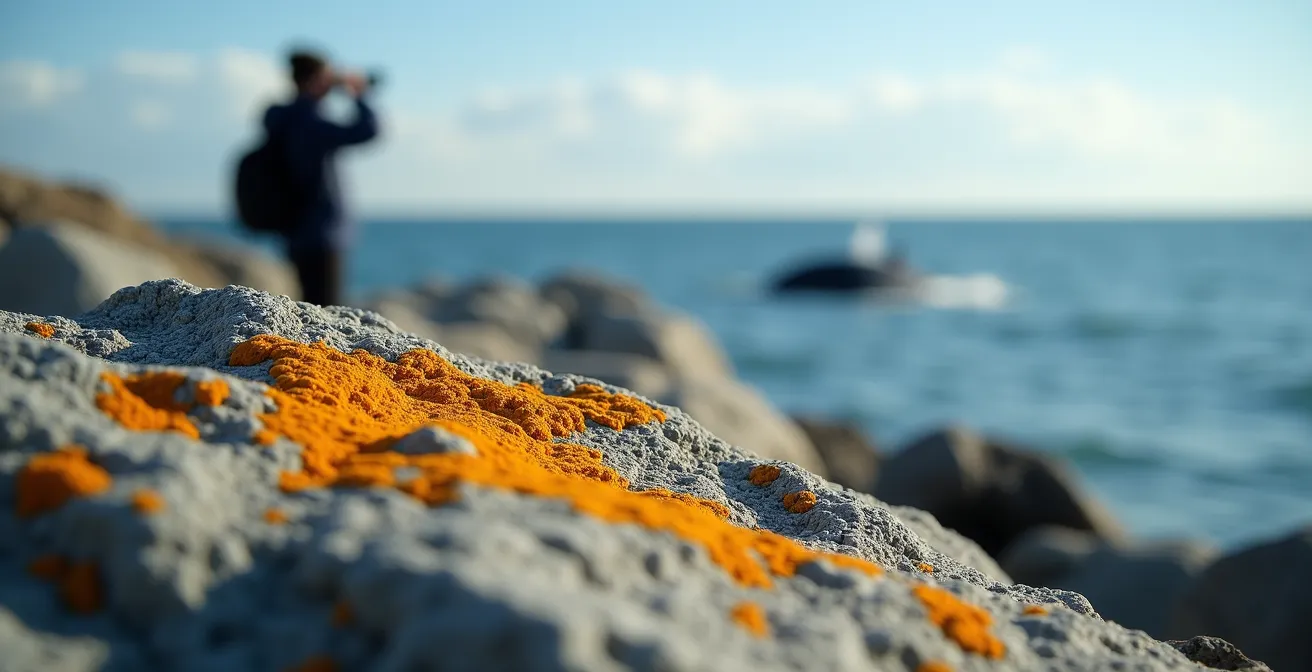
The key to a successful shore-based excursion is patience and preparation. Bringing a comfortable camp chair, dressing in layers, and keeping your voice low will enhance not only your experience but also that of the wildlife and fellow visitors. It is also crucial to stay on marked trails to protect the fragile lichen ecosystems that blanket the coastal rocks. This method of observation costs nothing but time, yet it provides an unparalleled, intimate connection to the natural rhythms of the St. Lawrence.
By choosing to watch from land, you make a powerful statement: that your desire to see these animals is matched by your commitment to leaving them completely undisturbed in their natural habitat.
The Marine Animal Response: What to Do If You See a Whale Tangled in Fishing Gear?
The privilege of observing marine mammals in their natural habitat comes with a profound responsibility. While the St. Lawrence is a rich feeding ground, it is also an industrial waterway, and the threat of entanglement in fishing gear is a grim and constant reality. For the critically endangered North Atlantic right whale, for example, research has shown that an astounding 85% of the population has been entangled at least once. Seeing a whale in distress—entangled, injured, or stranded—is a deeply distressing experience, but your immediate, informed actions can be the first and most critical step in a successful rescue operation.
The absolute most important rule is to never attempt a rescue yourself. Approaching an entangled whale is incredibly dangerous for both you and the animal. A frightened, multi-ton animal can easily capsize a boat, and well-intentioned but untrained attempts to cut lines can make the situation worse, leaving behind fragments of gear that cause chronic infection or a slower death. The only safe and effective course of action is to immediately report the incident to the professionals.
In Quebec, the designated authority is the Quebec Marine Mammal Emergency Response Network (RQUMM). Your role as a first observer is to be their eyes and ears on the water, collecting the crucial information they need to mount a rapid and effective response. Having a checklist ready allows you to provide clear, concise, and actionable data that can make the difference between life and death for the animal.
Your Emergency Response Checklist: How to Help an Entangled Whale
- Make the Call: Your first and most important action is to call the RQUMM at 1-877-722-5346. Report what you see immediately.
- Pinpoint the Location: Record the precise GPS coordinates of the sighting. If you don’t have a GPS, use landmarks and estimate your distance and bearing from them.
- Note the Time: Document the exact time and date of the observation. This helps rescue teams understand the animal’s movements.
- Describe the Animal: Identify the species if possible (e.g., beluga, minke, humpback), its approximate size, and any distinguishing features.
- Detail the Entanglement: Describe the type of gear (ropes, nets, buoys), where it’s located on the animal’s body (mouth, fluke, flipper), and how it’s affecting its movement.
- Document from a Distance: From a safe and legal distance (minimum 400m), take photos or videos. This visual information is invaluable for the response team.
By acting as a responsible and reliable first reporter, you become a vital link in the chain of survival. It is the ultimate expression of a conservationist mindset, turning a passive observation into a potentially life-saving intervention.
Zodiac vs. Large Vessel: Which Whale Watching Tour is Safe for Seniors with Back Pain?
For many travellers, especially seniors or those with mobility concerns like back pain, the rugged adventure promised by a Zodiac is simply not a viable option. The constant bouncing on choppy water can be uncomfortable at best and dangerous at worst. This doesn’t mean the awe-inspiring experience of whale watching is out of reach. In fact, it steers the choice towards larger, more stable vessels, which often provide a safer, more comfortable, and equally rewarding experience.
These larger tour boats are designed for stability and accessibility. They typically feature multiple decks, including enclosed, heated viewing areas with comfortable seating—a significant benefit in the often-chilly St. Lawrence climate. Amenities like onboard washrooms and cafes eliminate the hardships of a multi-hour trip. For instance, the AML Grand Fleuve, a vessel operated by Croisières AML in Tadoussac, offers specific comfort-oriented packages. Their VIP lounge provides priority boarding, avoiding long queues, and access to premium indoor seating with full back support and panoramic windows, ensuring an excellent view without the physical strain.
However, the most comfortable and secure option of all circles back to a core principle of ethical observation: watching from land. This eliminates all concerns about sea sickness, bumpy rides, and exposure to the elements. As Parks Canada experts suggest, this shouldn’t be seen as a lesser alternative but as a premium experience in its own right.
Position shore-based viewing not as a consolation prize, but as a premium, zero-impact experience ideal for those with mobility concerns.
– Parks Canada Accessibility Team, Saguenay-St. Lawrence Marine Park Accessibility Guide
By choosing a large, stable vessel or opting for a premium land-based viewing spot, seniors and individuals with back pain can fully immerse themselves in the majesty of the St. Lawrence whales without compromising their health or safety.
The Rule of Twelfths: How to Calculate Safe Crossing Times in Tidal Waters?
Navigating the St. Lawrence, especially where the Saguenay River meets the estuary, is not like boating on a lake. The tidal forces here are immense and can create treacherous conditions for even experienced mariners. For the small vessel operator, understanding and respecting these tides is a matter of safety. For the conservationist, it’s also an ethical imperative. Losing control of your boat in a strong current could lead to an accidental and illegal approach to a whale. The “Rule of Twelfths” is a crucial heuristic that helps boaters estimate water flow and identify the safest windows for passage.
The rule is a simple way to approximate the change in water level during a six-hour tidal cycle. It states that in the first hour after high or low tide, the water level will change by 1/12th of the total tidal range. In the second hour, it changes by 2/12ths. In the third and fourth hours—the middle of the tide—the flow is at its peak, with the water level changing by 3/12ths (or 25%) per hour. The flow then slackens in the fifth (2/12ths) and sixth (1/12th) hours. This means that the current is weakest in the first and last hours of the tide and strongest in the third and fourth hours. Crossing during these peak hours can be extremely hazardous.
The confluence of the Saguenay and St. Lawrence is a documented high-risk zone. As research has shown, the powerful tidal currents flowing over the underwater cliffs of the Laurentian Channel can create dangerous standing waves and make small craft unmaneuverable. The Canadian Hydrographic Service provides the essential tide charts, and using the Rule of Twelfths allows you to interpret that data for safe navigation.
| Hour of Tide | Fraction Moved | Water Level Change | Current Strength |
|---|---|---|---|
| Hour 1 | 1/12 | 0.42m | Weak |
| Hour 2 | 2/12 | 0.83m | Moderate |
| Hour 3 | 3/12 | 1.25m | Strong (hazardous) |
| Hour 4 | 3/12 | 1.25m | Strong (hazardous) |
| Hour 5 | 2/12 | 0.83m | Moderate |
| Hour 6 | 1/12 | 0.42m | Weak |
By planning your crossings to coincide with the slack periods around high or low tide, you not only protect yourself and your vessel but also ensure you can maintain full control, thereby preventing accidental disturbances to the marine mammals that call these powerful waters home.
Key Takeaways
- The 400-metre distance rule for endangered species like belugas is a non-negotiable legal and ethical minimum to protect their sensory world.
- Vessel choice involves understanding the “acoustic footprint”; high-frequency Zodiacs impact belugas, while low-frequency large vessels impact baleen whales.
- The most ethical and often most comfortable viewing method is land-based observation, which has a zero-impact footprint on the animals.
How to Book a Stay in a Heritage Lighthouse in Canada?
For the ultimate immersive and ethical wildlife experience, imagine waking up not to an alarm clock, but to the sound of a whale’s blow just offshore. This is the reality offered by a handful of restored heritage lighthouses along the St. Lawrence. Booking a stay in one of these iconic structures is more than just unique accommodation; it’s an opportunity to live, even for a night, as a guardian of the coast, enjoying an unparalleled observation privilege with a 24/7, zero-impact front-row seat.
Several lighthouses in Canada, decommissioned from their navigational duties, have been repurposed into inns and guesthouses under the Heritage Lighthouse Protection Act. One of the most sought-after for whale watchers is the Pot à l’Eau-de-Vie (Brandy Pot) Lighthouse. Managed by Société Duvetnor, this 19th-century lighthouse sits on an island in the heart of a marine protected area. Guests stay in one of three period-style rooms, and the experience is all-inclusive, covering the boat crossing, guided tours of the island’s ecology, and gourmet meals featuring regional cuisine.
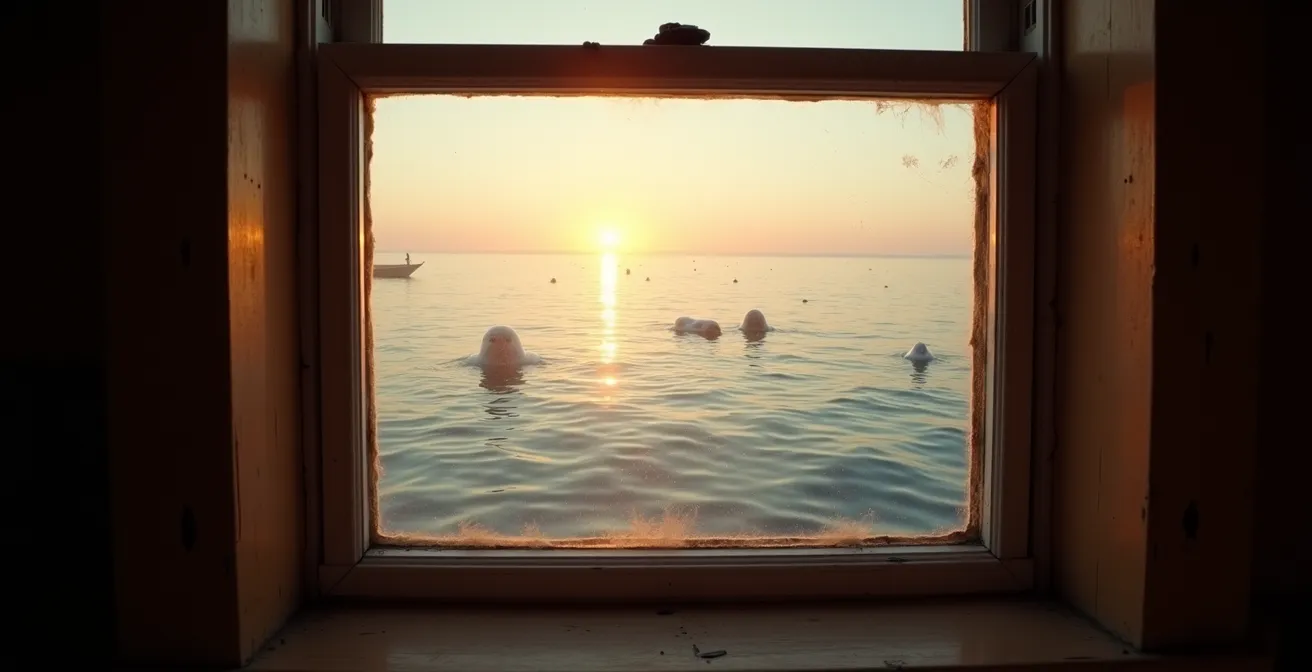
From the lighthouse gallery, you have a panoramic, unobstructed view of the surrounding waters, a known congregating area for belugas and minke whales. The experience offers a deep connection to both maritime history and the natural world. Booking is essential and must be done well in advance, typically through the websites of the non-profit organizations that manage these historic properties, such as Société Duvetnor or Parks Canada for other locations. A stay here is not just a vacation; it’s a contribution to the preservation of both cultural and natural heritage.
Now that you understand the principles of ethical observation, your next step is to actively choose tour operators and viewing methods that prioritize the well-being of these magnificent animals. Plan your trip not just to see whales, but to become a steward for their protection.