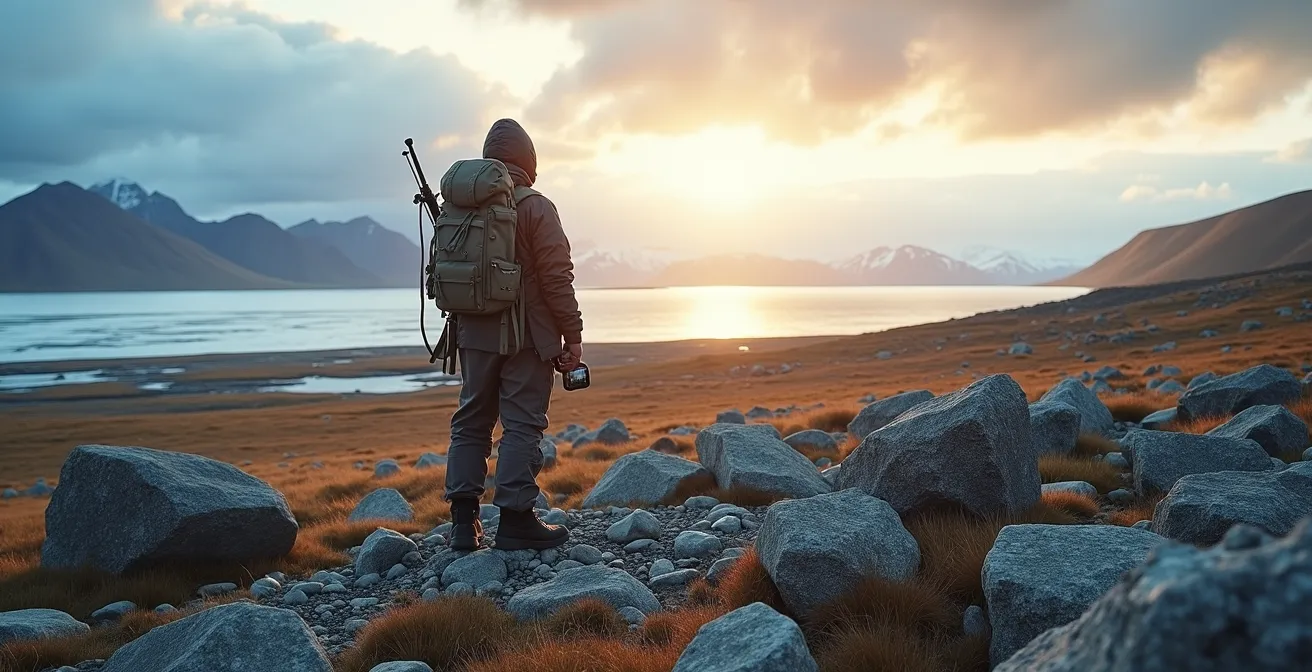
Planning a trip to Nunavut requires more than just booking a flight; it demands a fundamental shift in understanding. Many adventurers are confused by the complex rules and high costs, assuming it’s just remote-location bureaucracy. The key is to recognize that you are not entering public Crown land, but a territory governed by the Nunavut Agreement. Obtaining the correct permits is not a mere formality but a foundational act of respect for Inuit sovereignty and a legal requirement for safe passage.
An adventure traveler might look at the price of a flight to Iqaluit and wonder why it costs more than a ticket to Paris. They might pack for a summer hike assuming the biggest challenge is the cold, only to be met by 24-hour sunlight and relentless mosquitos. These are common misconceptions for those planning a journey to Canada’s vast and beautiful North. The most critical misunderstanding, however, is one of access. Many travelers, accustomed to the rules of southern Canada, assume that wilderness is synonymous with public or “Crown” land, free to be explored with minimal restriction.
In Nunavut, this assumption is not just incorrect; it’s illegal. The territory’s landscape is a complex tapestry of Inuit Owned Land, territorial parks, and national parks, all governed by a unique legal framework established by the Nunavut Agreement. This is the heart of planning a safe and respectful expedition. It’s not about finding loopholes or simply tolerating “red tape.” It’s about fundamentally understanding that you are a guest in a homeland, where access is a privilege granted through a dialogue with its owners and stewards.
But if the real key is not just filling out forms, but understanding the spirit of the law, how do you navigate this process correctly? The path to a successful Nunavut expedition lies in respecting this system of land governance. It involves recognizing that local laws, like community alcohol restrictions, are in place for community well-being, and that buying art is an opportunity to directly and ethically support the people whose land you are visiting.
This guide will deconstruct the practical and legal realities of travelling in Nunavut. We will move beyond the generic advice to provide a clear framework for everything from budgeting for flights and dressing for the Arctic summer to understanding the absolute necessity of obtaining the right permits before you even think about setting foot on the tundra.
Summary: Your Essential Guide to Permits and Protocols for Visiting Nunavut
- Why a Flight to Iqaluit Costs More Than a Flight to Paris?
- 24-Hour Sun: How to Sleep and Dress During the Arctic Summer?
- Alcohol Bans: Which Arctic Communities Prohibit Possession of Liquor?
- Why You Cannot Hike Auyuittuq National Park Without a Safety Orientation?
- Soapstone Carvings: How to Ensure You Are Buying Certified Inuit Art?
- Why You Hear Land Acknowledgments Before Events in Vancouver and Toronto
- Crown Land Camping: How for Non-Residents to Camp for Free Legally?
- How to Read Solar Forecasts to Predict Aurora Activity?
Why a Flight to Iqaluit Costs More Than a Flight to Paris?
The sticker shock is real. A round-trip flight from a major Canadian city like Montreal or Ottawa to Iqaluit can easily cost twice as much as a flight to Europe. This isn’t a simple case of price gouging; it’s a reflection of the harsh economic and logistical realities of the Canadian Arctic. Unlike the hyper-competitive transatlantic routes served by dozens of airlines, Nunavut is served by a very small number of carriers. These airlines face immense operational costs: specialized aircraft that can land on gravel runways, extremely high fuel prices, and the complex logistics of moving crew and maintenance resources across vast, infrastructure-poor distances. Every piece of equipment, every meal, and every employee has a significant transportation cost baked in.
Furthermore, passenger volume is low and often seasonal, meaning airlines cannot rely on the economies of scale that drive down prices on high-traffic routes. While this reality can seem daunting, it doesn’t mean a trip is impossible. Strategic planning is key. Travelling during the shoulder seasons of May or September can often result in fares 20-30% lower than the summer peak. Watching for seat sales, typically announced a few weeks in advance, and leveraging loyalty programs like Aeroplan can also make a significant difference.
The market is also showing signs of change, creating new opportunities for savvy travelers. This is perfectly illustrated by a recent market disruption.
Chrono Aviation’s Market Disruption Strategy
By leveraging an existing charter contract with the Baffinland Iron Mine, Chrono Aviation began offering commercial seats on its Montreal-Iqaluit route. As detailed in a report by Nunatsiaq News, their $699 one-way fare undercut the incumbent’s typical price by over 50%. This model, which piggybacks on industrial charters, shows how new, more affordable options can emerge for regular passengers, highlighting the importance of researching all available carriers, including smaller charter companies that may sell their extra seats.
Ultimately, budgeting for a Nunavut flight requires accepting its inherent cost while actively seeking out these specific savings strategies. The price reflects the true cost of accessing one of the most remote and incredible places on Earth.
24-Hour Sun: How to Sleep and Dress During the Arctic Summer?
Arriving in Nunavut during the summer can be a disorienting experience. The sun circles the horizon, never dipping below it, creating a perpetual state of daylight. This “midnight sun” is a beautiful phenomenon, but it poses two practical challenges for the unprepared traveler: how to sleep and how to dress. Your body’s internal clock, or circadian rhythm, relies on darkness to signal sleep. Without it, insomnia can quickly set in. An eye mask is not an optional luxury; it is essential equipment. Similarly, if you are camping, a blackout tent is a wise investment to create an artificial night.
Dressing for the Arctic summer is a science of layering. The temperature can swing dramatically, from warm and sunny to cold, windy, and wet in a matter of minutes. A common mistake is to over-rely on a single, heavy jacket. A flexible layering system is far more effective for regulating body temperature and staying dry. This system is about function over fashion, with each layer serving a distinct purpose.
This technical approach to clothing ensures you are prepared for any weather the Arctic throws at you, from a warm hike across the tundra to a sudden downpour or a windy boat ride among ice floes.

As the image shows, modern technical fabrics are designed to work together. A proper system begins with a moisture-wicking base layer of merino wool or a synthetic material to pull sweat away from your skin. Next comes an insulating mid-layer, like a fleece or down jacket, to trap body heat. The final piece is a waterproof and windproof outer shell (both jacket and pants) that breathes, allowing moisture to escape while protecting you from the elements. Just as critical are waterproof hiking boots, a head net to defend against the notorious mosquitos and black flies, and high-UV sunglasses to protect your eyes from the constant, reflective glare.
Alcohol Bans: Which Arctic Communities Prohibit Possession of Liquor?
Navigating the social and legal landscape of Nunavut requires an awareness that rules are often set at the community level, and nowhere is this more apparent than with alcohol regulations. As a visitor, you must understand that your personal habits do not supersede local laws. Many communities in Nunavut have strict controls on alcohol, which fall into three main categories: prohibited, restricted, or unrestricted. These are not arbitrary rules; they are democratic decisions made by the residents of each hamlet to promote public health and safety.
In a “prohibited” community, it is illegal for anyone, including visitors, to possess, consume, or transport any amount of alcohol. Bringing alcohol into these communities is a serious offense with legal consequences. In “restricted” communities, an Alcohol Education Committee sets specific limits on the amount and type of alcohol a person can have. “Unrestricted” communities function more like southern Canadian jurisdictions, but it is still illegal to sell or trade alcohol. Under no circumstances should you ever leave leftover alcohol behind in any community; you must take it with you when you leave.
The critical point for any traveler is that these regulations can and do change based on community plebiscites. The status of a community you read about online last year may be different by the time you arrive. Therefore, there is only one foolproof method to ensure you are compliant: you must check the current rules before your trip and confirm them upon arrival. The most reliable source of information is the local Royal Canadian Mounted Police (RCMP) detachment. A quick call before you travel or a visit upon landing is a mandatory step of due diligence and a clear sign of respect for community governance.
Why You Cannot Hike Auyuittuq National Park Without a Safety Orientation?
Auyuittuq National Park is a place of breathtaking, raw beauty, but it is also one of the most challenging and unforgiving environments in Canada. Parks Canada’s requirement for a mandatory safety orientation is not a bureaucratic formality; it’s a life-saving necessity. The orientation covers critical survival information that southern hikers would never encounter, such as how to safely cross glacial rivers whose currents can change hourly, proper food cache techniques to avoid attracting polar bears, and emergency communication protocols in a land with zero cell service. It is an essential transfer of knowledge from those who manage the park to those who wish to experience it.
However, the most crucial piece of information often missed by prospective hikers is that the Parks Canada permit is only one part of the equation. As their own guidelines state, this is a co-managed park, and your responsibilities extend beyond the federal government. This is where a deep understanding of Nunavut’s land governance becomes paramount. As Parks Canada explicitly states:
If you plan to travel on Inuit-owned land, you must contact the Qikiqtani Inuit Association to obtain permission
– Parks Canada, Auyuittuq National Park Official Guidelines
Many of the access points and surrounding areas of national parks in Nunavut are designated Inuit Owned Land (IOL). Travelling across or camping on IOL without a permit from the corresponding Regional Inuit Association—in this case, the Qikiqtani Inuit Association (QIA)—is trespassing. Applying for both the Parks Canada permit and the QIA permit concurrently, well in advance of your trip, is non-negotiable. This dual-permit system is the legal embodiment of the co-management structure that underpins the Nunavut Agreement.
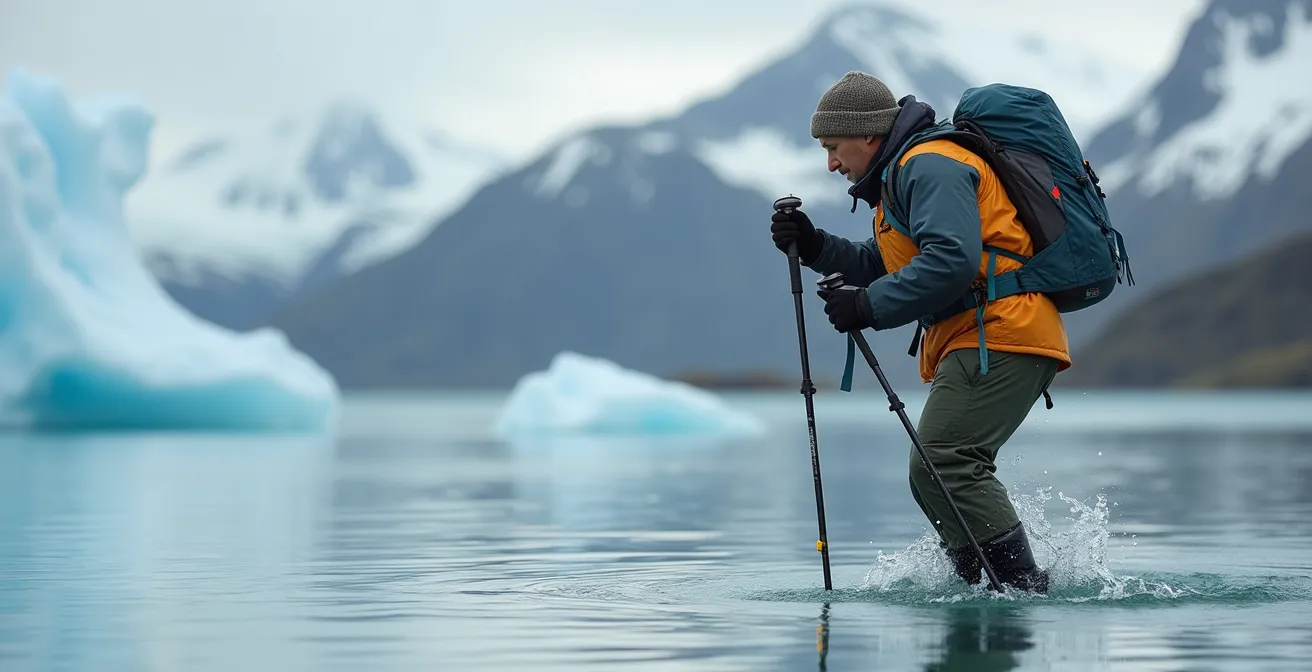
The safety orientation and the dual-permit requirement are both rooted in the same principle: respect for the land and for local authority. Hiring a licensed local outfitter for boat transport to the trailheads in Pangnirtung or Qikiqtarjuaq is not just a convenience; it’s another layer of safety, putting you in the hands of guides with generations of experience navigating these waters and weather systems. Disregarding these procedures is not adventurous; it’s reckless and disrespectful.
Soapstone Carvings: How to Ensure You Are Buying Certified Inuit Art?
Bringing home a piece of Inuit art, such as a soapstone carving or a print, is a meaningful way to connect with the culture of Nunavut. However, as a visitor, you have a responsibility to ensure your purchase is ethical. The goal is to support the artist and the community directly, not to fuel a market of mass-produced knock-offs that exploit Inuit culture. True ethical purchasing is about connection and respect, not just a transaction. Aggressive haggling is considered rude; a fair price reflects the artist’s skill, time, and the story behind the piece.
The most ethical way to buy art is directly from the artist in their home community. This ensures 100% of the money goes to the creator and gives you the invaluable opportunity to hear about the piece’s meaning firsthand. If this isn’t possible, the next best option is to purchase from an Inuit-owned cooperative. These co-ops have a long and storied history in the North, playing a vital role in bringing Inuit art to the world while ensuring fair compensation for artists. They are community-run institutions that are pillars of the local economy.
A prime example of this model is the West Baffin Eskimo Co-operative.
West Baffin Eskimo Co-operative Success Model
Established in 1959 in Kinngait (formerly Cape Dorset), the West Baffin Eskimo Co-operative is renowned as Canada’s oldest professional Inuit printmaking studio. This Inuit-owned and governed model has been instrumental in fostering the careers of world-famous artists while guaranteeing that the economic benefits remain within the community. It sets the gold standard for ethical art commerce in Nunavut, demonstrating a sustainable system that protects both cultural authenticity and the artists themselves.
When buying from galleries in Iqaluit or southern Canada, your primary tool for verification is the “Igloo Tag.” This official certification from the Government of Canada’s Indigenous Art Centre guarantees the piece is authentic Inuit art. Always ask for documentation about the artist and the piece’s origin. An ethical purchase is one that honours the artist, respects the culture, and contributes positively to the Nunavut economy.
Why You Hear Land Acknowledgments Before Events in Vancouver and Toronto
In southern Canadian cities like Vancouver and Toronto, land acknowledgments have become a common and important practice at the start of public events. They serve as a verbal reminder that these cities are built on the traditional, ancestral, and unceded territories of specific Indigenous peoples. It is an act of reconciliation and a recognition of a history and presence that long predates colonization. While this is a powerful symbolic gesture in the south, in Nunavut, the concept of land rights and Indigenous governance is not just symbolic—it is a codified, legal, and political reality that structures the entire territory.
The foundation of this reality is the Nunavut Agreement, signed in 1993. This is the largest Indigenous land claim settlement in Canadian history. It is not an ancient treaty but a modern, comprehensive agreement that established the Territory of Nunavut and its unique form of public government. It is the reason why discussions of “Crown Land” are often misplaced in Nunavut and why Inuit Owned Land carries such profound legal weight.
This agreement did more than just define land ownership; it created a new system of governance. As Crown-Indigenous Relations and Northern Affairs Canada clarifies, this was a fundamental restructuring of power. The agreement established a framework for co-management and self-determination, creating new bodies to oversee the territory’s resources and development. A key passage highlights this, noting that the Nunavut Agreement established five Institutions of Public Government, including the Nunavut Impact Review Board, which is responsible for the environmental assessment of all proposed projects. These are not advisory committees; they are powerful, quasi-judicial bodies with real authority over land use.
So, while a land acknowledgment in Toronto is about recognizing a historical and ongoing presence, in Nunavut, the entire system of permits, land administration, and environmental review is the living, breathing embodiment of that principle. Every permit application is, in effect, a land acknowledgment backed by the force of law.
Crown Land Camping: How for Non-Residents to Camp for Free Legally?
Here is the single most important legal distinction an adventure traveler from southern Canada must understand: the concept of “Crown Land camping” as it exists in provinces like Ontario or British Columbia does not apply in Nunavut. The idea that you can find a piece of wilderness outside a park, pitch a tent for free, and have a right to be there is fundamentally incorrect. Assuming so is the fastest way to find yourself trespassing and showing profound disrespect to the actual landowners.
Under the Nunavut Agreement, vast tracts of the territory were designated as Inuit Owned Land (IOL), which is legally private land. Title to these lands is held by the Inuit. Therefore, the default assumption for any land outside of a designated park or a municipal boundary must be that it is IOL. To access, cross, or camp on this land for any purpose, you are legally required to obtain a permit from the appropriate Regional Inuit Association (Qikiqtani, Kivalliq, or Kitikmeot). These associations manage the land on behalf of all Inuit beneficiaries. The fees collected for these permits are not for profit; they support the crucial work of land management and stewardship programs.
Even within designated parks, access is not free or unregulated. National Parks require permits from Parks Canada (and, as noted, often an IOL permit as well), while Territorial Parks require their own specific permits. Camping within a hamlet’s municipal boundaries also requires permission from the local hamlet office. There is effectively no land in Nunavut that a non-resident can legally camp on for free without first obtaining permission from an authority—be it an Inuit Association, Parks Canada, or a local municipality. The “free for all” concept of Crown Land is a southern construct that has no place here.
Your Land Status Verification Checklist: Before You Camp in Nunavut
- Identify Points of Contact: List all planned camping locations and identify the governing body for each (Is it in a National Park, a Territorial Park, a municipality, or likely Inuit Owned Land?).
- Collect Existing Information: Check the official maps from the Nunavut government and Regional Inuit Associations to determine the precise status of the land you wish to visit. Do not rely on Google Maps.
- Ensure Coherence with Regulations: Cross-reference your plan with the rules of each land authority. Does your proposed activity (e.g., camping, hiking, using a drone) comply with their specific regulations?
- Assess Mémorability vs. Impact: Consider your desired experience. Is it more important to be in a specific, “un-touched” spot, or can you have an equally memorable and lower-impact experience by using a designated park campsite?
- Create a Permit Action Plan: List every permit you need to apply for, the contact information for each authority (QIA, Parks Canada, etc.), their application deadlines, and associated fees. Begin this process at least 90 days in advance.
Key takeaways
- The Nunavut Agreement, not southern Canadian laws, governs land access; assume all wilderness is private Inuit Owned Land requiring a permit.
- Dual permits are often necessary: one from the land-managing body (like Parks Canada) and another from the relevant Regional Inuit Association.
- Local expertise is not optional; hiring local guides for safety and adhering to community rules (like alcohol restrictions) are fundamental signs of respect.
How to Read Solar Forecasts to Predict Aurora Activity?
Witnessing the Aurora Borealis, the Uvaaksat or Aqsalijaat in Inuktitut, is a primary goal for many winter visitors to Nunavut. These ethereal lights are not a guaranteed spectacle; they are the result of a complex interaction between the sun and Earth’s magnetic field. Predicting their appearance involves a bit of science and a lot of patience. The phenomenon begins with solar wind, a stream of charged particles released from the sun. When these particles collide with gases in our atmosphere, they produce the famous dancing lights. Stronger solar activity means a higher chance of a vibrant aurora display.
To move from hope to a strategic viewing plan, you need to monitor solar forecasts. Two key Canadian resources are invaluable: the Canadian Space Agency’s AuroraMAX, which provides real-time camera feeds and short-term forecasts, and the University of Alberta’s AuroraWatch, which issues alerts based on geomagnetic activity. They often use the Kp-index, a scale from 0 to 9 that measures the intensity of a geomagnetic storm. A Kp-index of 4 or higher often indicates a good chance of seeing a strong aurora at Nunavut’s latitudes. Timing is also critical. It’s physically impossible to see the aurora during the 24-hour sun of the Arctic summer. According to travel experts, the best months for aurora viewing in Nunavut are from late August to April, when the nights are long and dark.
However, the most important safety protocol for aurora viewing has nothing to do with solar physics. Nighttime excursions outside of community boundaries carry a very real risk of encountering polar bears. For this reason, you should never venture out onto the land or sea ice alone at night. The only safe way to view the aurora from the wilderness is by hiring a local guide or joining an official tour. These guides are experienced outdoorspeople who are trained in polar bear safety and carry the necessary equipment. They also know the best and safest vantage points. This practice is another core tenet of respectful Nunavut travel: relying on and compensating local expertise for a safe and enriching experience, where you might even learn the traditional Inuit stories behind the lights you’re watching.
By embracing this mindset—seeing permits not as barriers but as dialogues, rules as community safeguards, and local guides as essential partners—you transform your journey from a simple trip into a meaningful and respectful expedition. Your first step should be to start the permit research and application process with the relevant Inuit Associations and government bodies, long before you book any flights.