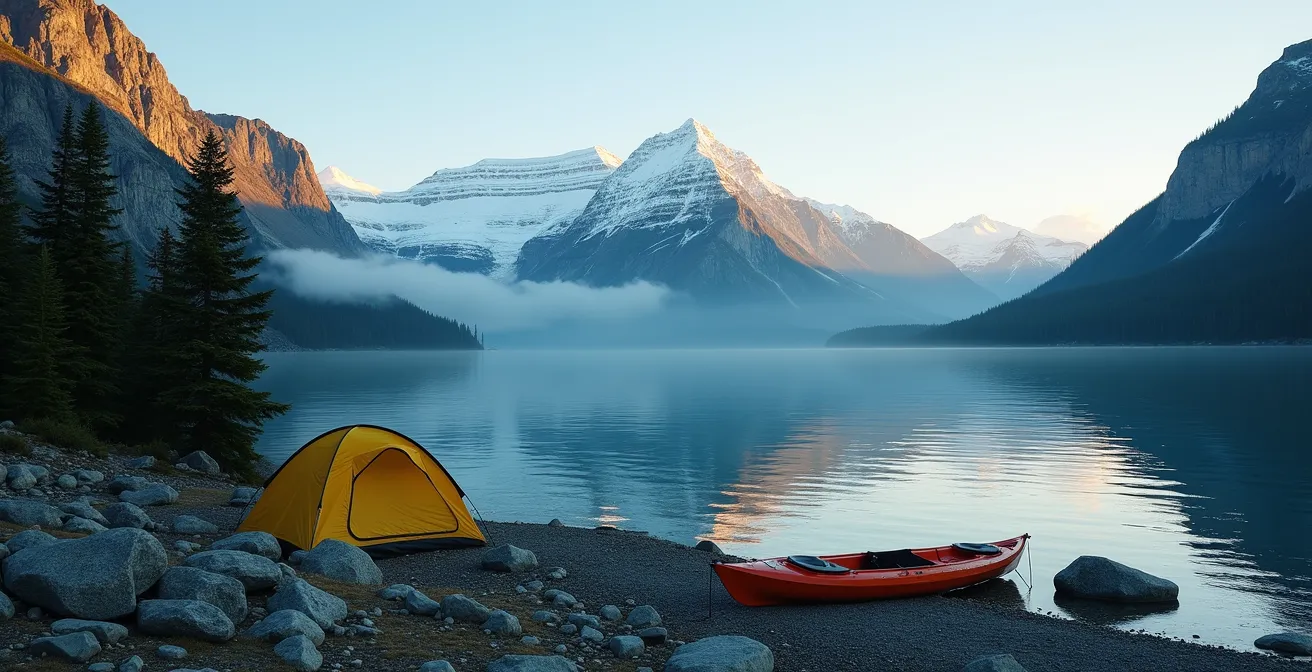
Traveling British Columbia on $150 a day isn’t a myth; it’s a matter of strategic hacking, not sacrifice.
- Exploit systemic price gaps in transportation by leaving your car behind for ferries and filling up on gas in Alberta.
- Leverage overlooked, low-cost infrastructure like Recreation Site campgrounds and university summer dorms for accommodation.
Recommendation: Stop thinking like a tourist paying rack rates and start using these local strategies to unlock an affordable West Coast adventure.
The phrase “BC means Bring Cash” echoes in backpacker hostels and travel forums, painting a picture of a stunning province with a price tag to match. For budget travelers, the dream of misty rainforests, epic mountain ranges, and vibrant city life can feel financially out of reach. The typical advice—cook your own meals, travel in the shoulder season—is a good start, but it barely scratches the surface of what’s possible when you understand the province’s unique economic landscape.
The common perception is that a trip here requires either a bloated bank account or extreme austerity. You’re told to choose between expensive hotels and rustic camping, or between gourmet meals and instant noodles. This binary choice is a false one. It overlooks the systemic inefficiencies and local secrets that allow for a rich travel experience on a surprisingly lean budget. The real key to an affordable BC trip isn’t about spending less, but about spending smarter.
What if the secret wasn’t just about avoiding costs, but about strategically exploiting them? This guide is built on a simple premise: to travel BC on a budget, you need to think like a local hacker. We’ll move beyond generic tips to reveal the specific cost structures in transportation, accommodation, and even daily food, showing you how to make targeted choices that unlock massive savings without compromising your adventure. We will explore how leaving your car on the mainland can fund your entire island trip, how to find free backcountry shelters, and why Vancouver’s cheapest foods are also some of its most delicious.
For those who prefer a visual introduction, the following video offers a serene drive through one of Vancouver’s most iconic and completely free attractions, Stanley Park. It’s a perfect example of the world-class experiences available in BC that don’t cost a dime, setting the stage for the budget-hacking strategies we’re about to explore.
This article breaks down the essential strategies for mastering a BC budget. We’ve structured it around the key decisions you’ll face, from crossing the Georgia Strait to finding a cheap meal in the city, providing a clear roadmap to affordable travel on the West Coast.
Summary: Your Guide to Hacking the Cost of British Columbia Travel
- Walk-on vs. Drive-on: How Much Do You Save by Leaving the Car on the Mainland?
- Recreation Sites: How to Find Free or Cheap Camping Spots in BC Backcountry?
- Sushi and Pizza: Why These Two Foods are the Cheapest Staples in Vancouver?
- Okanagan vs. Cowichan: Which Wine Region Fits a Weekend Itinerary?
- October to March: Is it Worth Visiting Tofino During Storm Watching Season?
- Why Your Gas Budget Will Vary by 30% Between Alberta and BC
- Motels vs. Campgrounds: Which Option Saves More Money for a Family of 4?
- How to Cycle the Stanley Park Seawall Without Annoying the Locals?
Walk-on vs. Drive-on: How Much Do You Save by Leaving the Car on the Mainland?
The first major budget shock for many visitors to BC is the cost of taking a vehicle on a BC Ferry to Vancouver Island or the Gulf Islands. What tourists see as a mandatory expense, locals see as an optional luxury. The single most effective cost-arbitrage strategy for island travel is to leave your car at the terminal and walk on. The savings aren’t just marginal; they can be substantial enough to fund several days of your trip.
Driving a standard vehicle onto a ferry for a round trip can easily cost over $140, and that’s before factoring in the fuel to get around the island. In contrast, a walk-on passenger pays a fraction of that price. This simple choice transforms your transportation budget. Once on the other side, cities like Victoria and Nanaimo have excellent public transit systems (like BC Transit) that are cheap and efficient. For exploring further afield, using a car-share service like Evo for a single day often proves far cheaper than bringing your own vehicle for a multi-day trip. This hybrid approach offers the best of both worlds: the massive savings of a walk-on fare combined with the flexibility of a car when you truly need it.
The financial difference is stark, as this analysis based on a trip from Vancouver (Tsawwassen) to Victoria (Swartz Bay) shows. The data, drawn from a budget breakdown by Lonely Planet’s guide to budget BC travel, clearly illustrates the savings.
| Travel Option | Ferry Cost (Round Trip) | Additional Transport | Total Estimated Cost | Best For |
|---|---|---|---|---|
| Walk-on Passenger | $36 CAD | BC Transit: $5/day | $46 CAD | Victoria downtown only |
| Drive-on (Standard Vehicle) | $140 CAD | Gas: $30 | $170 CAD | Island exploration |
| Walk-on + Car Share | $36 CAD | Evo: $90/day | $126 CAD | Flexible city/nature mix |
By choosing to walk on, you immediately free up over $120. That money can cover your accommodation, food, or activities for the day. It’s a classic example of “infrastructure hacking”—using the system in the most efficient way possible, rather than the most obvious one.
Recreation Sites: How to Find Free or Cheap Camping Spots in BC Backcountry?
After transport, accommodation is the biggest budget-eater in British Columbia. While provincial parks offer stunning campsites, they can be pricey and book up months in advance. The real budget-hacker’s secret lies in a different, more rustic network of sites: BC Recreation Sites. Managed by the province, there are over 1,200 of these sites, many of which are completely free or charge a nominal fee (typically $15 per night). These are often more basic than provincial parks—think pit toilets and no showers—but they offer unparalleled access to lakes, rivers, and trailheads far from the tourist crowds.
Finding these spots requires a bit of research using resources like the official Recreation Sites and Trails BC website or apps like iOverlander, but the payoff is enormous. You’re not just saving money; you’re gaining a more authentic backcountry experience. For a backpacker, a string of free Rec Sites can mean a week of travel for the cost of food and gas alone. This strategy is the epitome of leveraging public infrastructure that isn’t primarily marketed to tourists. While others are paying a premium for manicured parks, you’re sleeping under the same stars for free.
Case Study: The Sunshine Coast Trail
For the ultimate example of free accommodation, look no further than the 180km Sunshine Coast Trail. This remarkable trail is Canada’s longest free hut-to-hut trek, featuring 16 volunteer-built sleeping huts that are available on a first-come, first-served basis at no charge. This allows hikers to complete a multi-week wilderness journey without even carrying a tent, proving that some of BC’s most profound nature experiences are accessible without spending a fortune on gear or lodging.
The financial impact is undeniable. A travel analysis of the region confirms that nightly costs for a campsite are a fraction of hotel prices, with a typical spot costing around $25-45 CAD for camping vs $125+ for a hotel. By opting for Rec Sites, you can often push that cost down to zero, making the $150-a-day budget not just achievable, but comfortable.
Sushi and Pizza: Why These Two Foods are the Cheapest Staples in Vancouver?
Eating out in Vancouver can be expensive, but the city’s culinary landscape has a unique quirk that budget travelers can exploit: the exceptional quality and affordability of both sushi and pizza. This isn’t a coincidence. Vancouver’s large Asian diaspora has created a hyper-competitive market for sushi, driving prices down while keeping quality high. You can find pre-made sushi combos at supermarkets like T&T for under $12 that rival what you’d pay double for elsewhere. It’s a healthy, filling, and incredibly cheap lunch option.
Simultaneously, a thriving late-night and student culture has given rise to numerous by-the-slice pizza joints like Freshslice or Uncle Fatih’s, where two massive slices can be had for under $10. These two food categories form the backbone of a savvy Vancouverite’s cheap eats strategy. While tourists might be lining up for pricey gastropub burgers, locals are grabbing a delicious and substantial meal for a fraction of the cost. A breakfast from Tim Hortons, a sushi lunch, and a pizza dinner can easily keep your daily food spending under $35, leaving plenty of room in your $150 budget for other experiences.
This strategy is about identifying the “urban food staples”—the specific foods that are cheap because of local demographics and competition. The image below captures the surprising quality you can find in Vancouver’s budget food scene.

As you can see, budget-friendly doesn’t have to mean boring or low-quality. By tapping into these local food currents, you eat well, save a significant amount of money, and get a more authentic taste of the city’s culture than you would at a tourist-trap restaurant. It’s about recognizing that the best value is often found where the locals eat every day.
Okanagan vs. Cowichan: Which Wine Region Fits a Weekend Itinerary?
A visit to BC’s wine country is a classic experience, but the famous Okanagan Valley comes with a hefty price tag and requires a long, gas-guzzling drive from Vancouver. For the budget-conscious traveler, a far more strategic choice is the lesser-known but equally charming Cowichan Valley on Vancouver Island. This is a perfect example of “counter-flow travel”—choosing a fantastic alternative to the main tourist draw to save time and money.
The Cowichan Valley, just north of Victoria, offers a more intimate and affordable wine-tasting experience. The proximity to Vancouver (a short ferry ride and drive) immediately cuts down on transportation costs. Furthermore, the wineries themselves are often smaller, family-run operations with a different business model. As the travel guide Keep Exploring Canada notes, this has a direct impact on your wallet. They highlight this difference in their budget guide:
Many smaller Cowichan wineries have lower fees or waive them with a bottle purchase, which is less common in the more commercialized Okanagan wineries
– Keep Exploring Canada, British Columbia Budget Holiday Guide
This isn’t just about saving a few dollars on tasting fees; it’s a systemic difference that adds up across a whole weekend. Accommodation is generally cheaper, the vibe is more relaxed, and you spend less time in the car and more time enjoying the region.
The cost breakdown for a weekend trip for two people makes the choice clear. This comparative data highlights why choosing Cowichan is a powerful budget hack.
| Factor | Okanagan Valley | Cowichan Valley |
|---|---|---|
| Distance from Vancouver | 400km (5 hours) | 100km + ferry (3 hours) |
| Gas Cost (round trip) | $100-120 CAD | $40 + $70 ferry |
| Average Tasting Fee | $15-25 per winery | $10-15 (often waived) |
| Budget Accommodation | $120+/night | $90+/night |
| Weekend Total (2 people) | $400-500 CAD | $300-350 CAD |
By choosing the alternative, you save 25-30% on your weekend trip while still getting a wonderful wine country experience. It’s about being strategic, not about missing out.
October to March: Is it Worth Visiting Tofino During Storm Watching Season?
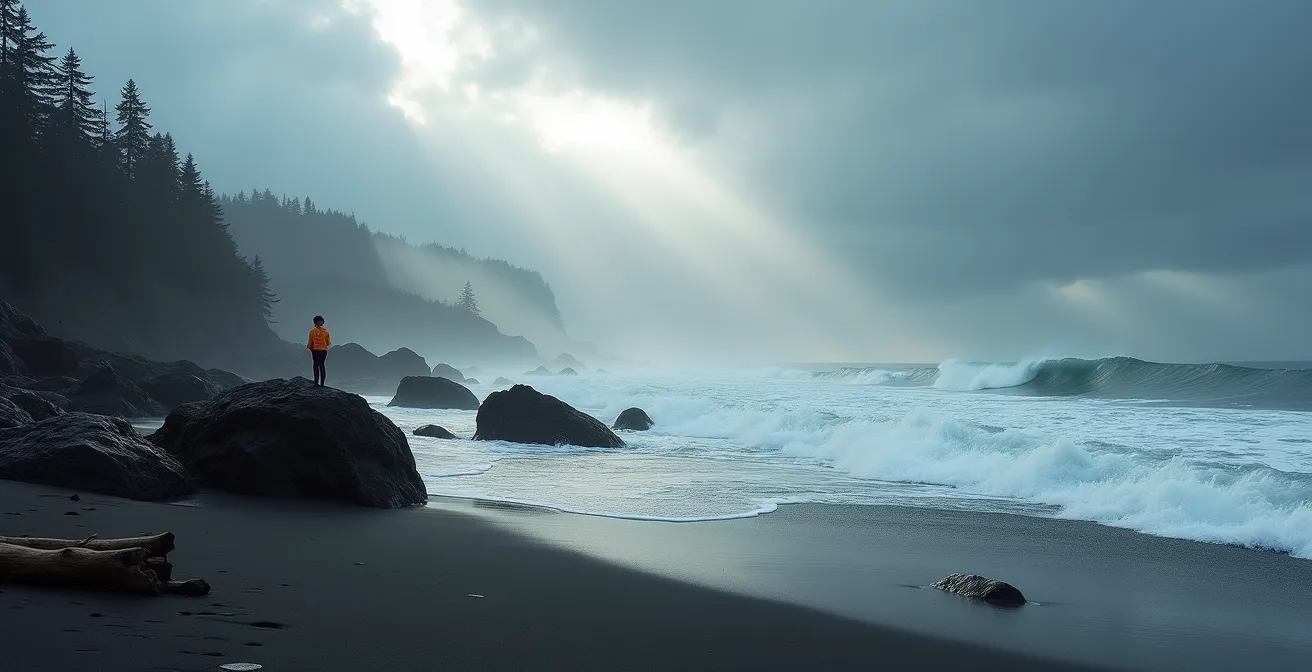
Tofino in the summer is beautiful, crowded, and incredibly expensive. But from October to March, this iconic West Coast town transforms. The crowds disappear, the prices drop, and the Pacific Ocean puts on one of nature’s most dramatic shows: storm watching season. For a budget traveler, visiting during this “off-season” is the ultimate act of seasonal leverage. You’re not just getting a discount; you’re accessing a completely different, arguably more powerful, Tofino experience.
The primary benefit is financial. An analysis of seasonal pricing patterns reveals that you can expect 30-50% lower accommodation prices during storm season. A room that costs $300 a night in July might be $150 in November, instantly making a trip to this bucket-list destination feasible. But it’s not just about saving money. The experience itself is unique. Watching 20-foot waves crash against the shore from a cozy cabin or while walking a windswept beach is an unforgettable adventure that you simply can’t have in the calm summer months.
The wild weather doesn’t mean everything shuts down. Many tours and cultural experiences continue, offering a more intimate setting without the summer crowds. This is a key insight for anyone worried the off-season will be boring.
Case Study: T’ashii Paddle School’s Year-Round Cultural Tours
Proving that Tofino remains vibrant outside the summer peak, T’ashii Paddle School, an Indigenous-owned and operated company, offers cultural canoe tours through Tla-o-qui-aht territory. Their Meares Island tour, for instance, runs into October and features a guided walk through a rainforest of 1,000-year-old cedar trees. These tours provide deep cultural connection and access to stunning landscapes, demonstrating that Tofino’s most enriching experiences are available to travelers who are smart enough to visit during the quieter, more affordable months.
Visiting Tofino in the storm season is the perfect distillation of the budget hacker’s mindset: you trade crowds and high prices for drama, authenticity, and incredible value.
Why Your Gas Budget Will Vary by 30% Between Alberta and BC
For any traveler planning a road trip into British Columbia from the east, the most overlooked budget-killer is the dramatic jump in gas prices the moment you cross the Alberta border. This isn’t a small difference; it’s a massive price gap caused by differing provincial taxes and levies, including Vancouver’s TransLink tax. A real-world traveler budget analysis found a staggering 45% difference, with prices at $0.96/L in Calgary versus $1.39/L in Vancouver at the time of their trip. Ignoring this fact can add hundreds of dollars to your trip costs unexpectedly.
This is where cross-border cost arbitrage becomes your most powerful tool. The strategy is simple but profoundly effective: fill your tank to the absolute brim in a town like Canmore or Banff, Alberta, before you drive into BC. That one stop can save you $20-30 on a single tank of gas. This isn’t just a one-time trick; it’s a mindset that you should apply throughout your trip. For example, gas prices are significantly lower at First Nations-run gas stations, which are exempt from certain taxes. Using an app like GasBuddy to locate these stations is a classic local hack.
Furthermore, if you’re driving within the Lower Mainland, plan your routes to fuel up in municipalities outside of Metro Vancouver’s jurisdiction, like Abbotsford, to avoid the regional transit tax. These may seem like small moves, but they accumulate into significant savings over the course of a road trip. The following plan outlines how to systematically lower your biggest road trip expense.
Your Action Plan: The BC Fueling Strategy
- Pre-Crossing Fill-Up: Always fill your vehicle’s tank completely in Alberta just before crossing the border into BC. This single action is your biggest money-saver.
- Locate Tax-Exempt Stations: Use an app like GasBuddy to actively search for and prioritize fueling at First Nations gas stations, which often have significantly lower prices due to tax exemptions.
- Avoid the TransLink Tax: When in the Lower Mainland, consciously plan to buy gas in municipalities like Abbotsford or Chilliwack to avoid Metro Vancouver’s hefty transit tax.
- Leverage Memberships: If you have a Costco membership, plan your fill-ups at their gas stations, which consistently offer prices 5-10 cents per litre lower than competitors.
- Time Your Purchases: Be observant of local price cycles. Many gas stations, particularly in smaller towns, offer slight discounts on specific days of the week, often on Tuesdays.
By treating fuel as a strategic purchase rather than an afterthought, you can effectively reduce one of the biggest variable costs of your BC adventure and keep your daily budget on track.
Key Takeaways
- Prioritize being a walk-on passenger on BC Ferries; the savings from leaving your car are substantial enough to fund days of travel.
- Actively seek out BC Recreation Sites for free or very cheap camping, and look into university dorms for affordable city stays in the summer.
- Your first tank of gas in BC should be purchased in Alberta. This single act of “fuel arbitrage” sets the tone for a smart budget trip.
Motels vs. Campgrounds: Which Option Saves More Money for a Family of 4?
When planning accommodation, travelers often see a simple trade-off: the expense and comfort of a motel versus the savings and effort of a campground. For a family or a small group, the math seems to favor camping, but the upfront cost or rental of gear can complicate the equation. However, this narrow comparison overlooks a brilliant third option that offers a ‘best of both worlds’ solution, especially in BC’s major cities: summer accommodation at university residences.
During the summer months (typically May to August), universities like the University of British Columbia (UBC) in Vancouver and the University of Victoria (UVic) rent out their empty dorm rooms to the public. These aren’t just single rooms; many are suite-style units with multiple bedrooms and, crucially, a private kitchen. This “infrastructure hack” is a game-changer for budget travelers. You get the privacy and security of a hotel, the cost-saving benefit of a kitchen to cook your own meals, and a price point that is often significantly lower than a budget motel.
Case Study: The Hidden Value of University Summer Stays
Canadian universities like UBC and UVic provide an often-overlooked accommodation hack. They offer suite-style summer lodging that is ideal for budget travelers. These facilities provide multi-room units with kitchens for a fraction of hotel costs, typically ranging from $120-150 per night for a suite that can sleep several people. With included amenities like access to campus gyms, pools, and excellent transit connections, they represent the best value compromise between the austerity of camping and the high cost of city hotels.
A cost analysis comparing these options for a group reveals the clear advantage. While camping is cheapest, the addition of gear rental can make it less appealing for short trips. Meanwhile, university dorms provide a comfortable, convenient middle ground that blows motels out of the water on price.
| Option | Nightly Cost | 5-Night Total | Additional Costs | Grand Total |
|---|---|---|---|---|
| Provincial Campground | $45 | $225 | Gear rental: $300 | $525 |
| Budget Motel (2 rooms) | $180 | $900 | Restaurants: $400 | $1,300 |
| University Dorms (UBC Summer) | $120 | $600 | Groceries: $200 | $800 |
| Hybrid (3 nights motel + 2 camping) | Varies | $630 | Mixed: $250 | $880 |
For a solo backpacker or a couple, the savings are just as significant. Choosing a university stay over a motel or even a private room in a hostel can free up a huge portion of your daily budget while providing superior amenities.
How to Cycle the Stanley Park Seawall Without Annoying the Locals?
Cycling the Stanley Park Seawall is a quintessential Vancouver experience, and best of all, it’s a world-class activity that can be done on a shoestring budget. However, its popularity means it can get incredibly crowded, and there’s a specific etiquette that many tourists unknowingly violate, leading to frustration for everyone. Being a savvy traveler here means not only saving money but also blending in seamlessly with the locals by respecting the unwritten rules of the path.
First and foremost, the most important rule is to always ride in a counter-clockwise direction. This is mandatory and ensures a smooth, one-way flow of traffic. Second, save money by skipping the expensive day-rentals geared towards tourists. Instead, use the city’s Mobi bike-share system, which offers passes that are far cheaper for a few hours of use. A four-hour pass for the nine-kilometre loop will cost you around $17 CAD, a fraction of the $50+ you might pay at a conventional rental shop.
Beyond those basics, acting like a local means being courteous. This includes ringing your bell when passing pedestrians on the right, pulling completely off the path for photo stops at designated lookouts like Prospect Point, and avoiding peak times. The best rides are on weekday mornings before 10 a.m. or in the evenings after 6 p.m., when you’ll have more of the path to yourself. By following these simple rules, you not only have a more enjoyable and safer ride, but you also show respect for the city and the people who use the park every day. Here are the key points to remember:
- Ride counter-clockwise only. This is the number one rule and is enforced.
- Use the Mobi bike-share system instead of tourist-focused daily rentals for significant savings.
- Always ring your bell as a courtesy when you are about to pass pedestrians or slower cyclists.
- To avoid crowds, plan your ride for weekday mornings or evenings.
- If you must drive, park for free on nearby residential streets and walk to the bike-share station to avoid expensive parkade fees.
- Use designated pull-outs for photos; never stop in the middle of the bike lane.
Now that you have the playbook of strategies for hacking transportation, accommodation, food, and activities, you’re equipped to see British Columbia not as an expensive destination, but as a puzzle waiting to be solved.
With these insider tips in your pocket, you can stop worrying about the “Bring Cash” reputation and start planning an intelligent, affordable, and unforgettable adventure on Canada’s West Coast.