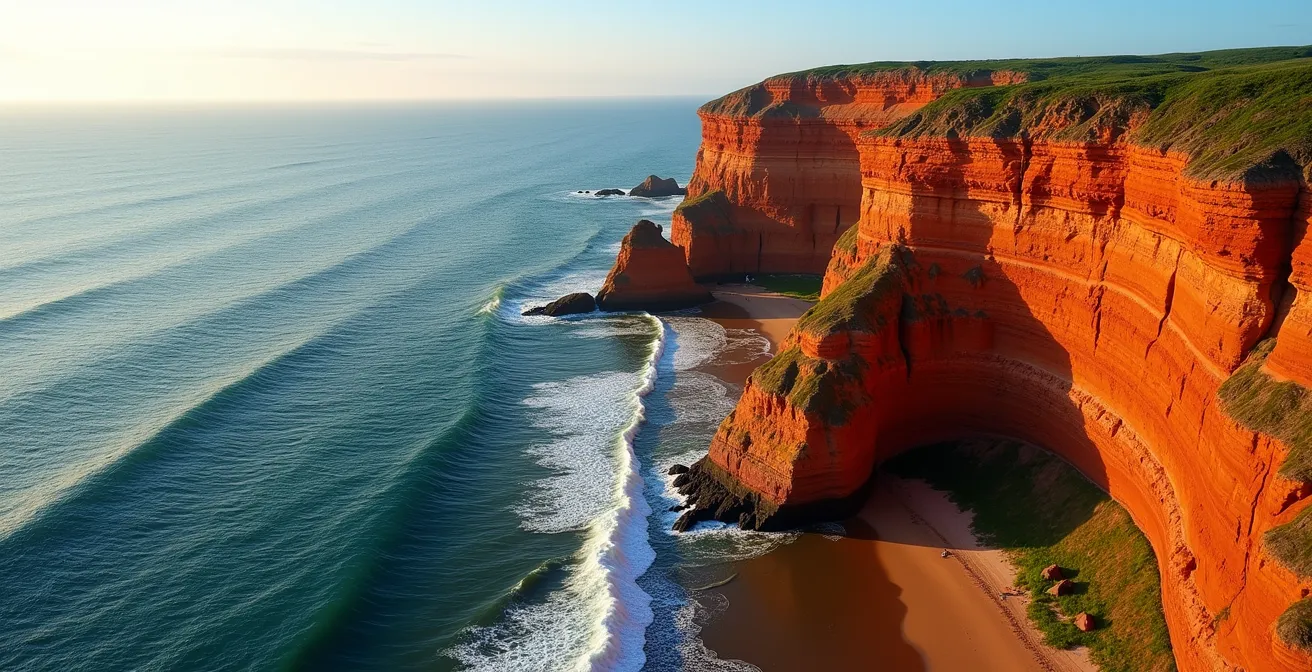
Visiting Prince Edward Island’s red cliffs is a race against time, and your actions as a visitor directly determine the finish line.
- The soft sandstone that forms the cliffs is not just rock; it is a fragile ecosystem and an irreplaceable 300-million-year-old fossil record.
- Designated boardwalks and viewing platforms are not suggestions; they are essential tools for preservation, separating human impact from the vulnerable landscape.
Recommendation: Practice a ‘Sustainable Gaze’—capture the island’s beauty through your lens without leaving a physical, erosive trace on the environment.
The allure of Prince Edward Island is deeply rooted in its dramatic, iron-rich coastline. For photographers and tourists, capturing the perfect image of the russet cliffs against the blue of the Atlantic is a primary goal. You’ve seen the photos, perhaps of the now-lost Teacup Rock, and you want to experience that raw beauty for yourself. But a specter haunts this landscape: the very act of visiting it is accelerating its demise. As a geologist who has studied these formations, I see not just beauty, but a profound fragility.
Most travel advice offers generic warnings like “be careful” or “watch the tides.” While true, this advice fails to address the fundamental problem. The issue isn’t just personal safety; it’s about our collective environmental impact. The soft, sedimentary rock crumbles underfoot, and the delicate dune ecosystems that protect the coast are easily destroyed. This isn’t a landscape that can withstand casual exploration. Every footstep off a designated path leaves a geological imprint, a scar that contributes to the island’s accelerating retreat from the sea.
So, if the common approach is part of the problem, what is the solution? The key is to shift our perspective from that of a passive consumer of scenery to an active steward of the environment. This guide is built on a simple but powerful principle: you can and must see PEI’s red cliffs without destroying them. It’s about understanding the ‘why’ behind the rules, not just following them blindly.
Throughout this article, we will explore the science behind the island’s fragility, from its unique geology to its vital ecosystems. We will provide a clear framework for how to interact with this landscape responsibly, ensuring that your ‘erosion footprint’ is zero. By the end, you will know not just where to get the best views, but how to do so with a conscience, preserving this Canadian treasure for generations to come.
This guide provides a comprehensive look at how to enjoy the island’s natural wonders sustainably. Follow along as we break down the key environmental rules and provide actionable advice for the conscientious traveller.
Summary: A Conservationist’s Guide to PEI’s Fragile Coastline
- The Dune Grass Rule: Why Walking on PEI Dunes Can Destroy a Beach Ecosystem?
- North Shore vs. South Shore: Which PEI Beaches Have the Warmest Water?
- High Tide Danger: Why You Must Check Tides Before Walking Around Coastal Headlands?
- Iron Oxide: How to Get PEI Red Dirt Stains Out of Your White Clothes?
- Clay Roads: Why You Should Not Drive a Rental Car on Heritage Roads in the Rain?
- Wild Blueberries: Why Are They Everywhere in Maritime Desserts in August?
- The Black Rocks Rule: Why You Must Never Stand on Wet Rocks at Peggy’s Cove?
- Where to Find Authentic Acadian Cuisine in the Maritimes?
The Dune Grass Rule: Why Walking on PEI Dunes Can Destroy a Beach Ecosystem?
The rolling dunes of Prince Edward Island National Park are not just a beautiful backdrop for your beach day; they are the island’s first line of defence against the sea. These are not static hills of sand. They are living, breathing ecosystems held together by the intricate root systems of marram grass. This grass is the single most important factor in stabilizing the coastline, acting as a natural infrastructure that prevents sand from blowing away and buffers the land from storm surges.
The fragility of this system cannot be overstated. The root systems are shallow and easily damaged by compression. In fact, Parks Canada warns that it takes only 10 footsteps to kill marram grass, creating a path of destruction that can take years to recover. Once the grass is gone, the wind carves out a “blowout” in the dune, a wound that can grow with every storm, compromising the entire dune’s integrity. Walking on the dunes is illegal for this reason, with fines starting at $150 under park regulations.
To put this in perspective, a community-led restoration at St. Peters Harbour involved dozens of volunteers planting marram grass to rebuild dunes that protect the harbour. As the Nature Conservancy of Canada notes, these efforts are vital for protecting coastal communities from flooding. Every time you stay on a boardwalk, you are actively participating in the same conservation effort and respecting the work of those who restore this vital barrier.
Your Responsible Photography Checklist: Capturing Dunes and Cliffs Safely
- Use designated viewing areas: The lower parking lot at North Rustico provides excellent, safe views of the west-facing cliffs.
- Access the beach via official crossings: The Cavendish Beach Complex dune crossing allows for an eastern perspective without stepping on any vegetation.
- Stay exclusively on boardwalks: The Greenwich Dunes Trail is the premier example, offering stunning elevated views while protecting the most sensitive dune systems.
- Visit the Oceanview Lookoff: This new platform near Cavendish was specifically built to provide safe selfie opportunities without needing to approach the unstable cliff edge.
- Report violations: If you see others walking on protected dunes, you can inform park staff. This helps protect the ecosystem for everyone.
North Shore vs. South Shore: Which PEI Beaches Have the Warmest Water?
A common question for PEI visitors is where to find the warmest water for swimming. The answer lies in the island’s geography. The South Shore, facing the sheltered Northumberland Strait, generally boasts warmer, calmer waters than the North Shore, which is exposed to the colder, more powerful Atlantic Ocean. However, as a conservation-minded traveller, water temperature is only one part of the equation. The more important question is: which shore is more resilient, and how can I visit it sustainably?
The North Shore is home to the iconic, dramatic red cliffs and vast dune systems of PEI National Park. It is also the area experiencing the most aggressive erosion, with some areas losing up to three meters of coastline per year. In contrast, the South Shore’s erosion is slower. This difference has led to distinct sustainable infrastructure on each coast. The North Shore relies heavily on extensive boardwalks and viewing platforms to manage the high volume of tourists and protect its fragile dunes. The South Shore often uses well-maintained staircases to provide access to beaches, preventing visitors from scrambling down and eroding the clay banks.
This paragraph introduces the comparative table below, which details the key differences between the North and South Shores from a sustainable tourism perspective. As the data from a recent analysis by National Geographic highlights, your choice of beach can be guided by both comfort and conservation.
| Shore | Water Temperature | Erosion Rate | Sustainable Features | Recommended Beach |
|---|---|---|---|---|
| North Shore | Colder (Atlantic) | 0.6-3m/year | Extensive boardwalk systems, designated viewing platforms | Cavendish Beach – supervised access |
| South Shore | Warmer (Northumberland Strait) | 0.3m/year average | Well-maintained access stairs preventing bank erosion | Argyle Shore Provincial Park |
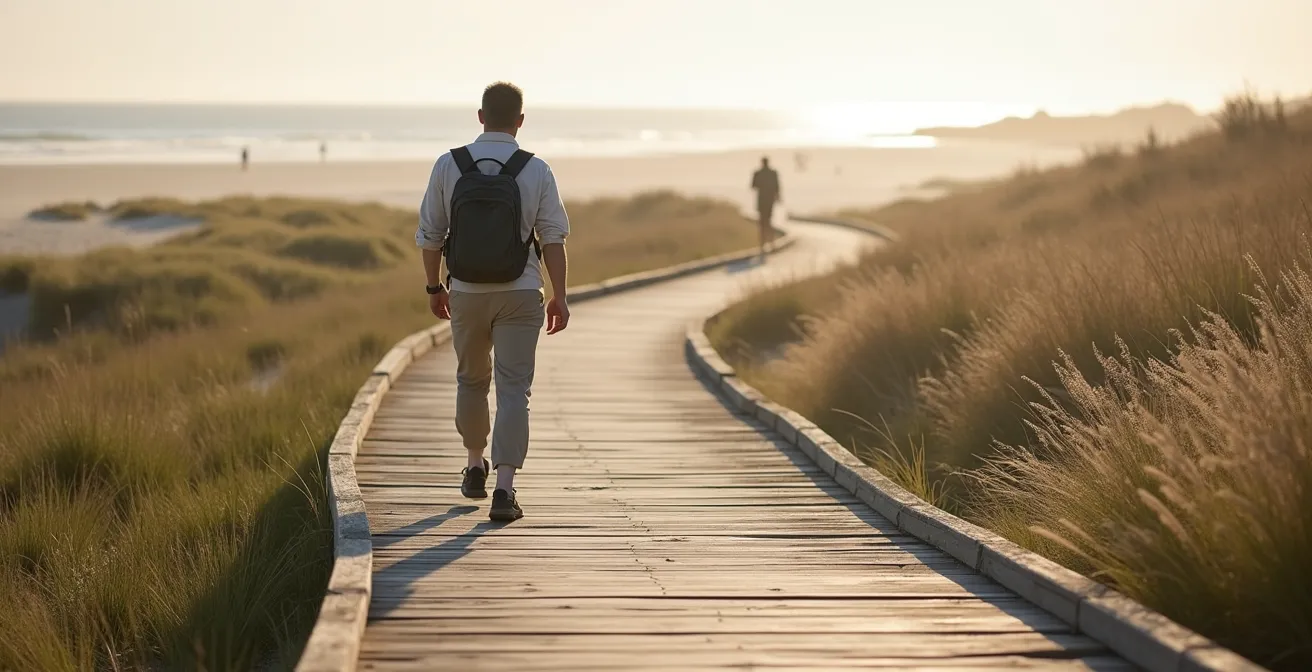
Choosing a beach, therefore, becomes a conscious decision. If you visit the iconic North Shore, commit to using its protective infrastructure. If you opt for a warmer swim on the South Shore, use the stairs and stay off the banks. In both cases, your actions contribute to the preservation of the coastline.
High Tide Danger: Why You Must Check Tides Before Walking Around Coastal Headlands?
On any coastline, checking the tide chart is a fundamental safety rule. On Prince Edward Island, it’s a critical act of environmental preservation. The tides in the Gulf of St. Lawrence can have a significant range, and they move quickly. It is frighteningly easy to walk around a sandstone headland at low tide, only to find your return path completely submerged by water a few hours later.
This is where the risk transcends personal danger and becomes an environmental crisis. When trapped by a rising tide, the natural human instinct is to panic and seek higher ground. On PEI’s coast, that means scrambling up the face of the red cliffs. This single act can cause catastrophic damage. The soft, crumbly sandstone, already weakened by waves and weather, cannot withstand the force of a person climbing it. Large chunks can break away, accelerating erosion by years in a matter of minutes and leaving a permanent scar on the landscape.
Furthermore, a rescue operation, should one be necessary, can cause even more widespread damage. The movement of personnel and equipment across sensitive coastal areas can harm vegetation and further destabilize the cliffs. Your ‘geological imprint’ in this scenario is not just a footstep; it’s a cascade of destruction. Before you ever set foot on a beach with the intention of rounding a point, you must know two things: the time of the next high tide and how long you have until the water returns. Never take a chance; a photograph is never worth the risk to yourself or to this irreplaceable environment.
Plan your coastal walks to begin on a falling tide, giving you the maximum amount of time. Always have a clear exit strategy and turn back well before the tide turns. This simple discipline is one of the most powerful conservation actions you can take.
Iron Oxide: How to Get PEI Red Dirt Stains Out of Your White Clothes?
Many visitors leave PEI with an unwanted souvenir: a stubborn red stain on their clothes or shoes. The common question is how to remove it, but the more important question is what that stain truly represents. That red colour is from iron oxide, the same compound that gives rust its colour. It is the binding agent in the island’s soft sandstone. A red stain on your white pants is not just dirt; it is a physical piece of the cliff face, an artifact of erosion that you are now carrying with you.
Every red-stained souvenir signifies a moment of direct contact with the vulnerable sandstone, a moment where fine particles of a 300-million-year-old formation were broken off and transferred to fabric. This perspective transforms a laundry problem into a conservation lesson. The best way to “get out” a red dirt stain is to prevent it entirely by not making direct contact with the cliffs or exposed red soil. This means staying on designated paths, boardwalks, and grassy areas at all times.
This is not a minor issue. As a whole, Prince Edward Island’s shoreline is shrinking at a rate of 30 centimetres per year on average, with storm surges taking much more. While natural forces are the primary driver, the cumulative impact of thousands of visitors touching, climbing, and rubbing against the soft cliffs contributes to this loss. Your desire for a close-up photo or a piece of red rock as a keepsake directly contributes to this alarming statistic.
Instead of red-stained clothes, consider a better souvenir. A photograph taken from a designated viewpoint like the Oceanview Lookoff captures the beauty without the harm. A piece of art from a local artisan who is inspired by the landscape supports the island’s economy while honouring its environment. These are souvenirs that celebrate PEI, rather than slowly consuming it.
Clay Roads: Why You Should Not Drive a Rental Car on Heritage Roads in the Rain?
Part of PEI’s charm is its network of scenic “heritage roads,” unpaved clay lanes that wind through rolling countryside, often canopied by trees. They evoke a sense of a bygone era and offer a beautiful alternative to the main highways. However, these roads are as fragile as the coastline, especially after a rainfall. The red clay soil becomes a thick, sticky mud that is notoriously difficult to drive on.
For tourists, this presents a practical problem. Many rental car agreements in PEI explicitly prohibit driving on unpaved roads. Getting a car caked in red mud can lead to significant cleaning fees, and if you get stuck or damage the vehicle, your insurance or rental agreement could be voided. Visitors have reported that even accessing popular spots like Greenwich National Park or some rural B&Bs can involve short stretches of these packed red-stone roads, which become treacherous when wet.
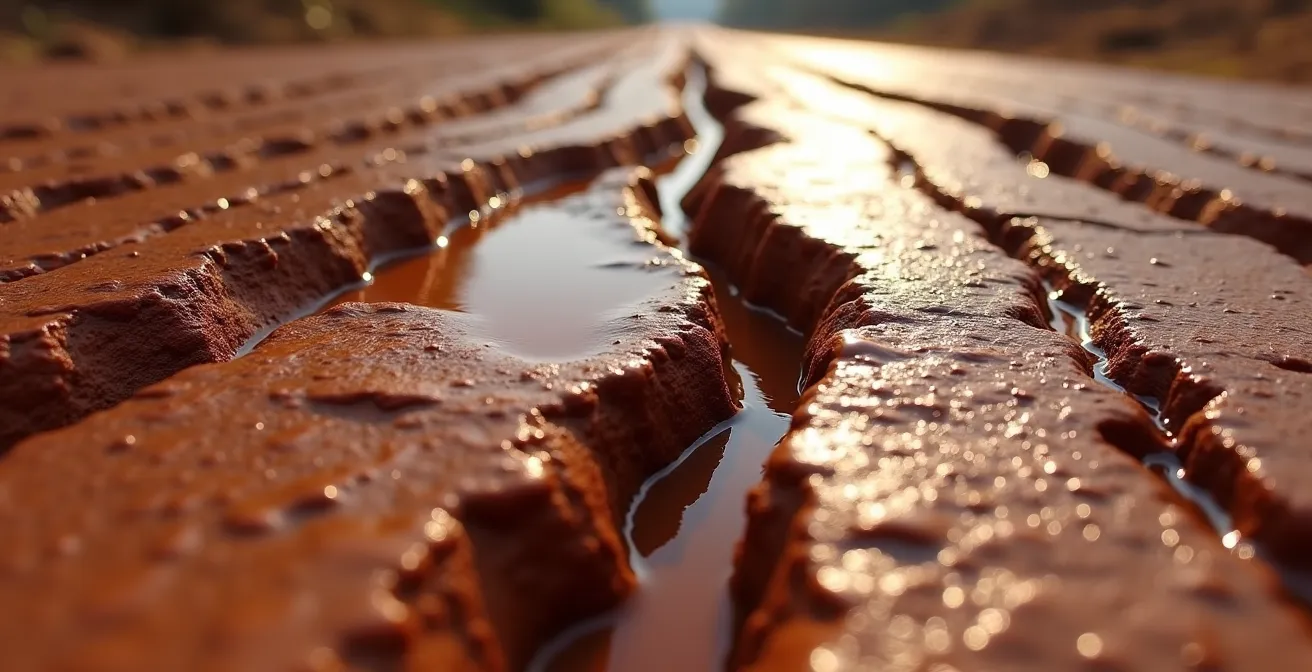
Beyond the risk to your rental deposit, there is a significant environmental consequence. When you drive on a wet clay road, your tires create deep ruts. The next time it rains, water funnels into these channels, dramatically accelerating erosion. It carves out miniature canyons, washing away the road surface and sending sediment-laden runoff into nearby streams and wetlands, which ultimately impacts the coastal ecosystem. The damage shown in the image above is not just an inconvenience; it’s a form of landscape degradation caused directly by vehicle traffic.
If you encounter a heritage road and it has been raining, the most responsible choice is to find an alternative, paved route. Your GPS might see it as a shortcut, but it’s a shortcut that can have lasting negative impacts on the island’s delicate infrastructure and your travel budget.
Wild Blueberries: Why Are They Everywhere in Maritime Desserts in August?
In late summer, the Maritimes, and PEI in particular, are awash in wild blueberries. From pies and crumbles to jams and sauces, this small, flavourful berry is a celebrated part of the local cuisine. These are not the large, cultivated highbush blueberries found in most supermarkets; they are lowbush blueberries, a wild crop that thrives in the acidic soil of the region. Their prevalence is a direct reflection of the island’s agricultural heritage.
However, the connection between these delicious desserts and the coastal environment is deeper and more complex than most realize. Many of PEI’s wild blueberry barrens are located within the same watersheds that feed into the coastal bays and estuaries. This creates a direct link between farming practices inland and the health of the ocean. Unsustainable agricultural practices, such as the overuse of fertilizers and pesticides, can lead to chemical runoff.
This runoff travels through streams and groundwater, eventually reaching the coast. There, it can fuel harmful algae blooms that deplete oxygen in the water, damaging marine life and the very ecosystems that support the island’s fisheries. As environmental groups like the NS Environmental Network point out, controlling human disturbances, including intensive agriculture, is essential for protecting the coastal vegetation that stabilizes the shoreline. Your choice at the bakery is connected to the health of the beach.
As a visitor, you can support a healthier ecosystem by making conscious choices. Seek out U-Pick farms that advertise their use of integrated pest management. When you’re at a café or restaurant, ask if they source their berries from local, sustainable growers. Support establishments that have certifications like Ocean Wise, as this indicates a broader commitment to environmental stewardship. These small actions create a market for sustainability that ripples from the farm field all the way to the coast.
Key Takeaways
- The core difference between PEI’s cliffs and other famous rocks (like Peggy’s Cove) is geology: soft, sedimentary sandstone is for conservation, while hard, igneous granite is for safety.
- Vegetation is active infrastructure. Marram grass on dunes and other plants on cliff tops are not decoration; they are the living glue holding the island together.
- Your power as a tourist lies in your choices: where you walk (boardwalks), what you eat (sustainably sourced food), and what you buy (local art, not stained clothes).
The Black Rocks Rule: Why You Must Never Stand on Wet Rocks at Peggy’s Cove?
Many visitors to the Maritimes are familiar with the cardinal rule of Peggy’s Cove, Nova Scotia: “Stay off the black rocks.” This warning is plastered on signs throughout the iconic fishing village. The “black rocks” are those parts of the granite outcrop that are washed by waves, even on calm days. They are notoriously slippery due to moisture and algae, and rogue waves have tragically swept unsuspecting visitors into the turbulent Atlantic. This rule is fundamentally about personal safety on an unyielding surface.
It is crucial to understand that the “rule” for PEI’s red cliffs is entirely different in its primary purpose. While slipping is a risk, the main concern is not your safety, but the survival of the rock itself. As a geologist, the contrast is stark. The granite at Peggy’s Cove is an ancient, igneous rock, forged by immense heat and pressure. It is incredibly hard and resistant to erosion. Your footsteps have virtually zero impact on the structure of the rock. The danger flows from the rock to you.
On PEI, the relationship is reversed. The danger flows from you to the rock. The red cliffs are made of soft, sedimentary sandstone. These rocks are essentially compressed sand, held together by minerals like iron oxide. They are so soft that you can crumble them in your hand. This is the critical distinction every visitor must grasp. Furthermore, these cliffs preserve a precious scientific record, including fossils from the Permian period, 300-250 million years old, a time before the dinosaurs. When a piece of this cliff breaks off, part of that irreplaceable sedimentary legacy is lost forever.
This table clarifies the fundamental difference in risk and impact between these two iconic Maritime geological sites.
| Rock Type | Location | Hardness | Erosion Impact | Safety Risk |
|---|---|---|---|---|
| Granite (igneous) | Peggy’s Cove, NS | Extremely hard | Minimal from foot traffic | Slippery when wet |
| Sandstone (sedimentary) | PEI cliffs | Soft, crumbly | Severe – permanent loss with each footstep | Slippery algae + structural collapse risk |
Where to Find Authentic Acadian Cuisine in the Maritimes?
The quest for authentic cuisine is a rewarding part of any journey, and in the Maritimes, that often leads to Acadian food. On PEI, the heart of this culture is the Evangeline Region. Here, you can find traditional dishes that speak to a history of resourcefulness and a deep connection to the land and sea. But as we’ve seen throughout this guide, true authenticity in a place like PEI is inseparable from sustainability. A truly “authentic” meal is one that supports the long-term health of the environment that produces it.
When you choose a restaurant in the Evangeline Region or elsewhere on the island, you can extend your conservationist mindset from the beach to the dining table. Ask questions. Inquire if the seafood is certified by a program like the Marine Stewardship Council (MSC) or Ocean Wise, which indicates it was harvested sustainably. Ask about where they source their vegetables, favouring establishments that support local, organic farms. These choices help maintain the fisheries and reduce the agricultural runoff that can damage coastal ecosystems.
This approach is not just a modern trend; it’s a return to the roots of the culture. A powerful example of this synergy is the restoration of Basin Head. This area, crucial for its unique ecosystem and traditional Acadian fishing grounds, recently underwent a major “living shoreline” project. By restoring natural dune systems to protect the harbour from storm surges, the project safeguards both the endangered marine life and the sustainable fishing industry that has defined Acadian coastal life for centuries. This is a perfect case study of how protecting natural infrastructure ensures that cultural practices, like shellfish harvesting, can continue for generations.
By dining with discernment, you are not just having a meal; you are casting a vote for a healthy ecosystem. You are supporting the fishers, farmers, and chefs who are committed to preserving the natural heritage that makes their cultural heritage possible. This is the ultimate expression of a sustainable gaze—seeing the connections and acting on them.
Your visit to Prince Edward Island can be a powerful force for good. By embracing these principles, you move beyond being a mere tourist and become a temporary guardian of this beautiful, fragile corner of Canada. Make every choice, from where you walk to what you eat, a conscious act of preservation.