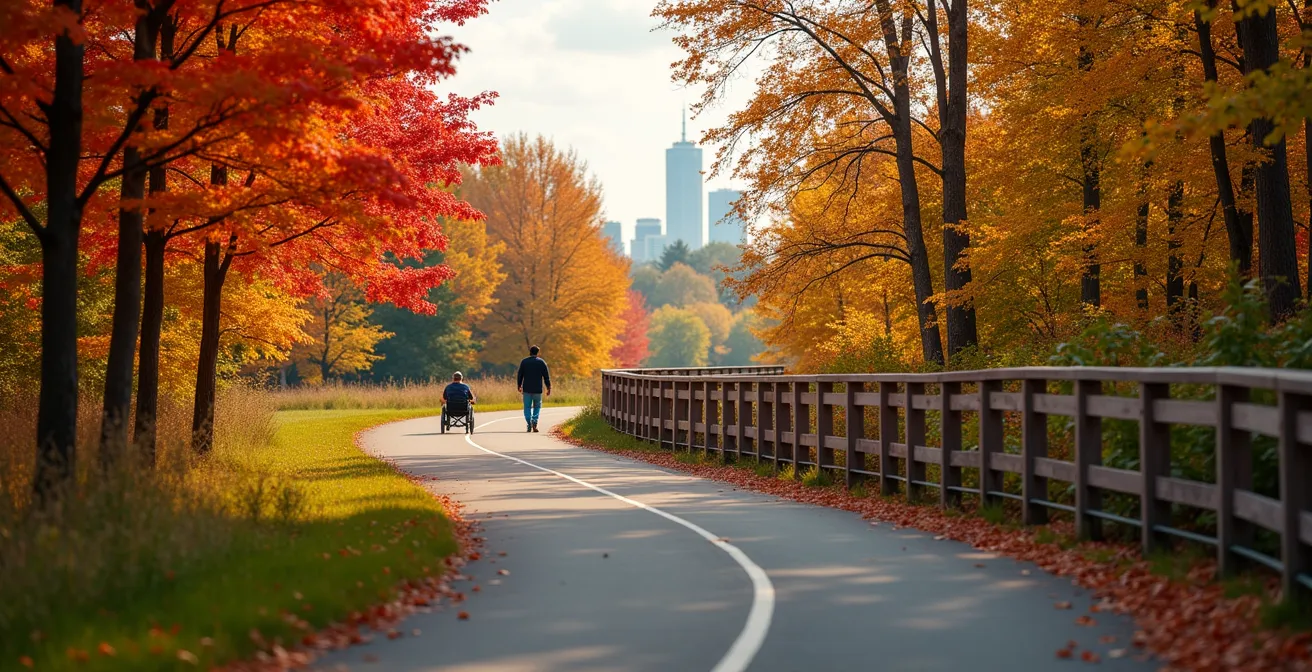
True access to Toronto’s nature isn’t just about a “flat trail”; it’s about solving the logistical puzzle of getting there and using the space with confidence.
- Many parks are listed as “accessible,” but crucial details like trailhead parking, path surfaces, and year-round washroom availability are often missing.
- Focusing on barrier-free logistics—from the subway stop to the trail start—is the key to a stress-free experience for wheelchair and stroller users.
Recommendation: Use this guide to audit potential destinations for their complete accessibility journey, not just the path itself, to unlock a true feeling of “paved wilderness” within the city.
For families with strollers and individuals using wheelchairs, the desire for a “wild” nature experience often clashes with the reality of Toronto’s urban landscape. The city is rich with green spaces, but the promise of nature can quickly turn to frustration when a “flat trail” is actually loose gravel, an “accessible” entrance has a hidden curb, or the designated parking is a kilometre from the trailhead. It’s a common story that leaves many feeling that genuine nature is out of reach without a major expedition.
Most online guides offer simple lists of parks, mentioning well-known spots like the Toronto Islands or the main Waterfront Trail. While helpful, this advice often overlooks the critical details that define true accessibility. It doesn’t answer the tough questions: Where is the *exact* parking spot? Are the washrooms open in February? Can I even get from the bus stop to the trail without encountering a barrier? This gap in information creates uncertainty and undermines the confidence needed to explore.
But what if the key wasn’t just knowing *where* to go, but *how* to navigate the entire journey? This guide adopts the perspective of an urban planner, focusing on the practical challenges and solutions of barrier-free logistics. We’ll move beyond park names to dissect the trailheads, the transit connections, and the year-round amenities. The goal is to provide you with the navigational confidence to find your own patch of paved wilderness, proving that a deep connection with nature doesn’t require leaving smooth ground behind.
This article will guide you through the specifics of Toronto’s most promising accessible nature loops. We will explore everything from the truly barrier-free trails in our largest urban parks to the crucial details of winter maintenance and using the TTC to reach the forest’s edge. We’ll even look at how these principles apply to grander adventures across Canada.
Summary: Your Guide to Toronto’s Accessible Urban Nature
- Rouge National Urban Park: Which Trails are Truly Wheelchair Accessible?
- The Trailhead Problem: How to Find Accessible Parking Spots at Popular Nature Sites?
- Tommy Thompson Park: How to See Migratory Birds Without Leaving Paved Roads?
- Winter Walking: Which Urban Trails Keep Accessible Washrooms Open Year-Round?
- Subway to Forest: How to Reach High Park’s Nature Trails via TTC?
- The River Valley: How to Explore North America’s Largest Urban Park System?
- No-Hike Views: The Top 5 Drive-Up Viewpoints in the Rockies
- How to Find Wheelchair Accessible Trails in Canadian National Parks?
Rouge National Urban Park: Which Trails are Truly Wheelchair Accessible?
Rouge National Urban Park is a massive expanse of nature, but “accessible” can mean different things across its vast territory. For wheelchair and stroller users, the key is to ignore vague promises and target specific, verified trail sections. The park’s management has made significant strides, but knowing precisely where to go is essential for a successful visit. A focus on designated day-use areas is the most reliable strategy.
Several trails have been designed or enhanced with accessibility in mind, moving beyond the typical rough-and-ready dirt path. These routes prioritize firm, stable surfaces and minimal grades, ensuring a smooth experience. The best options include:
- Glen Eagles Vista Trail: Offers a flat, granular surface with interpretive signage and stunning views of the Rouge River valleys.
- Vista Trail Loop at Zoo Road: A natural dirt and granular surface with a flat grade, including access to an observation deck via a paved roadway.
- Twyn Rivers Day Use Area: Home to a 1km enhanced accessibility trail section featuring viewing platforms and barrier-free universal washrooms.
- Black Walnut Day Use Area: A paved lot connects directly to flat, granular trails with accessible washroom facilities.
This infrastructure is part of a larger, ongoing commitment to universal access. Parks Canada’s major accessibility investment shows that 410,000 square feet of new accessible site development is slated to begin construction in 2025, promising even more opportunities in the future. These projects focus on creating seamless experiences from arrival to immersion.
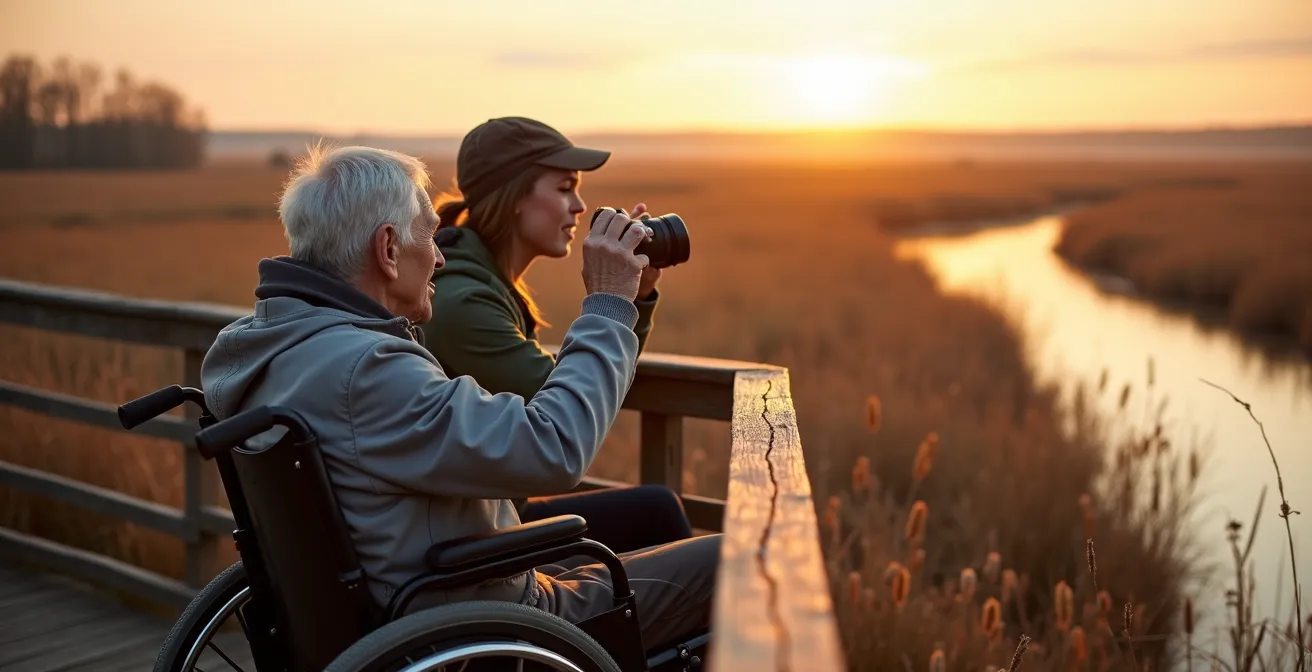
As you can see, the design of these spaces, like the boardwalks and observation platforms, is intentional. They are built not just for passage but for pausing and connecting with the environment. The use of features like barrier-free washrooms and dedicated accessible trail sections transforms a simple walk into a reliable, stress-free nature outing.
The Trailhead Problem: How to Find Accessible Parking Spots at Popular Nature Sites?
The single greatest point of failure in an accessible nature outing is often “the last 100 metres”—the gap between your vehicle and the start of the trail. A park can have a perfectly paved loop, but it’s useless if the designated parking is across a grassy field or lacks a proper curb cut. Solving this trailhead problem requires a pre-trip audit, looking for sites where barrier-free logistics have been considered from the moment you park.
Many parks simply don’t provide enough information online, leaving visitors to guess. The ideal accessible trailhead features designated, wide parking spots directly adjacent to the path’s entrance, with a firm, continuous surface connecting the two. There should be no curbs, stairs, or steep slopes. When a park gets this right, it demonstrates a true understanding of accessibility.
Case Study: The Hollidge Accessible Trail Loop
Located in Whitchurch-Stouffville, just a short drive from Toronto, the 1.3km Hollidge Trail loop exemplifies best practices in trailhead design. Accessible parking is located directly at the trail’s start, eliminating any navigational ambiguity. The path itself is hard-packed gravel, which is manageable for most manual wheelchairs, and maintains a flat terrain with no incline. Critically, the trail features regular rest spots and is wide enough for easy passing, making for a serene and confident experience.
The success of the Hollidge Trail isn’t an accident; it’s the result of user-centric design. By placing the user’s needs first, the planners eliminated common points of friction. When scouting new locations, look for these same indicators: clear photos online showing the parking-to-trail connection, recent visitor reviews that mention accessibility, and official park maps that specifically mark accessible facilities. Don’t be afraid to call a park’s visitor centre to ask pointed questions about the surface and grade between the parking lot and the trail.
Tommy Thompson Park: How to See Migratory Birds Without Leaving Paved Roads?
Tommy Thompson Park, known to locals as the Leslie Street Spit, is a remarkable feat of urban ecology. This man-made peninsula is a globally recognized Important Bird and Biodiversity Area, yet it remains one of Toronto’s most accessible “paved wilderness” destinations. It masterfully combines wild-feeling habitats with the robust infrastructure needed for barrier-free exploration, making it a prime spot for birdwatching from a wheelchair or with a stroller.
The park’s defining feature is its extensive network of paved roads. A review of the Leslie Street Spit Trail on AllTrails notes its 12.2 km of paved and gravel surfaces have a mere 32 metres of elevation gain, ideal for wheeled mobility. More officially, Tommy Thompson Park features 10 kilometres of accessible paved trail, providing a smooth and stable surface that winds through various habitats, from cottonwood forests to coastal marshes. This allows visitors to travel deep into the park and witness incredible wildlife, including nesting colonies of cormorants and herons, without ever leaving the road.
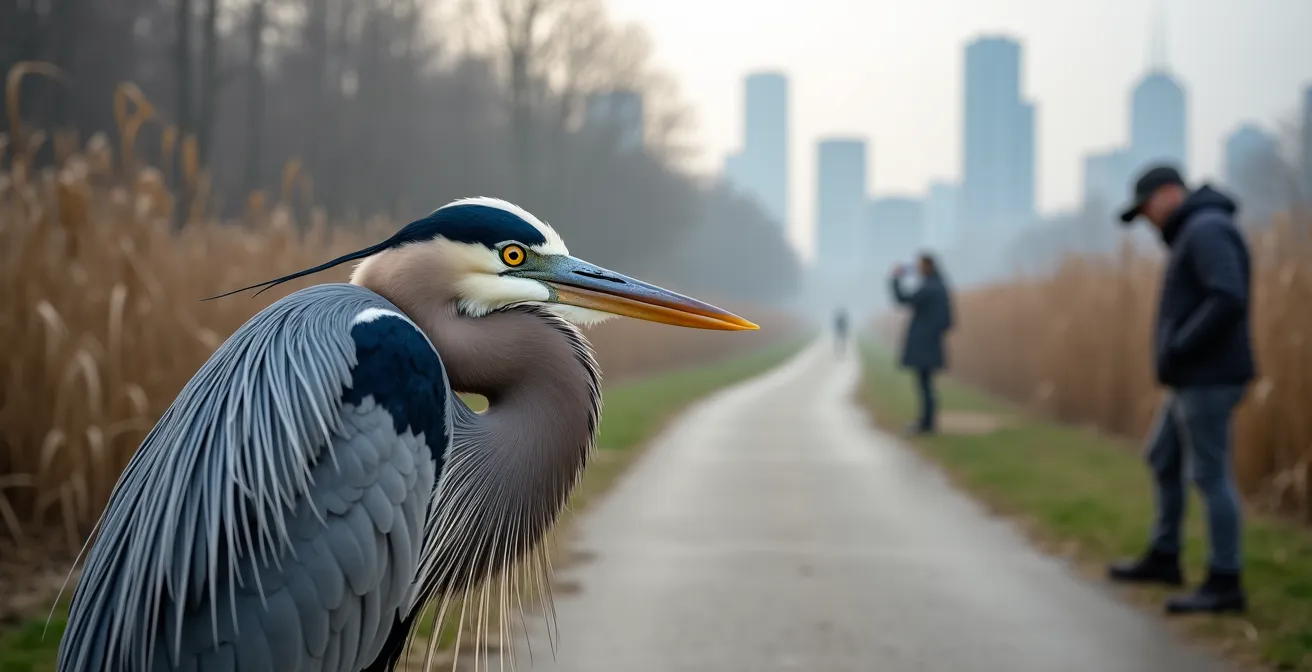
The wide, flat paths are not only great for accessibility but also accommodate the park’s popularity, allowing for comfortable and safe sharing of space. As you travel the main spine road, you are treated to constantly shifting views: serene wetlands on one side and the iconic Toronto skyline on the other. This unique juxtaposition of urban and wild is what makes the park so special. The paved network provides access to key viewing areas and the park’s signature lighthouse, ensuring a full experience for everyone.
Winter Walking: Which Urban Trails Keep Accessible Washrooms Open Year-Round?
For many, winter shrinks the map of accessible nature. A trail that’s perfect in July can become an impassable landscape of snow and ice by January. Worse yet, essential facilities like washrooms are often closed for the season. However, with the right information, four-season accessibility is achievable. The key is to focus on Toronto’s network of priority-maintained routes where snow clearing is systematic and reliable.
The City of Toronto’s winter maintenance plan is the foundational document for planning any cold-weather outing. The city prioritizes specific multi-use trails, bikeways, and park pathways that are critical for transportation and recreation. These routes are cleared to a bare surface, often receiving a higher level of service than residential sidewalks. Knowing which trails are on this priority list gives you the navigational confidence to head out after a snowfall.
As City of Toronto Transportation Services explains in their Winter Road Operations Report, planning is key: “The majority of plowing takes place overnight when the roads, sidewalks and bikeways are quieter. This increases safety and prepares infrastructure for the morning commute.”
Your Winter Trail Accessibility Checklist: Planning a Cold-Weather Outing
- Identify Priority Routes: Confirm if your target trail, like the Martin Goodman Trail, is on the city’s priority list for clearing at 2cm of snow.
- Check Washroom Status: Before leaving, visit the specific park’s webpage or call 311 to confirm which washroom facilities remain open year-round. Don’t assume.
- Assess Transit Connections: Verify that pathways connecting to your TTC stop are part of the 250+ parks receiving winter maintenance, ensuring a clear path from transit to trail.
- Monitor Conditions: Use the city’s PlowTO map in real-time to see when a trail was last plowed and salted, especially after a major snowfall (8cm+).
- Plan for Shorter Days: Note trail lighting conditions, as daylight is limited. Stick to routes you are familiar with and that have good passive surveillance.
The most crucial step beyond trail clearing is verifying year-round washroom access. Parks with major community centres or those along key commuter routes are more likely to keep facilities open. A quick check on the City of Toronto’s website under “Parks Locations & Hours” can save you from a very uncomfortable situation. By combining knowledge of snow clearing routes with facility status, you can reclaim winter for nature exploration.
Subway to Forest: How to Reach High Park’s Nature Trails via TTC?
High Park is one of Toronto’s crown jewels, offering a genuine forest feeling right in the city. For those relying on public transit, the journey via the TTC is a critical part of the accessibility puzzle. Reaching the park is straightforward, but navigating from the subway station to the park’s accessible nature trails requires some planning. The key is understanding the layout of the nearest accessible stations and the park’s internal paved network.
High Park Station on Line 2 (Bloor-Danforth) is the closest station, but it is unfortunately not yet wheelchair accessible. The best alternative is Keele Station, which is fully accessible with elevators. From Keele Station, it’s a short, paved sidewalk journey south along Keele Street to the park’s main entrance on Bloor Street. This entrance leads directly onto West Road, a wide, paved road that winds through the park.
Once inside, West Road and Colborne Lodge Drive form a paved loop that provides access to many of the park’s main attractions, including the edges of Grenadier Pond and the main picnic areas. While many of the smaller, unpaved “nature trails” that branch off are not suitable for wheels, the main paved roads themselves function as excellent, wide, and smooth trails. They offer beautiful canopy cover and the feeling of being deep in the woods. For a truly car-free experience, visiting on a Sunday is ideal, as the main roads within the park are closed to vehicle traffic, turning the entire paved network into a pedestrian and cyclist paradise.
This principle of leveraging existing, well-maintained infrastructure is a core concept in urban accessibility. Even the city’s vast underground PATH system, while a different context, demonstrates this. An analysis on Wheelchair Traveling highlights that its 90% wheelchair accessibility connects major downtown TTC stations, proving that smooth, barrier-free travel is possible when planned. Applying that same mindset to the journey from the subway to High Park’s paved roads unlocks a premier nature experience.
The River Valley: How to Explore North America’s Largest Urban Park System?
While Toronto is defined by its ravine system, the concept of a vast, integrated urban park system finds its ultimate expression elsewhere in Canada. Edmonton’s River Valley, for instance, is the largest expanse of urban parkland in North America. Exploring such a massive system presents unique accessibility challenges, but the principles for navigating it are universal and can be applied directly to Toronto’s own Don Valley or Humber River systems. The strategy is to use national standards as a benchmark for what to look for locally.
Parks Canada, as a national leader, sets a high bar for accessibility across its diverse sites. On a broad scale, Parks Canada maintains over 50 accessible trails across its National Parks network, each with specialized features. These trails are not just “flat” but are intentionally designed for universal access. Understanding these features can help you audit your local Toronto river valley trails for true accessibility.
What does a national-standard accessible experience include? It’s a holistic approach that considers every aspect of a visit. Features to look for, which are being implemented in federal parks, include:
- All-terrain wheelchairs: Available for loan at many visitor centres, allowing access beyond paved surfaces.
- Universal access mats: Deployed at beaches to allow wheelchairs to travel over sand to the water’s edge.
- Barrier-free scenic routes: Entire scenic drives, like the Cabot Trail, are designed with accessible viewpoints and facilities along the way.
- Specialized equipment: Features like swimming wheelchairs at some park lakes show a deep commitment to inclusive recreation.
When you approach Toronto’s own “river valley” systems, like the Don Valley trail network, use this as your mental checklist. Look for wide, paved sections like the Lower Don Trail, check for accessible washrooms at entry points like Todmorden Mills, and advocate for the city to adopt these higher standards. Exploring a large system becomes manageable when you know the gold-standard features to seek out.
Key Takeaways
- True accessibility in nature is about the entire journey—from parking or transit to the trail itself—not just a single feature.
- Four-season exploration is possible by focusing on Toronto’s priority-maintained routes and verifying year-round washroom availability.
- The principles for finding accessible trails in Toronto can be scaled up to unlock incredible nature experiences in provincial and national parks across Canada.
No-Hike Views: The Top 5 Drive-Up Viewpoints in the Rockies
While this guide focuses on the immediate vicinity of Toronto, the principles of accessible nature exploration are scalable to Canada’s most epic landscapes. Once you’ve built your confidence on local paved loops, you can set your sights higher. For many, the Canadian Rockies represent the pinnacle of natural beauty, and thankfully, you don’t need hiking boots to experience their grandeur. A number of world-class viewpoints are accessible by vehicle, offering “no-hike” vistas that are breathtaking for everyone.
This approach shifts the focus from physical exertion to strategic destination selection. Parks Canada and local authorities have made significant efforts to ensure that the rewards of a mountain view are not reserved solely for mountaineers. A crucial policy to be aware of is that Parks Canada offers free admission and program access for a support person traveling with a visitor with a disability, removing a financial barrier to these experiences.
When planning a trip to the Rockies, these drive-up or short-shuttle locations offer the highest reward for the least physical effort, making them perfect for seniors, families with young children, and wheelchair users.
| Location | Accessibility Features | View Quality | Additional Services |
|---|---|---|---|
| Banff Hot Springs | Wheelchair accessible areas | Mountain panorama | Senior Discovery Pass accepted |
| Jasper Townsite | Shuttle bus accessible points | Valley and peak views | Multiple accessible attractions |
| Mount Revelstoke Parkway | Drive nearly to summit | 360-degree mountain views | Accessible picnic areas at viewpoints |
| Waterton Lakes | Paved parking areas | Mountain-prairie interface | Picnic-friendly spaces |
Each of these locations has been developed with accessibility in mind, providing paved parking, accessible facilities, and pathways to the main viewing platforms. They prove that with thoughtful infrastructure, the most stunning mountain panoramas are truly within reach for all visitors, fulfilling the promise of our national parks.
How to Find Wheelchair Accessible Trails in Canadian National Parks?
Finding truly wheelchair-accessible trails in Canada’s vast national parks system moves beyond hoping for a flat path. It involves leveraging the resources and initiatives that Parks Canada has put in place to ensure a “world-class accessible experience.” The strategy is a combination of pre-trip research using official sources, understanding what best-in-class accessibility looks like, and taking advantage of supportive policies. This approach transforms a potentially daunting task into a manageable plan.
The foundation of any search is the official Parks Canada website. It features a dedicated accessibility section with detailed reports and lists of available services. Look for concrete examples and progress reports, not just vague promises. For instance, the accessibility initiatives at Batoche National Historic Site and in Banff National Park serve as powerful case studies. In Banff, the “Moving People Sustainably” initiative’s partnership with Roam Public Transit ensures fully wheelchair-accessible shuttle services between key hubs like Banff, Lake Louise, and Canmore, solving the crucial transit link.
Furthermore, Parks Canada has implemented user-friendly policies to reduce barriers. A key policy is that Parks Canada provides free admission for all youth 17 and under, and this extends to support persons accompanying a visitor with a disability. This significantly lowers the cost barrier for families and individuals requiring assistance, making these national treasures more accessible to all Canadians.
When planning your visit, look for parks that have published a detailed accessibility plan and report. These documents often list specific trails, facilities, and services that have been audited and upgraded. By focusing your search on these documented leaders in accessibility, you can plan your trip with a high degree of navigational confidence, knowing that the infrastructure has been thoughtfully designed to support a barrier-free visit.
Now that you are equipped with the strategies to assess and discover accessible trails, the next logical step is to start planning your own urban nature adventure. Begin by auditing a local park in Toronto using these principles and build your confidence for grander excursions.