
Forget the downtown tourist traps; Toronto’s most authentic culinary treasures are hidden in plain sight within its suburban strip malls.
- The city’s global identity is best experienced through Hakka cuisine in Scarborough, northern Koreatowns, and Tibetan momo shops in Parkdale.
- Success as a food adventurer means judging a place by its lineup and longevity, not its decor, and learning how to navigate around challenges like construction.
Recommendation: The next time you’re hungry, skip the familiar downtown core, get in your car, and use this guide to start your own culinary archaeology expedition in the GTA’s plazas.
For most visitors, and even many locals, a Toronto food tour means navigating the crowds of St. Lawrence Market or seeking out an Instagram-worthy brunch spot on Queen Street West. The city’s culinary narrative is often tethered to its downtown core, a collection of well-marketed, polished, and predictable experiences. We’re told to eat poutine, grab a peameal bacon sandwich, and call it a day. But this version of Toronto’s food scene is a sanitized postcard, missing the vibrant, chaotic, and deeply authentic soul of the city.
The real story is told in the sprawling suburbs, written on the illuminated signs of unassuming strip malls from Scarborough to North York. This is where Toronto’s celebrated multiculturalism truly lives and breathes. The city’s demographic landscape is a testament to this, with recent data showing that more than 57.2% of Toronto residents are visible minorities as of 2021, a diversity that is most deliciously expressed in its neighbourhood eateries. But if the key to unlocking this world isn’t a downtown reservation, what is it? It’s about rejecting the facade fallacy—the idea that good food requires chic decor—and embracing the art of the suburban food crawl.
This guide is your training manual. We’re not just listing restaurants; we’re teaching you how to become a food scout. We’ll delve into specific culinary niches, from the unique fusion of Hakka cuisine to the bustling Koreatown north of the city centre. We’ll give you practical strategies for finding the best take-home ingredients, supporting local businesses through urban challenges, and ultimately, exploring these cultural enclaves with the respect and curiosity of a traveller, not a tourist. It’s time to find the beauty that lies beneath the ordinary.
This article provides a roadmap for your suburban food adventures. Explore the diverse culinary landscapes that define the Greater Toronto Area, learn how to identify authentic products, and understand the etiquette of respectful exploration. Find out what awaits you in the sections below.
Table of Contents: A Food Scout’s Guide to Toronto’s Global Cuisine
- Indian-Chinese Fusion: Why Toronto is the Global Capital of Hakka Cuisine?
- Yonge and Finch: Why This Neighborhood Rivals the Downtown Koreatown?
- The Danforth: Where to Buy the Best Feta and Olive Oil to Take Home?
- Eglinton West: How to Support Local Businesses During the LRT Construction?
- Parkdale: Where to Find the Best Tibetan Dumplings in Little Tibet?
- Chinatown vs. Richmond: Where to Find the Best Dim Sum in Greater Vancouver?
- Made in Canada vs. Souvenir Shop Junk: How to Spot Authentic Cultural Crafts?
- How to Respectfully Explore Cultural Enclaves Without Being a “Zoo Tourist”?
Indian-Chinese Fusion: Why Toronto is the Global Capital of Hakka Cuisine?
Hakka cuisine is the ultimate example of strip mall gastronomy. It’s a distinct culinary tradition born from the migration of the Hakka people from China to India, primarily Calcutta. The food itself is a thrilling fusion: Chinese wok-frying techniques meet the bold, spicy flavours of the Indian subcontinent. Think crispy chili chicken, Manchurian fried rice, and pungent garlic fish. While you can find it in other parts of the world, Toronto—and specifically the eastern suburb of Scarborough—has become its undisputed global capital outside of Asia. This is no accident; it’s a direct reflection of immigration patterns that have shaped the city.
The Greater Toronto Area is a demographic powerhouse for the Chinese diaspora. According to recent census data, the community represents a significant part of the city’s fabric, with 679,725 Chinese residents in the GTA as of 2021. Within this large community, Hakka-Chinese immigrants from India and their descendants found a home, and their food found a fervent audience. They opened family-run restaurants, not in pricey downtown locations, but in affordable suburban plazas where the rent was low and the parking was free. For decades, these spots have served as community hubs, perfecting their recipes and building loyal followings.
What makes a great Hakka restaurant? Look past the simple decor. The authenticity litmus test here is the heat and the “wok hei”—the smoky, seared flavour that can only be achieved with a seasoned wok and intense heat. The best places are often packed, with a constant stream of takeout orders. The menu should feature staples like Chili Chicken (dry or with gravy), Hakka Chow Mein, and Paneer 65. Finding a great Hakka spot is your first step in becoming a suburban food scout: it teaches you to trust the crowd and the cuisine over the curb appeal.
Yonge and Finch: Why This Neighborhood Rivals the Downtown Koreatown?
While the downtown Koreatown on Bloor Street gets most of the attention, savvy food lovers know the true epicentre of Korean food and culture has migrated north. The Yonge and Finch area, often called “Koreatown North,” is not just a collection of restaurants; it’s a vibrant, 24/7 ecosystem that offers a far deeper and more authentic experience. Unlike its more tourist-friendly downtown counterpart, this neighbourhood serves the daily needs and evolving tastes of Toronto’s large Korean community. This is where you move beyond Korean BBQ and discover the specialized restaurants that are the hallmark of a mature culinary scene.
The key to exploring Yonge and Finch is to think like a local. This means understanding the rhythm of the neighbourhood. It’s a place of specialization. You don’t go to one restaurant for everything; you go to the place that has perfected one thing. There are restaurants dedicated solely to Gukbap (pork and rice soup), others that specialize in Jokbal (braised pig’s trotters), and dozens of spots for Chimaek (chicken and beer). The area is also famous for its late-night dessert cafes and the seamless integration of food courts with K-beauty shops and lifestyle stores, offering a complete cultural immersion.
Forget the standard dinner reservation. An exploration of Yonge and Finch is about timing. Many spots don’t even get busy until after 9 p.m., catering to a younger crowd and a culture of late-night dining. This isn’t just a place to eat; it’s a destination that reveals the modern, dynamic pulse of Korean culture in Canada. It proves that to find the city’s best, you often have to travel away from its perceived centre.
Your Field Guide: Exploring Yonge-Finch Korean Specialties
- Start with breakfast spots offering traditional Korean morning meals instead of Western-style brunch.
- Visit specialized soup restaurants (Gukbap) that focus on single dishes perfected over decades.
- Explore late-night dessert cafes unique to the younger demographic of Koreatown North.
- Check out Korean beauty and lifestyle stores integrated with food courts for the full K-culture experience.
- Time your visit for after 9 p.m. when the area transforms into a 24/7 dining destination.
The Danforth: Where to Buy the Best Feta and Olive Oil to Take Home?
The Danforth, Toronto’s historic Greektown, might seem like an obvious food destination. But the real joy for a food scout isn’t just eating in a taverna; it’s the culinary archaeology of its delis and markets. This is where you transition from being a consumer to a creator, by finding the authentic ingredients to bring into your own kitchen. Two pillars of Greek cuisine—feta cheese and olive oil—are sold here in a quality and variety you simply won’t find in a standard supermarket. But how do you choose?
Forget the pre-crumbled, plastic-tasting feta you might be used to. On The Danforth, you’ll find huge blocks of cheese sitting in brine, sold by the pound. The key is to know what you’re looking for. The best delis offer different types, primarily distinguished by the milk used and the aging process. Barrel-aged feta, made from 100% sheep’s milk, is prized for its tangy, complex flavour and is best eaten fresh in salads. A version made with a mix of sheep and goat milk, often brined in tins, is firmer and saltier, making it perfect for cooking, especially in dishes like spanakopita.
The same principle applies to olive oil. Look past the generic blended oils and seek out tins of extra virgin olive oil imported from specific regions of Greece, like Crete or Kalamata. These oils have distinct peppery or grassy flavour profiles. A good deli owner will be your best guide. Don’t be afraid to ask questions: “Which oil is best for finishing a dish?” or “Which feta is creamiest?” Learning to source these foundational ingredients is a core skill for any food adventurer.
To make an informed choice at the deli counter, understanding the different varieties is key. This table breaks down the common types of feta you’ll encounter.
| Feta Type | Milk Source | Aging Method | Best Use |
|---|---|---|---|
| Barrel-Aged PDO | 100% Sheep’s Milk | Wooden barrels, 2+ months | Greek salads, eating fresh |
| Tin-Brined | Sheep & Goat Mix | Metal tins in brine | Cooking, baking |
| Creamy Cow’s Milk | Cow’s Milk | Vacuum-sealed | Spreading, mild flavor dishes |
Eglinton West: How to Support Local Businesses During the LRT Construction?
Eglinton Avenue West, home to one of North America’s largest communities of Jamaican and Caribbean immigrants, is a vibrant corridor of culture. However, for years, the massive Eglinton Crosstown LRT construction project has created immense challenges for the small, family-owned businesses that are the lifeblood of this neighbourhood. For a food scout, this presents both a challenge and an opportunity: how to navigate the disruption and, more importantly, how to use your spending power to support these resilient entrepreneurs.
This is where a food tour becomes an act of solidarity. The common complaint is that the area is inaccessible, but that’s a misconception. It simply requires a bit of strategy. Rather than trying to drive and park directly on Eglinton, the key is to use side streets or designated parking areas like plazas and explore on foot. This turns a frustrating drive into an enjoyable walk, allowing you to discover bakeries, jerk chicken spots, and record stores you’d otherwise miss. Furthermore, initiatives are emerging to reclaim these spaces. As the plazaPOPS team noted in a blogTO report on their work, there’s a movement to transform underused strip mall parking lots into community hubs.
Scarborough is set to have night market experiences thanks to plazaPOPS at Wexford Heights, which transforms strip mall parking spaces into public gathering spaces. The team has successfully executed community pop-ups in north Etobicoke and a garden pop-up at Wexford Heights Plaza.
– plazaPOPS initiative team, blogTO report on strip mall transformations
Supporting these businesses also means being a smarter consumer. Visiting during off-peak hours can make your trip easier and give you more time to interact with the owners. Crucially, when ordering delivery, always try to order directly from the restaurant’s own website or app if they have one. Third-party apps can take a commission of up to 30%, a significant blow to a small business already struggling with reduced foot traffic. Your choices as a consumer have a direct economic impact on the survival of these cultural institutions.
Your Construction-Proof Food Tour Strategy
- Park at a designated plaza (like Wexford Heights Plaza, which offers free parking) and walk to multiple restaurants within a 5-minute radius.
- Use side streets and parallel avenues to bypass the main construction zones on Eglinton.
- Visit during off-peak hours (e.g., 2-5 p.m. on weekdays) for easier navigation and more personal service.
- Order directly from restaurants’ own websites or apps rather than using third-party delivery services to maximize their revenue.
- Follow local Business Improvement Area (BIA) social media or newsletters for updates on special events, pop-ups, and promotions.
Parkdale: Where to Find the Best Tibetan Dumplings in Little Tibet?
In the west end of Toronto lies Parkdale, a neighbourhood that has become the heart of the city’s Tibetan community—one of the largest Tibetan diasporas outside of Asia. This concentration has transformed the area into a vibrant “Little Tibet,” and its undisputed culinary symbol is the momo. These steamed dumplings, typically filled with beef, chicken, or vegetables and served with a fiery dipping sauce, are the ultimate comfort food and a perfect entry point into Tibetan culture. A self-guided momo crawl through Parkdale is a quintessential Toronto food experience.
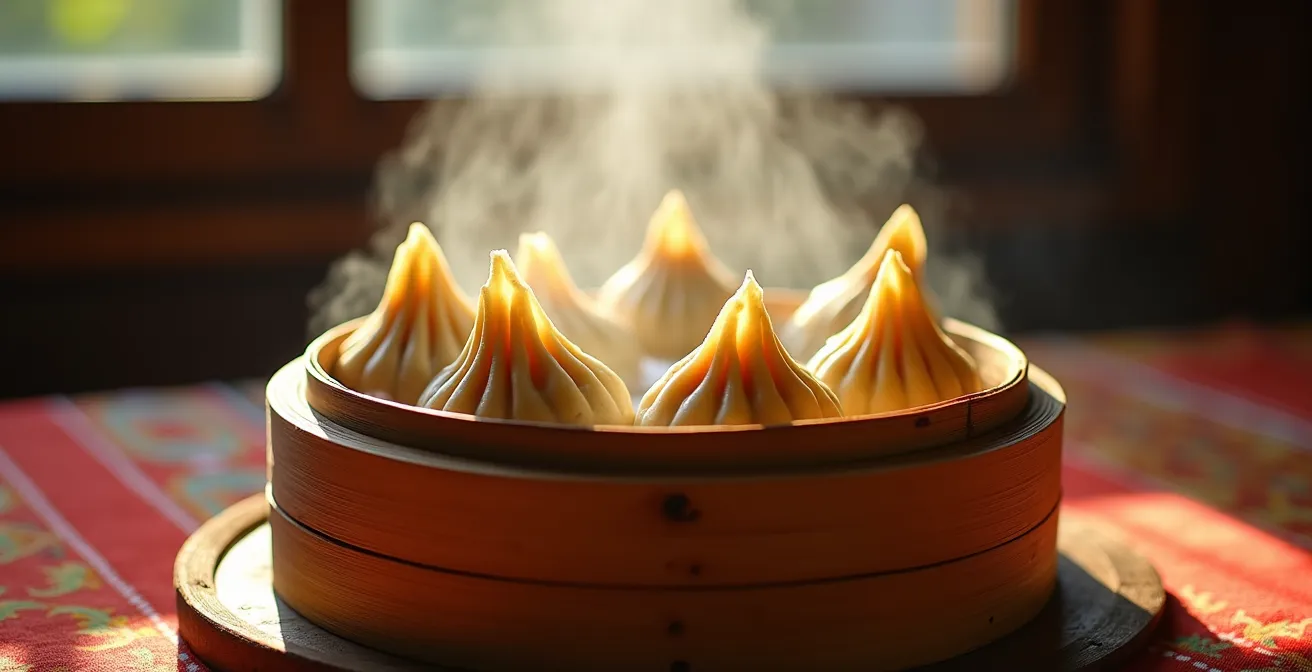
As the case study on Parkdale’s evolution into Little Tibet highlights, momos are a cultural staple shared across Tibetan, Nepalese, and North Indian cuisines. In Parkdale, you’ll find them everywhere, from dedicated momo houses to full-service restaurants. The authenticity litmus test for momos lies in the details. The dough of the wrapper should be thin but resilient, never gummy. The pleats are a sign of craftsmanship—each family and restaurant has its own style. Most importantly, the filling should be juicy and flavourful. A great momo will burst with savoury broth on the first bite.
Case Study: Parkdale’s Evolution into Little Tibet
Momos are steamed dumplings popular in Tibetan, Nepalese, and North Indian cuisines, typically filled with meat, vegetables, or cheese and served with dipping sauce. Toronto’s Parkdale neighbourhood is home to one of the largest Tibetan ex-pat communities outside of Asia, making it the perfect spot for a self-guided momo tour through Little Tibet.
The best way to experience Little Tibet is to be adventurous. Don’t just go to the first place you see. Walk the length of the main strip on Queen Street West, peek into the windows, and look for the spots bustling with locals. Order one plate of steamed beef momos at one spot, then walk a few doors down and try the fried vegetable momos at another. Compare the different styles of chili-sesame dipping sauces. This is culinary archaeology in action: comparing, contrasting, and discovering your personal favourite in a neighbourhood rich with options.
Chinatown vs. Richmond: Where to Find the Best Dim Sum in Greater Vancouver?
While our focus is Toronto, a true Canadian food scout understands that culinary phenomena are rarely isolated. To understand the evolution of dim sum in the GTA—particularly in suburban hubs like Richmond Hill and Markham—it’s incredibly insightful to look at the situation in Greater Vancouver, Canada’s other major hub for Chinese cuisine. There, a fascinating tale of two cities plays out between the historic, tourist-friendly Chinatown in Vancouver proper and the sprawling, hyper-modern suburban city of Richmond.
This comparison offers a powerful lesson in the “downtown vs. suburb” dynamic. Vancouver’s Chinatown offers a nostalgic experience, with some restaurants still using traditional push carts. It’s walkable, accessible, and holds a deep historical significance. However, the culinary cutting edge has long since moved to Richmond. Connected to Vancouver by the Canada Line transit system, Richmond is a majority-Chinese city where the dim sum scene is fiercely competitive. Restaurants there use modern order sheets, feature innovative and seasonal menus, and command higher prices. Reservations are essential, and the quality is often considered the best in North America.
This dynamic mirrors what’s happening in Toronto. While Toronto’s downtown Chinatown on Spadina Avenue remains an important cultural hub, the most exciting and high-quality dim sum is now found in the northern suburbs of Markham and Richmond Hill. As noted by the food blog Global Toronto Eats in its analysis, competition is fierce and diners are unforgiving, meaning any restaurant that survives with long queues is a reliable sign of quality. The lesson for the food scout is clear: for traditional experiences, the old city centres may suffice, but for the highest quality and innovation, you must follow the community to the suburbs.
The choice between a downtown or suburban dim sum experience involves clear trade-offs in style, price, and accessibility, as this comparison of the Vancouver scene illustrates.
| Aspect | Vancouver Chinatown | Richmond |
|---|---|---|
| Style | Traditional push carts, nostalgic | Order sheets, modern service |
| Price Range | $3-5 per dish | $5-12 per dish |
| Accessibility | Walkable, SkyTrain accessible | Canada Line, car recommended |
| Reservation | Walk-ins welcome | Reservations essential |
| Innovation | Classic recipes | Fusion and seasonal menus |
Made in Canada vs. Souvenir Shop Junk: How to Spot Authentic Cultural Crafts?
The same principles used for finding authentic food can be applied to finding authentic cultural crafts. Tourist shops are filled with mass-produced trinkets—”Native-inspired” dreamcatchers made overseas or maple leaf paraphernalia of dubious origin. A true souvenir should be a connection to a place and its people, not a piece of factory-produced junk. Learning to distinguish genuine, locally-made crafts from imitations is a critical skill for a respectful and discerning traveller.
The first step is to manage your expectations, especially regarding price. Authentic Indigenous art, for example, is not cheap. It represents an artist’s skill, time, and cultural heritage. A small, authentic piece will typically start at over $200. If you see something for $20, it’s almost certainly not authentic. For Inuit art, there’s a powerful tool for verification: look for the official Igloo Tag. This tag is a government-backed guarantee that the piece was made by an Inuit artist in Canada. It’s the gold standard of authenticity.
Beyond specific tags, the key is information. A reputable seller of authentic crafts will always be able to provide details about the artist. Ask for an artist information card, which should include their name, their community (e.g., Haida, Cree, Anishinaabe), and a brief artistic background. If the seller can’t provide the artist’s story, be skeptical. Similarly, a “Made in Canada” label should be specific. A label that says “Made in British Columbia” is more trustworthy than a generic one. Avoid anything with vague, legally meaningless terms like “Aboriginal-style” or “Native-inspired”—these are red flags for mass-produced imitations.
Your Action Plan: Auditing for Authentic Finds
- Identify Points of Contact: List all potential purchase points, from gallery shops and markets to online stores and artist studios.
- Collect and Inventory: Examine the items. Look for signatures, artist cards, or official markers like the Igloo Tag. Document the materials used.
- Check for Coherence: Does the story from the seller match the item’s appearance and price? Compare it against known characteristics of the art form (e.g., Haida formline, Inuit sculpture).
- Assess Memorability and Emotion: Does the piece feel unique and handcrafted, or generic and mass-produced? Authentic art has a presence that factory items lack.
- Create an Integration Plan: Prioritize purchasing from galleries that directly support artists or from artists themselves. Plan to invest in one meaningful piece rather than several generic souvenirs.
Key Takeaways
- Toronto’s most authentic food is found in suburban strip malls, not downtown.
- Judge a restaurant by its food and its crowd, not its decor (the “Facade Fallacy”).
- Supporting local businesses in areas like Eglinton West requires strategic planning, like ordering direct and parking off the main street.
How to Respectfully Explore Cultural Enclaves Without Being a “Zoo Tourist”?
The ultimate goal of a food scout isn’t just to eat well; it’s to engage with a community in a way that is enriching for everyone. The greatest risk in exploring cultural enclaves is treating them like a theme park—becoming a “zoo tourist” who consumes and observes from a distance without genuine interaction or respect. Avoiding this requires a conscious shift in mindset, from one of passive consumption to one of active, thoughtful participation. It’s about remembering that you are a guest in someone else’s neighbourhood.
The foundation of respectful exploration is economic. Your money is your most powerful tool. Make a deliberate choice to shop at family-owned businesses, eat at independent restaurants, and buy groceries from local ethnic markets. If you’re considering a tour, seek out one led by a community member who can provide authentic context and ensure the economic benefits stay within the neighbourhood. This is a tangible way to contribute directly to the people who make these enclaves so special. As Howard Tam, founder of Eat More Scarborough Food Tours, advises, the beauty is there if you just take a moment to look.
Get yourself out here and take a food tour. A lot of these places were just regular strip plazas. Like, ‘what’s here?’ But once you take a moment and explore it, you’ll find the beauty that lies beneath.
– Howard Tam, Eat More Scarborough Food Tours founder
Beyond economics, basic etiquette is paramount. Learn to say “hello” and “thank you” in the community’s primary language; this small effort signals respect. When it comes to photography, be mindful. Photographing architecture, food, and storefronts is generally fine, but never photograph people without explicit permission, especially elders or children. If you plan to visit a religious site, like a temple or mosque, dress modestly and be prepared to remove your shoes. The golden rule is to observe first. Watch how people interact, note the local customs, and follow their lead. By doing so, you move from being an outsider looking in to a welcome guest sharing in a rich cultural experience.
Now that you have the tools and the mindset of a suburban food scout, the only thing left is to begin your own exploration. Start with one neighbourhood, try one dish you’ve never heard of, and talk to one shop owner. The real Toronto is out there, waiting to be discovered, one delicious strip mall at a time.
Frequently Asked Questions on Exploring Toronto’s Food Enclaves
Is it appropriate to take photos in cultural neighborhoods?
Yes, but photograph architecture and storefronts, not individuals. Always ask permission before photographing people, especially elders or children in cultural dress.
How can tourists economically support these communities?
Shop at family-owned businesses, eat at local restaurants rather than chains, buy groceries at ethnic markets, and consider taking paid cultural tours led by community members.
What basic etiquette should visitors follow?
Learn a few greetings in the community’s language, dress modestly when visiting religious sites, remove shoes when required, and observe before participating in cultural practices.