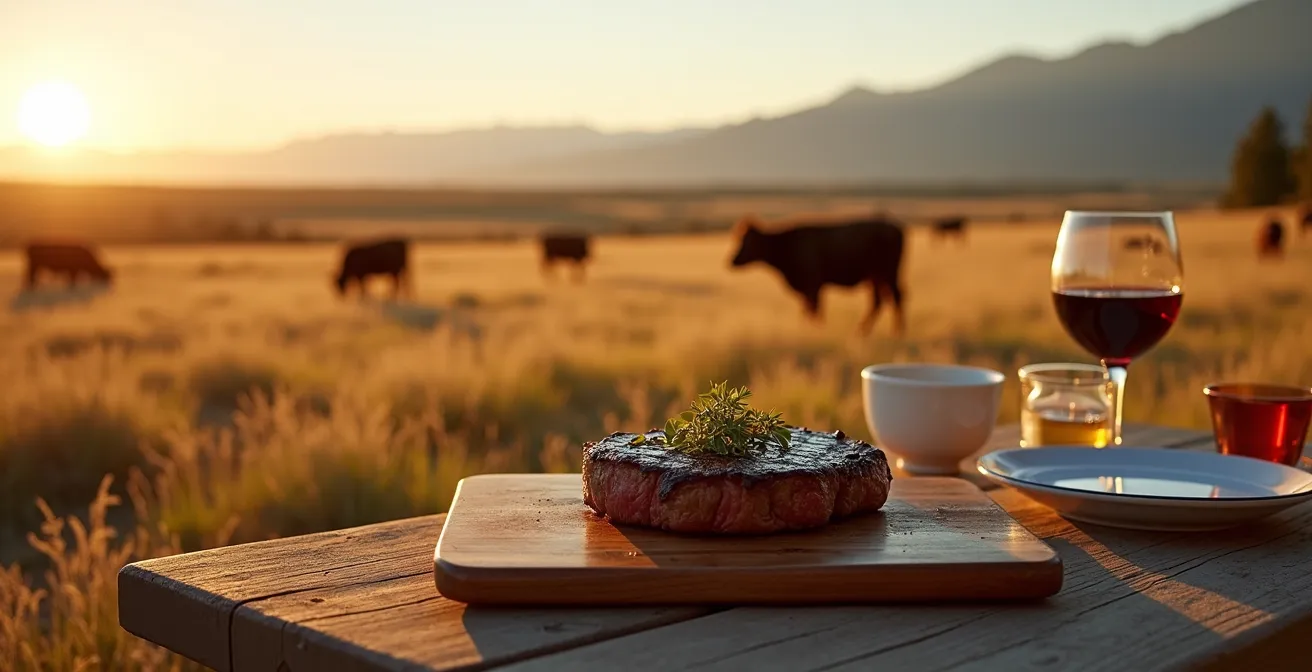
The quest for authentic Alberta beef isn’t about choosing one place, but understanding two philosophies: the refined culinary craft of the steakhouse and the raw agricultural soul of the ranch.
- City steakhouses offer mastery of aging and grading (Canada Prime, AAA), paired with culinary traditions like the Caesar cocktail.
- Ranches provide a true “terroir” experience, with beef raised on the land you visit, often cooked in simple, traditional ways.
Recommendation: Decide if you seek culinary perfection or agricultural connection first, and use this guide to find your ideal beef experience in Alberta.
For any true carnivore traveling through Alberta, the question isn’t *if* you’ll eat beef, but *where*. The province’s reputation is built on its world-class cattle, and the choice seems to split between two iconic paths: the sophisticated, dimly lit steakhouses of Calgary or the rustic, open-fire cookouts on a sprawling ranch. Standard advice often presents lists of top restaurants or touts the vague promise of an “authentic” ranch visit. This creates a classic carnivore’s dilemma, pitting one experience against the other.
But what if this is the wrong way to think about it? The true journey into the heart of Alberta beef isn’t a choice between a steakhouse and a ranch. It’s about understanding the two distinct philosophies of authenticity they represent. One is a story of culinary craft—the art of grading, aging, and perfect preparation that elevates beef to its peak potential. The other is a story of agricultural soul—the direct connection to the land, the animal, and the multi-generational families who raise them. A steakhouse serves you the pinnacle of the product; a ranch lets you taste its origin.
This guide moves beyond the simple “steakhouse vs. ranch” debate. We will deconstruct what makes each experience uniquely Albertan, from the science behind beef grades and the history of the Caesar cocktail to the unwritten rules of dressing for the Stampede and the profound difference between a dude ranch dinner and a working ranch BBQ. By the end, you won’t just know where to eat; you’ll know *why* you’re eating it, allowing you to curate the ultimate, full-spectrum Alberta beef experience.
To navigate this journey, we’ll explore the essential traditions, tastes, and choices that define Alberta’s beef culture. This table of contents will guide you through the key decisions and discoveries ahead.
Contents: Your Guide to the Alberta Beef Experience
- AAA vs. Prime: What Do Canadian Beef Grades Actually Mean for Taste?
- The Bull Testicle Dare: How are Prairie Oysters Actually Prepared and Eaten?
- The Pancake Breakfast: How to Find Free Stampede Breakfasts in July?
- The Bloody Caesar: Why Clamato Juice is the Mandatory Drink with Alberta Beef?
- Ranch Direct: How to Buy Frozen Steaks from a Local Producer?
- Calgary Stampede: How to Dress Western Without Looking Like a Costume?
- The Beef on a Bun: How to Tackle Alberta’s Messy Rodeo Classic?
- Dude Ranch vs. Working Ranch: Which Alberta Horse Experience fits Your Skills?
AAA vs. Prime: What Do Canadian Beef Grades Actually Mean for Taste?
Before you even step into a steakhouse, you must understand the language of quality: the Canadian beef grading system. This isn’t just marketing; it’s a rigorous assessment of marbling—the intramuscular fat that dictates tenderness, juiciness, and flavour. Unlike the common perception that all Alberta beef is equal, the grade makes a world of difference. The system is a core pillar of the region’s culinary craft, ensuring a consistent and predictable eating experience.
The top tier is Canada Prime. This is the holy grail for steak lovers, defined by “slightly abundant” marbling that melts during cooking, basting the meat from within. However, its rarity is part of its allure. A recent report reveals that only 4.8% of all graded beef from fed slaughter cattle in Canada achieved Prime grade in 2023. This makes finding it a special occasion. The vast majority of high-quality beef you’ll encounter is Canada AAA, representing 51% of production. It offers a fantastic balance of flavour and tenderness with “small” marbling, making it the reliable star of most steakhouses. Grades AA and A have progressively less marbling and are better suited for slow-cooking methods.
This table, based on data from the Canadian Beef Grading Agency, breaks down the key differences between the grades, providing a clear comparison to the familiar USDA system. It shows a clear hierarchy where more marbling directly translates to a more luxurious steak.
| Canadian Grade | Marbling Level | % of Canadian Beef (2023) | USDA Equivalent | Tenderness | Juiciness | Flavor Intensity |
|---|---|---|---|---|---|---|
| Canada Prime | Slightly Abundant | 4.8% | USDA Prime | Exceptional | Very High | Robust |
| Canada AAA | Small | 51% | USDA Choice | High | High | Full |
| Canada AA | Slight | 45% | USDA Select | Good | Moderate | Mild |
| Canada A | Trace | 3% | USDA Standard | Fair | Low | Light |
Your Action Plan: Questions to Ask for Exceptional Alberta Beef
- Breed Identity: Ask “What breed is this beef from?” Look for mentions of Angus, Hereford, or unique local heritage breeds.
- Aging Process: Inquire, “Is this dry-aged? If so, for how long?” A 21-38 day range is considered optimal for intensifying flavour.
- Terroir Specifics: Ask “Which specific ranch or region did this come from?” Foothills beef has a different flavour profile (terroir) than prairie-raised beef.
- Finishing Method: Clarify, “Is this grass-finished or grain-finished?” This profoundly affects marbling and the final taste.
- Processing Date: For non-aged cuts, ask “When was this processed?” Freshness is a key factor in quality.
The Bull Testicle Dare: How are Prairie Oysters Actually Prepared and Eaten?
While the steakhouse celebrates the refined cuts, the ranching world honours the entire animal. Nothing embodies this agricultural soul more than “Prairie Oysters.” Far from being seafood, this iconic Alberta delicacy is bull testicles, a dish born from the practical, no-waste traditions of spring branding season on the prairies. Once a necessity for ranchers, they have evolved into a celebrated, and often daring, part of local cuisine.
The transformation from ranch necessity to culinary dare is a fascinating story. At events like the annual Testicle Festival in Rolling Hills, what was once a simple campfire snack is now a featured attraction. In Calgary, pubs like Buzzards and Bottlescrew Bill’s have made them a staple, especially during the Stampede, introducing thousands of visitors to this unique piece of Alberta’s food heritage. The preparation is key to making them palatable, even delicious, for the uninitiated.
There isn’t one single way to prepare Prairie Oysters; the method often depends on the setting. The most common preparations transform the texture and flavour, making them surprisingly approachable:
- Classic Deep-Fry: This is the most popular method for a reason. The testicles are sliced thin, breaded in seasoned flour, and deep-fried until crispy and golden. Served with a tangy cocktail sauce, the result is reminiscent of a crispy calamari or a chicken nugget, making it the perfect entry point for first-timers.
- Pan-Seared Gourmet: A more refined approach found in some restaurants involves dusting the slices with steak spice and searing them in a hot pan with butter, garlic, and herbs. A splash of brandy to deglaze the pan creates a rich sauce, elevating the dish from a novelty to a genuine appetizer.
- Traditional Ranch Style: The most authentic method is also the simplest. During branding, the testicles are cooked whole directly on the embers of an open fire, seasoned only with salt and pepper. This method is less about presentation and more about a direct, unadorned connection to the ranching life.
The Pancake Breakfast: How to Find Free Stampede Breakfasts in July?
In Alberta, beef isn’t just for dinner. During the Calgary Stampede in July, the entire city embraces a tradition where beef sausage and pancakes become the quintessential breakfast. The “Stampede Breakfast” is a massive, city-wide phenomenon of community hospitality, with dozens of free events hosted by businesses, community groups, and politicians. The scale is staggering; more than 100 different pancake breakfasts are hosted during the Stampede, with some of the largest, like the one at Chinook Centre, serving up to 60,000 people in a single morning.
These events are more than just a free meal; they are a cornerstone of Calgary’s community spirit, known as “white-hatting.” For a visitor, they offer an unparalleled opportunity to experience local culture firsthand. While pancakes are the star, the best breakfasts are distinguished by what’s served alongside them. True Alberta breakfasts include beef, either in the form of savoury sausages or even shredded beef on a bun, connecting the morning ritual back to the province’s cattle heritage.
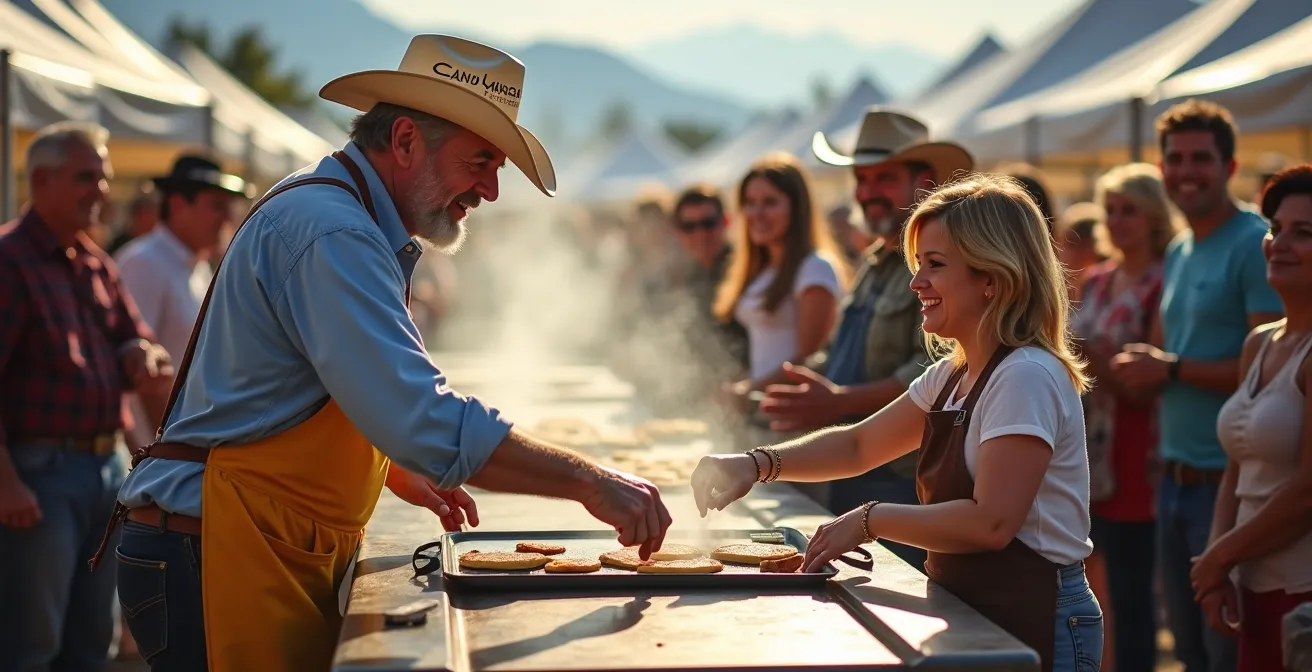
Finding the best breakfast requires a bit of insider knowledge. With so many options, you need a strategy to navigate the crowds and find the most authentic experiences. Here’s how to plan your pancake pilgrimage.
Your Guide: Finding the Best Stampede Breakfasts
- Map Your Meals: Use the calendar on stampedebreakfast.ca to see a daily list of all public breakfast events, times, and locations.
- Hunt for the Beef: Target breakfasts hosted by agricultural societies or ranching communities. These are the most likely to feature high-quality beef sausage or even beef-on-a-bun.
- Visit the Epicenter: Arrive early at Fluor Rope Square (228 8 Ave SW) for the daily chuckwagon breakfast from 8:30-10:30 AM, which famously includes bacon pancakes.
- Go Local for Shorter Lines: Seek out smaller community events, like the one in Bowness (7930 Bowness Rd NW), for a more local atmosphere and less waiting time.
- Think Beyond July: Check the schedules for the Ponoka Stampede and Strathmore Stampede, as they also host beef-and-pancake breakfasts outside of Calgary’s main event.
The Bloody Caesar: Why Clamato Juice is the Mandatory Drink with Alberta Beef?
Every great culinary region has its signature drink, and in Alberta, it’s the Bloody Caesar. This savoury, spicy cocktail is not just a local favourite; it’s an indispensable part of the steakhouse experience, deeply woven into the fabric of Calgary’s identity. Its origin is a point of local pride, a perfect example of the city’s unique contribution to culinary craft. As the Calgary Stampede Historical Archives note in their recipe collection, “The Caesar was invented in 1969 by Walter Chell at the Calgary Inn (now the Westin) and has become an inseparable part of the city’s identity, especially during the Stampede.”
But why is it the perfect partner for a rich Alberta steak? The answer lies in the science of flavour. The combination of tomato and clam broth in Clamato juice delivers a powerful punch of umami—the fifth taste, known for its savoury, mouth-watering quality. This, along with the salt from the rim and the heat from the hot sauce, creates a complex flavour profile that masterfully cuts through the rich fat of a marbled ribeye or New York strip. It cleanses the palate between bites more effectively than many red wines, preparing you for the next flavourful mouthful.
This perfect pairing has led Alberta steakhouses to elevate the Caesar from a simple cocktail to an appetizer in its own right. The “fully loaded” or “meal-in-a-glass” Caesar has become a competitive art form. These elaborate creations are often served as a prelude to the main event, garnished with an array of extravagant items that showcase the region’s best. It’s common to see Caesars adorned with celery stalks, spicy green beans, and lime wedges, but the truly ambitious versions feature skewers of giant prawns, mini-burgers, or, most fittingly, strips of Alberta beef jerky, making the drink a true celebration of local flavours.
Ranch Direct: How to Buy Frozen Steaks from a Local Producer?
For those who seek the deepest connection to their food, the ultimate expression of agricultural soul is buying beef directly from the source. Bypassing the restaurant and the grocery store to purchase from a local rancher offers a completely different kind of value. It’s an experience built on transparency, terroir, and the story behind the steak. This is where you can truly taste the land, as the flavour of the beef is directly influenced by the grasses and environment where the cattle were raised.
Finding these producers has become easier than ever. Many Alberta ranches now sell directly to consumers through farm-gate sales, local farmers’ markets, or online ordering systems for delivery or pickup. This model allows you to ask the questions that truly matter. You can learn about the specific breed of cattle, whether they were grass-finished or grain-finished, and the family’s history on the land. This is information you’ll never get from a supermarket label. The beef is often sold frozen in vacuum-sealed packages, which preserves its freshness and quality perfectly until you are ready to cook it.
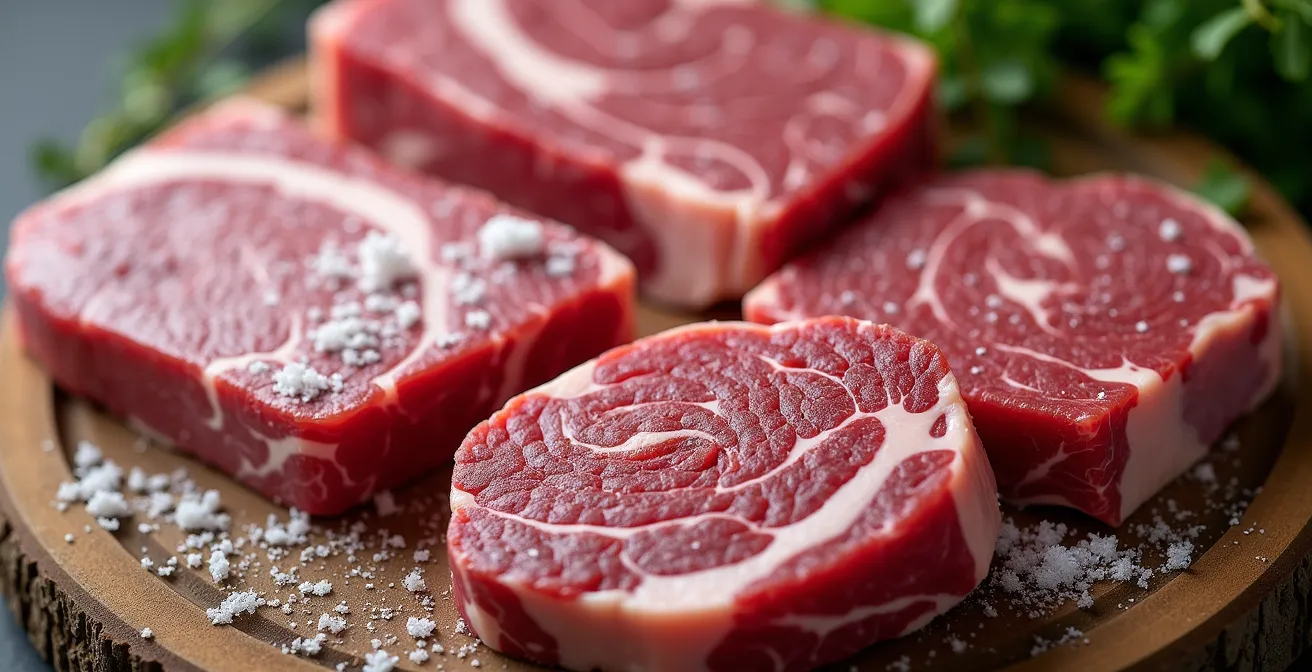
When you buy direct, you are not just purchasing a product; you are investing in a sustainable local food system and connecting with the people who steward the land. Many ranches offer mixed boxes, allowing you to sample a variety of cuts, from premium steaks to ground beef and roasts. This is an excellent way to fill your freezer with high-quality, traceable beef that carries a story. Look for producers at markets like the Calgary Farmers’ Market or search online for “Alberta ranch direct beef” to find farms in the region you are visiting. This direct-to-consumer relationship is the purest form of farm-to-table dining.
Calgary Stampede: How to Dress Western Without Looking Like a Costume?
Whether you’re heading to a high-end steakhouse or a dusty rodeo, looking the part is a sign of respect for Alberta’s Western culture. But there’s a fine line between authentic Western style and looking like you’re wearing a cheap Halloween costume. The key is to invest in quality, timeless pieces and to understand the unwritten dress code. The goal is to assemble a look that is both functional and stylish, rooted in the heritage of the region.
The foundation of any good Western outfit is the “Calgary Tuxedo”: a simple, classic combination of a denim jacket and quality blue jeans. This is a foolproof starting point. From there, the secret is to invest in one or two signature items rather than trying to wear every Western accessory at once. This is where legendary Calgary institutions come into play. A visit to a store like Lammle’s Western Wear offers an exclusive shopping experience for authentic gear, ensuring you get pieces that are worn by actual ranchers, not just tourists. It’s about channeling your inner cowboy with quality, not caricature.
Building an authentic look is a strategic investment. By focusing on key pieces, you can create an outfit that feels genuine and will last a lifetime. This approach ensures you fit in seamlessly, whether you’re at the Stampede grounds or a sophisticated urban eatery.
Your Action Plan: The Calgary Tuxedo Investment Strategy
- Build the Foundation: Start with quality blue jeans and a denim jacket. This is the versatile and always-appropriate ‘Calgary Tuxedo.’
- Make One-Piece Investment: Choose either a genuine Smithbilt hat or a pair of handmade boots from the Alberta Boot Company. Treat this as a lifetime purchase.
- Select a Real Belt Buckle: Buy an authentic buckle from a store like Lammle’s. Avoid tourist souvenirs; a buckle is a statement of identity for many Albertans.
- Follow the Day vs. Night Code: For the dusty rodeo grounds, prioritize comfort and sun protection. For an evening steakhouse dinner, opt for darker jeans, a pressed Western shirt, and polished boots.
- Know What to Avoid: Steer clear of cheap costume-shop outfits, excessive fringe, and the temptation to wear every Western item you own all at once.
The Beef on a Bun: How to Tackle Alberta’s Messy Rodeo Classic?
While the steak is king, Alberta’s more casual and gloriously messy contribution to beef culture is the iconic “Beef on a Bun.” This is the province’s answer to the handheld feast, a staple at every rodeo, hockey game, and Stampede event. It’s a dish that ranges from the relatively tidy to the delightfully disastrous, requiring a strategic approach to eating to avoid the dreaded “chin-drip.”
You can find this classic at food trucks in the Calgary Farmers’ Market, at rural rodeo concessions, and all over the Stampede grounds. The simplest version consists of thinly-shaved roast beef piled high on a soft white bun, served with a side of au jus for dipping. The true test of your eating skills, however, is the “Hot Beef Sandwich” variation, where the entire creation is drenched in rich, dark gravy. This version often requires a knife and fork, or at the very least, a specific eating stance to manage the delicious mess.
The secret to a great Beef on a Bun is the bun itself. It must be soft and absorbent, designed to soak up the juices and gravy without disintegrating immediately. A crusty baguette would be a catastrophic failure in this context. To help you navigate this culinary challenge, here is a scale to prepare you for what’s to come.
Checklist: The Chin-Drip Scale for Eating Alberta Beef Sandwiches
- Level 1 (Tidy): Thinly-shaved roast beef with minimal au jus. You can eat this standing up, but keep a napkin at the ready.
- Level 2 (Moderate): A regular beef on a soft bun with a generous dollop of horseradish. Use a two-handed grip and lean forward slightly.
- Level 3 (Messy): The Hot Beef Sandwich, smothered in gravy. You must sit down for this. Tuck a napkin into your collar and embrace the mess.
- Pro Tip: The soft bun is your greatest tool for soaking up juices. Never substitute it with crusty bread.
- Best Locations: Look for them at Calgary Farmers’ Market stalls, rural rodeo concessions, and Stampede grounds food trucks for the most authentic versions.
Key Takeaways
- The Alberta beef experience is a choice between two forms of authenticity: the ‘culinary craft’ of steakhouses and the ‘agricultural soul’ of ranches.
- Understanding Canadian beef grades (Prime, AAA) and local traditions (the Caesar cocktail) is key to appreciating the steakhouse experience.
- A true ranch experience connects you to the ‘terroir’ of the beef, offering a taste of the land and a connection to the producer.
Dude Ranch vs. Working Ranch: Which Alberta Horse Experience fits Your Skills?
The ultimate immersion into Alberta’s beef culture is a stay at a ranch. However, “ranch” can mean two very different things: a Dude Ranch or a Working Ranch. The choice between them comes down to what you seek: comfort and curated activities, or a raw, authentic immersion into the ranching life. This distinction is especially clear when it comes to the dining experience, perfectly bookending the “culinary craft vs. agricultural soul” dilemma.
A Dude Ranch is geared towards hospitality. The dining is often a highlight, featuring chef-prepared meals, private tables, and even wine lists. While the food is high-quality, the beef may not be from the ranch itself. It’s a restaurant-style experience in a rustic setting. A Working Ranch, on the other hand, offers a taste of real life. Meals are often communal, family-style BBQs eaten alongside the ranchers who work the land. The food is hearty and authentic, and most importantly, you are often eating beef that was raised right there. It is the purest form of farm-to-table.
Do you serve your own beef? This is the most important question to ask – eating beef raised on the land you’re riding is the ultimate authentic experience.
– Tyler and Rachel Herbert, Trail’s End Beef Ranch, Fourth-Generation Alberta Ranchers
This comparative table highlights the profound differences in the dining experience, helping you decide which path aligns with your travel goals. Are you looking for a gourmet meal in the countryside, or do you want to share a meal with the family that produced it?
| Aspect | Dude Ranch | Working Ranch |
|---|---|---|
| Dining Style | Chef-prepared, private tables, wine lists | Communal family-style BBQs with ranchers |
| Beef Source | Premium cuts, often imported | Ranch-raised beef, true farm-to-table |
| Meal Experience | Restaurant-style service, gourmet presentations | Authentic ranch meals, stories from multi-generational families |
| Special Experiences | Pancake breakfast trail rides, gourmet packed lunches | Campfire cowboy coffee, beef stew cookouts under stars |
| Social Dynamic | Guest-focused, more privacy | Integration with ranch family, cultural immersion |
Ultimately, the perfect Alberta beef journey may involve both. Start with the culinary craft of a Calgary steakhouse to set a benchmark for quality, then venture into the agricultural soul of a working ranch to connect with its origins. By understanding both sides, you transform from a simple tourist into a true beef connoisseur.