Transportation & Road Trips
Canada’s vast geography presents both an irresistible invitation and a formidable challenge for road travelers. With the second-largest land mass on the planet, distances between destinations can span thousands of kilometers, crossing multiple climate zones, terrain types, and cultural regions. A road trip here isn’t simply about getting from point A to point B—it’s an immersive journey through boreal forests, prairie expanses, mountain ranges, and coastal highways that reveal the country’s remarkable diversity.
Whether you’re contemplating a coast-to-coast expedition along the Trans-Canada Highway, planning a scenic drive through the Rockies, or arranging ferry passage to Atlantic islands, understanding the unique logistics of Canadian road travel is essential. This comprehensive resource introduces the fundamental aspects of transportation and road trips across Canada, from budgeting fuel costs and managing fatigue on remote stretches to navigating provincial regulations and avoiding wildlife on highways. Consider this your foundation for confident journey planning in a country where proper preparation can mean the difference between adventure and misadventure.
Planning Epic Cross-Country Journeys
The Trans-Canada Highway stretches approximately 7,800 kilometers from Victoria, British Columbia, to St. John’s, Newfoundland, making it one of the world’s longest national routes. Yet this iconic ribbon of asphalt represents just one of countless options for traversing the country. Understanding which route aligns with your interests, timeline, and comfort level forms the cornerstone of successful trip planning.
Choosing Your Route and Season
Timing profoundly impacts your experience. Summer months offer the most reliable weather and full accessibility to mountain passes, but also bring peak crowds at national parks and higher accommodation costs. Shoulder seasons—late spring and early fall—provide a compelling middle ground: fewer tourists, moderate temperatures, and spectacular foliage in eastern provinces. However, traveling outside peak season requires checking road conditions, as some mountain passes close with the first significant snowfall, sometimes as early as October.
Winter road trips demand specialized preparation. While major highways receive regular maintenance, remote stretches can become treacherous. Consider that daylight hours shrink dramatically in northern latitudes during winter months—a critical factor when planning daily driving distances.
Understanding Canadian Distances
Newcomers to Canada often underestimate travel times. The distance from Toronto to Vancouver exceeds 4,300 kilometers—roughly equivalent to driving from Paris to Tehran. Even within provinces, distances surprise: crossing Ontario from west to east requires more than 2,000 kilometers of driving. Build realistic itineraries that account for these vast scales, allowing time for rest stops, weather delays, and spontaneous detours to compelling roadside attractions.
Budgeting for the Open Road
Long-distance Canadian road trips involve several predictable cost categories that benefit from advance planning. Understanding these expenses helps prevent budget overruns and allows for more enjoyable spontaneity along the route.
Fuel Strategy and Costs
Fuel represents one of your largest expenses, with prices varying significantly between provinces and communities. Remote areas typically charge premium rates—sometimes 30-40% higher than urban centers—due to transportation costs. Applications and websites tracking fuel prices across Canada help identify the most economical filling stations along your route.
Calculate your fuel budget using your vehicle’s consumption rate and planned distance. For a coast-to-coast journey covering 8,000 kilometers in a vehicle averaging 9 liters per 100 kilometers, you’ll consume approximately 720 liters. At average prices, this represents a substantial investment, making fuel-efficient route planning worthwhile.
Accommodation Optimization
Lodging costs accumulate quickly on multi-week journeys. A strategic mix of accommodation types balances comfort and economy: campgrounds in national and provincial parks offer affordable options with spectacular settings, while budget motels in smaller communities typically cost less than urban hotels. Booking platforms often provide better rates than walk-in prices, though flexibility in timing can unlock last-minute deals in off-peak areas.
Park Passes and Entry Fees
If your route traverses multiple national parks, the Parks Canada Discovery Pass provides unlimited entry to more than 80 protected sites for a year. This investment pays for itself after visiting several parks, particularly when traveling as a family or group. Provincial parks operate separate fee structures, so research costs for your specific route.
Safety on Remote Highways
Canada’s extensive road network includes lengthy stretches through sparsely populated regions where assistance may be hours away. Understanding and preparing for safety challenges specific to remote Canadian highways proves essential for confident travel.
Wildlife Collision Prevention
Moose collisions represent a serious hazard, particularly in Atlantic provinces, northern Ontario, and British Columbia. An adult moose weighing 500 kilograms positioned on long legs creates a dangerous scenario: upon impact, the animal’s body often crashes through the windshield rather than rolling over the hood. Dawn and dusk present the highest risk periods when these animals are most active near roadways.
Reduce your risk through vigilant attention to warning signs, reduced speeds in designated wildlife zones, and heightened awareness during low-light conditions. If you spot one moose near the road, slow considerably—these animals rarely travel alone, and others may follow.
Managing Fatigue on Long Stretches
The Prairie provinces feature particularly challenging driving conditions: straight, monotonous highways extending to the horizon create a hypnotic effect that dulls alertness. Highway hypnosis occurs when environmental monotony reduces your brain’s active processing, increasing reaction times and accident risk.
Combat fatigue through scheduled breaks every two hours, driver rotation when possible, and strategic timing of your most demanding driving segments. Identify critical rest points before departure—in remote areas, services may be separated by 200 kilometers or more. Parks Canada rest areas and provincial highway pull-offs provide safe stopping locations.
Distracted Driving Regulations
Provincial laws governing mobile device use while driving carry substantial penalties. Most provinces prohibit hand-held device operation entirely, with fines ranging from several hundred dollars to over $1,000 for repeat offenses, plus demerit points. These regulations extend beyond phones to include GPS devices, tablets, and even eating or drinking in some jurisdictions.
Navigating Canada’s Challenging Terrain
From sea-level coastal routes to mountain passes exceeding 1,600 meters in elevation, Canadian highways traverse dramatically varied terrain that demands specific preparation and awareness.
Mountain Pass Preparation
British Columbia and Alberta routes through the Rocky Mountains include spectacular but demanding passes. Rogers Pass, Kicking Horse Pass, and the Coquihalla Highway feature steep grades, sharp curves, and rapidly changing weather conditions. Even in summer, temperatures at elevation can drop unexpectedly, and afternoon thunderstorms develop quickly.
Prepare your vehicle with a mechanical inspection before mountain driving. Brakes receive particular stress on long descents—downshift to lower gears rather than riding your brakes constantly. Winter mountain driving requires dedicated winter tires; all-season tires prove inadequate on icy mountain grades, and most provinces legally mandate proper winter tires during colder months.
Remote Area Considerations
Certain routes traverse regions where cellular coverage disappears for extended distances. Northern Ontario’s Trans-Canada Highway, Labrador’s coastal routes, and much of the Yukon and Northwest Territories fall into “cell-dead zones” spanning hundreds of kilometers. These connectivity gaps require advance planning: download offline maps, inform someone of your itinerary, and carry physical maps as backup.
Rest stops in remote regions may offer only basic facilities—or no facilities at all for long stretches. Carry emergency supplies including water, non-perishable food, blankets, and a first-aid kit. In winter, this kit expands to include candles, matches, extra warm clothing, and a snow shovel.
Ferry Routes and Island Access
Canada’s extensive coastline and island communities make ferry travel an integral component of many road trips, particularly when visiting Newfoundland, British Columbia’s coastal regions, or Prince Edward Island.
Newfoundland and “The Rock”
Reaching Newfoundland requires either flying or taking the Marine Atlantic ferry from Nova Scotia. Two route options exist: the shorter crossing from North Sydney to Port aux Basques (6-8 hours) or the longer journey to Argentia (16 hours). Booking several months in advance proves essential during peak summer season, as vehicle capacity fills quickly. These crossings operate year-round but face occasional cancellations due to severe weather, particularly during fall and winter Atlantic storms.
Budget appropriately—ferry costs for a vehicle and passengers represent a significant expense, but the alternative of flying and renting a vehicle on the island often costs more while providing less flexibility.
British Columbia Coastal Ferries
BC Ferries operates an extensive network connecting Vancouver Island, the Gulf Islands, and coastal communities. The Inside Passage route to Prince Rupert offers a spectacular alternative to inland highways, transforming a driving day into a scenic cruise through protected waterways. Reservations are strongly recommended for popular routes and mandatory for some longer journeys.
Understanding sailing schedules and seasonal variations prevents frustration. Some routes operate daily with multiple departures, while others run only a few times weekly. Missing your booked sailing may mean waiting hours or even a full day for the next available space.
Essential Road Trip Logistics
Beyond route planning and major expenses, numerous practical considerations contribute to smooth travels across Canadian highways.
Mechanical Preparedness
A breakdown in a major city means inconvenience; a breakdown 300 kilometers from the nearest service station creates a genuine emergency. Before departure, have a qualified mechanic inspect your vehicle, paying particular attention to tires, brakes, fluids, and belts. Carry a spare tire in good condition with the necessary tools for changing it—surprisingly, many modern vehicles include only tire inflation kits inadequate for serious punctures.
Roadside assistance membership through CAA (Canadian Automobile Association) or similar organizations provides peace of mind, particularly for remote travel. Understand your coverage limits: some basic plans restrict towing distances, potentially leaving you with substantial bills if you break down far from repair facilities.
Provincial Regulation Variations
Speed limits, traffic laws, and insurance requirements vary between provinces. While the Trans-Canada Highway maintains 100 km/h limits through most provinces, some sections reduce to 90 km/h, and construction zones may drop to 60 km/h with doubled fines for violations. Photo radar and speed cameras operate in several provinces, issuing tickets to registered vehicle owners weeks after violations.
If crossing international borders into the United States during your trip, ensure your insurance provides adequate coverage. Some Canadian policies include automatic U.S. coverage, while others require additional riders.
Healthy Eating on Extended Drives
The temptation of fast food at highway exits becomes overwhelming during long driving days, but maintaining nutritional balance helps sustain energy and alertness. Pack a cooler with fresh fruits, vegetables, cheese, and other healthy snacks. Many grocery stores offer prepared foods that provide better nutrition and value than restaurant meals. This approach also proves essential in remote regions where dining options may be limited or non-existent for hundreds of kilometers.
Canadian road trips offer unparalleled opportunities to experience the country’s geographic and cultural diversity at your own pace. Whether you’re drawn to the challenge of crossing the entire nation, exploring a specific region’s scenic highways, or reaching remote island destinations, thorough planning transforms potential obstacles into manageable elements of the adventure. The practical knowledge of budgeting strategies, safety protocols, terrain challenges, ferry logistics, and daily travel considerations outlined here provides the foundation for confident journey planning. From here, dive deeper into specific aspects that align with your travel goals—each element rewards careful preparation with smoother travels and richer experiences along Canada’s remarkable roads.

How to Decide Between the Ferry and Flying to Newfoundland?
The choice to fly or take the ferry to Newfoundland isn’t about the journey itself, but about guaranteeing your mobility once you arrive. The island’s severe rental car shortage means…
Read more
How to Calculate the Real Cost of a 2-Week Road Trip in Canada?
A successful Canadian road trip budget isn’t an estimate; it’s a financial audit of the hidden variables that drive up the real cost. Cost variance between provinces is a major…
Read more
A Pro Driver’s Guide to Canada’s Toughest Roads: From the Icefields Parkway to the Cabot Trail
Driving Canada’s epic roads is an operational challenge that demands a professional mindset, not a casual tour. The legal minimum for equipment, like tires, is often dangerously insufficient for actual…
Read more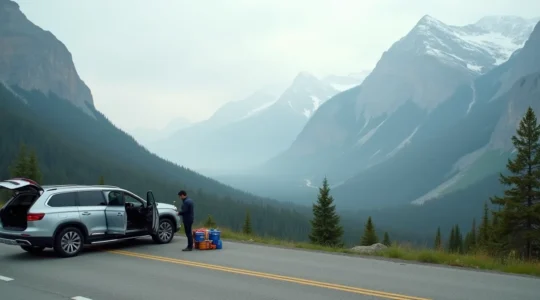
How to Prepare Your Vehicle for the 7,800 km Trans-Canada Highway Crossing?
Crossing Canada isn’t about having the perfect vehicle; it’s about mastering the logistical challenges that standard travel guides miss. Fuel costs aren’t uniform; they’re a strategic game of provincial tax…
Read more