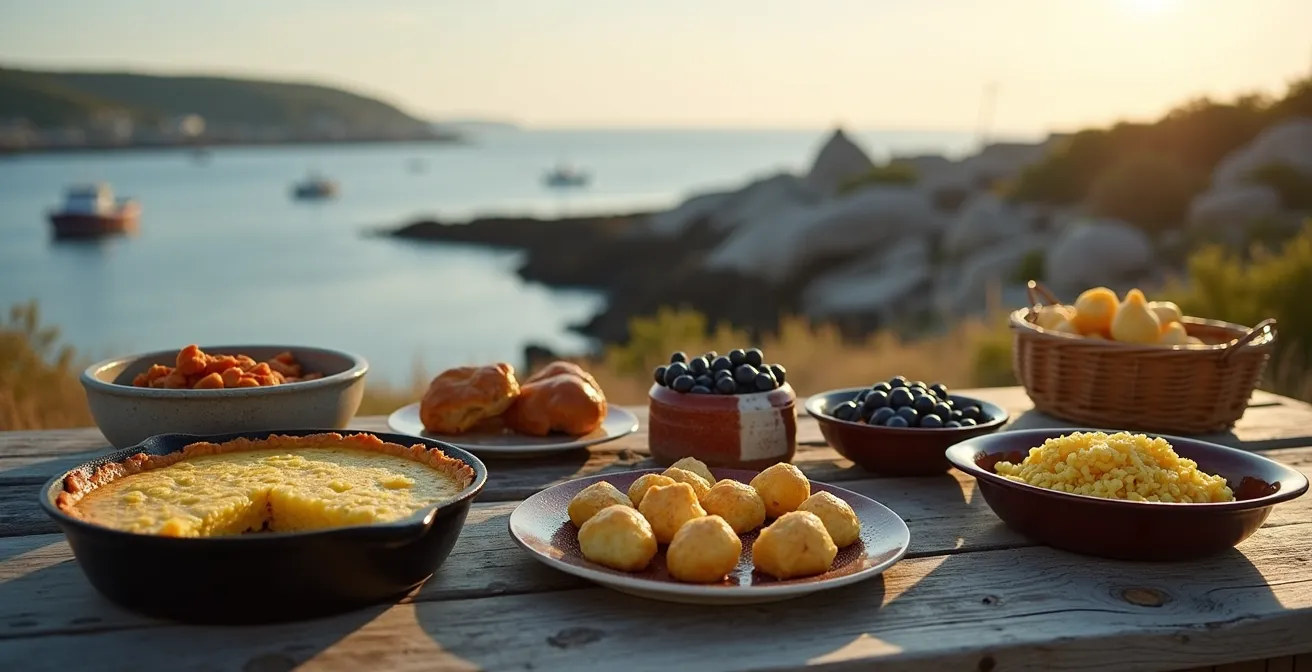
Authentic Acadian cuisine is an edible archive of history, where each dish tells a story of resilience, Indigenous collaboration, and survival following the Great Upheaval.
- The most genuine culinary experiences are often found in community settings like church hall suppers, not commercial restaurants.
- Key dishes like Poutine Râpée and Rappie Pie are culturally distinct from their more famous Québécois or Halifax namesakes and are central to Acadian identity.
Recommendation: To find the true taste of Acadia, look beyond the seafood, seek out the history behind the food, and engage with the communities that have preserved these traditions for centuries.
For many travellers, the taste of Canada’s Maritimes is a fresh lobster roll enjoyed by a windswept coast. While the region’s seafood is undeniably world-class, this popular image only scratches the surface of a much deeper, more complex culinary story. Most travel guides point you toward bustling wharves and tourist-friendly restaurants, but the true heart of Maritime food culture—Acadian cuisine—beats in quieter, more historic places. This is a food tradition born not of abundance, but of profound loss and remarkable ingenuity.
To truly understand Acadian food, you must see it as an edible archive. Each recipe is a testament to the resilience of a people who survived the *Grand Dérangement*—the 1755 British expulsion that scattered them across the globe. Upon their return, they rebuilt their culture with what little they had, creating a cuisine of survival from potatoes, salted pork, and foraged goods. This culinary tradition was also fundamentally shaped by the knowledge shared by the Mi’kmaq and Maliseet peoples, who introduced the Acadians to the region’s native pantry, from fiddleheads to maple syrup.
This guide moves beyond the wharf to explore this rich cultural terroir. We will decode the history baked into iconic dishes, differentiate authentic traditions from commercial imitations, and show you where to find the experiences that offer a genuine taste of Acadian identity. It’s a journey into a cuisine where every bite tells a story of a people who refused to be erased.
To guide you on this culinary exploration, this article deciphers the most iconic dishes and experiences of Acadian culture. Below is a summary of the key topics we will uncover, from the polarizing texture of Rappie Pie to the distinct heritage of Acadian poutine.
Summary: A Guide to Authentic Acadian Cuisine
- Rappie Pie: Why You Might Hate the Texture but Love the History
- Lobster Suppers in PEI vs. Church Halls: Which Offers a More Authentic Experience?
- Wild Blueberries: Why Are They Everywhere in Maritime Desserts in August?
- Halifax Donair: How to Eat the Official Food of Halifax Without Making a Mess?
- Craft Cider or Tidal Bay Wine: What Pairs Best with Atlantic Scallops?
- Poutine Variations: When Does Innovation Become Cultural Appropriation?
- The Sweet Water Origin: How Indigenous Peoples Taught Settlers to Make Maple Syrup?
- How to Buy Lobster Directly from the Wharf in Nova Scotia?
Rappie Pie: Why You Might Hate the Texture but Love the History
The first encounter with Rappie Pie, or *pâté à la râpure*, can be bewildering. It’s a dense, gelatinous casserole of grated potatoes and chicken or pork, baked to a golden-brown crisp on top. Its unique, somewhat gummy texture is a far cry from a fluffy shepherd’s pie, and for many, it’s an acquired taste. But to dismiss it on texture alone is to miss the entire point. Rappie Pie is perhaps the ultimate expression of the Acadian cuisine of resilience. As food historians at Saltscapes Magazine note, the traditional method involves finely grating potatoes, extracting all the starchy liquid by squeezing them through a cheesecloth, and then rehydrating the pulp with hot chicken broth before baking.
This laborious process was born from necessity. After the *Grand Dérangement*, returning Acadians had to make the most of humble, durable ingredients like the potato. This technique allowed them to transform a simple tuber into a hearty, sustaining meal that could feed a large family. The dish is a monument to ingenuity, a physical embodiment of making something substantial from very little. It’s a taste of history that is still central to family gatherings and community celebrations, particularly in the region of Clare, Nova Scotia. To appreciate Rappie Pie is to appreciate the spirit of Acadian survival itself.
Checklist: How to Spot Authentic Rappie Pie
- Visible Texture: Look for the distinct texture of grated potatoes; it should not have a smooth, mashed consistency.
- Chicken on the Bone: Authentic versions often use whole pieces of chicken, bone-in, for maximum flavour.
- Herb Profile: Taste for savory (summer savory) as the primary herb, a hallmark of Acadian cooking.
- Crispy Edges: A proper Rappie Pie is baked until it’s golden with delightfully crispy, almost chewy, edges and corners.
- The Squeeze Test: Ask if the potatoes were hand-grated and if the liquid was extracted. This is the key traditional step that defines the dish.
Understanding this dish is the first step in moving beyond a superficial appreciation of Acadian food and into its historical heart.
Lobster Suppers in PEI vs. Church Halls: Which Offers a More Authentic Experience?
A lobster supper is a quintessential Maritime experience, but not all suppers are created equal. The well-marketed commercial lobster suppers of Prince Edward Island offer a standardized, tourist-focused meal. While enjoyable, they often lack the deep-rooted community spirit that defines Acadian culture. For a truly authentic experience, a culinary historian would direct you to a lesser-known but far more meaningful tradition: the Acadian church hall supper in regions like New Brunswick’s Acadian Peninsula or the “French Shore” of Nova Scotia.
These events are community fundraisers, staffed by local volunteers and attended by generations of the same families. The atmosphere is boisterous, the language is often French (or the local Chiac dialect), and the food is prepared with pride. Here, the lobster is just one part of a larger feast that tells a story of place and people. The real treasures are the side dishes and, especially, the dessert table laden with homemade pies, grunts, and cakes made by community members. This is where the concept of “cultural terroir” truly comes alive. The difference is not just in the food, but in the entire social fabric of the experience, as a comparative analysis from sources like Saltscapes Magazine shows.
| Aspect | PEI Commercial Suppers | Acadian Church Halls |
|---|---|---|
| Atmosphere | Tourist-oriented, English-speaking | Community-focused, French-speaking |
| Service | Professional staff | Local volunteers |
| Desserts | Commercial bakery items | Homemade by community members |
| Pricing | Market rates ($45-65) | Fundraising focus ($20-35) |
| Cultural Immersion | Introduction level | Deep, authentic experience |
While commercial suppers provide a product, church halls offer an immersion. You are not just a customer; you are a temporary guest in a living community, participating in a tradition that sustains both the church and the culture itself.
For the culinary traveler, choosing the church hall supper is choosing to step inside the story, not just observe it from the outside.
Wild Blueberries: Why Are They Everywhere in Maritime Desserts in August?
Come late summer, the fields and roadsides of the Maritimes are stained a deep purple-blue, and market tables overflow with small, intensely flavoured wild blueberries. These are not the large, cultivated berries found in supermarkets year-round. Maritime wild blueberries are smaller, more potent, and have grown in this landscape for millennia, forming a core part of the Indigenous pantry long before European arrival.
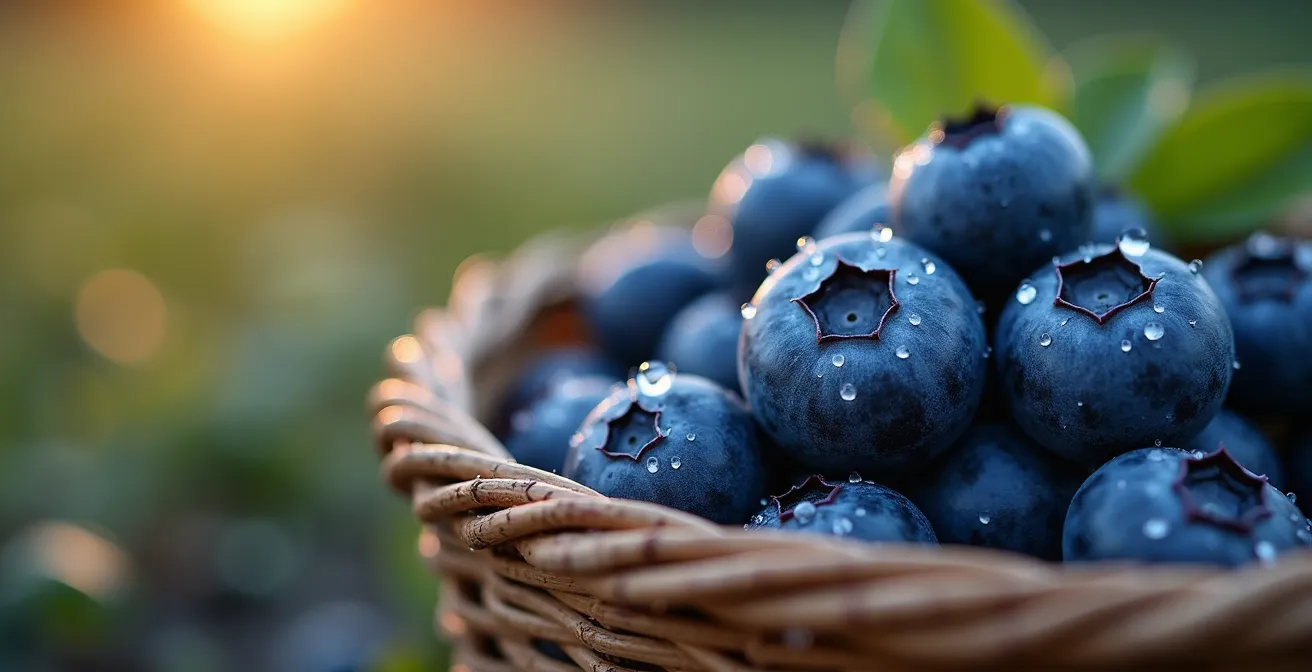
Their ubiquity in August desserts like the classic blueberry grunt (a stovetop cobbler), pies, and jams is a direct reflection of the seasonal rhythms that have always governed life in Acadia. Foraging and harvesting were essential survival skills, and the annual blueberry harvest represented a brief period of sweet abundance before the long winter. As you can see in the image, their deep colour signifies a high concentration of antioxidants and flavour. This seasonal event is a celebration of the land’s natural bounty, a tradition of gathering that connects modern Acadians to their ancestors and to the very soil of the region.
The wild blueberry is more than an ingredient; it is a symbol of place. Its presence in a dish signals a connection to the local ecosystem and a respect for the seasons. When you enjoy a slice of wild blueberry pie at a church supper, you are tasting a tradition shaped by the natural calendar of the land, a practice as old as the hills themselves.
This simple berry offers a sweet, tangible link to the region’s agricultural and foraging past.
Halifax Donair: How to Eat the Official Food of Halifax Without Making a Mess?
Here we must make a crucial distinction for the discerning culinary traveler: the Halifax Donair, while an undisputed icon of Nova Scotian late-night food, is not Acadian. This glorious mess of spiced beef, onions, tomatoes, and a uniquely sweet garlic sauce served in a pita is a proud Halifax invention, with roots in Greek and Lebanese culinary traditions. Enjoying one (pro tip: don’t set it down) is a rite of passage when visiting the city, but it’s culturally distinct from the traditions found in Acadian communities.
Confusing the two is a common mistake for visitors, similar to the mix-up between different types of poutine. As local food experts at Eat This Town point out, Maritime Canada has several distinct food cultures existing side-by-side. So, what is the authentic Acadian alternative for a hearty, late-night meal? The answer lies in the same resourceful, potato-and-pork-centric tradition that gave us Rappie Pie. Instead of a donair, you might find:
- Poutine Râpée: A large, boiled potato dumpling with a savoury pork filling, often found in local diners along the Acadian Coast.
- Chiard (or Tchaude): A traditional hash made with potatoes, salted pork, and onions, the ultimate comfort food.
- Fricot: A hearty chicken stew with potatoes and dumplings, available in 24-hour truck stops and family restaurants.
These dishes may lack the urban fame of the donair, but they offer a direct and delicious connection to the historical Acadian kitchen. They are true comfort foods, designed to be simple, filling, and deeply satisfying.
Choosing chiard over a donair in an Acadian region is an act of culinary respect and curiosity.
Craft Cider or Tidal Bay Wine: What Pairs Best with Atlantic Scallops?
While Acadian cuisine is steeped in history, it is not frozen in time. The modern culinary landscape of the Maritimes is vibrant, with a new generation of chefs and producers adding their own chapters to the region’s edible archive. This is beautifully illustrated by the rise of local craft beverages, particularly Tidal Bay wine and artisanal ciders. The question of what to pair with fresh Atlantic scallops is a perfect entry point into this evolving tradition.
Tidal Bay is Nova Scotia’s signature wine appellation—a crisp, aromatic white blend with bright acidity and a hint of salinity that makes it a perfect match for fresh seafood. It reflects the region’s cool climate and coastal terroir. Craft cider, meanwhile, represents a revival of an old agricultural tradition, turning the region’s apple bounty into complex, dry, and effervescent drinks. A place like Clare, Nova Scotia, has become an emerging culinary destination by embracing both its deep Acadian roots and these modern artisans, with wineries, cideries, and breweries flourishing alongside traditional kitchens.
Some might see this as a departure from tradition, but it’s more accurately a continuation. As historical records show, Acadian cuisine has always been adaptive, incorporating ingredients like rice, molasses, and brown sugar from trade with the Antilles and Brazil. Pairing local scallops with a local Tidal Bay wine is a modern expression of “cultural terroir”—celebrating the best of what the land and sea provide today.
The best pairing for scallops, therefore, is whichever local beverage best tells the story of the place you’re in.
Poutine Variations: When Does Innovation Become Cultural Appropriation?
There is no single word that causes more culinary confusion in Canada than “poutine.” For most, it means the iconic Québécois dish of french fries, cheese curds, and gravy. But in Acadian regions, the word refers to something entirely different and much older. To order “poutine” on the Acadian Peninsula is to ask for Poutine Râpée, a large, savoury boiled potato dumpling stuffed with salted pork. There is also Poutines à Trou, a sweet dessert pastry filled with apples or cranberries.
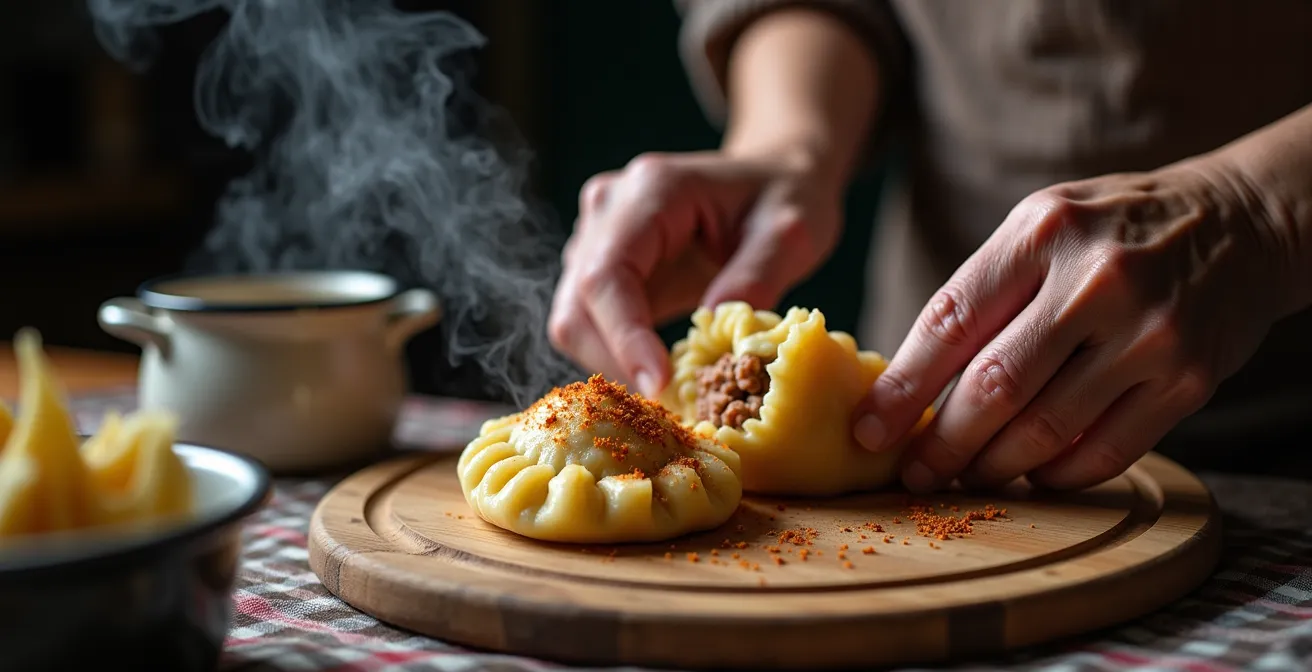
These Acadian poutines predate the Québécois version by centuries and are pillars of the traditional food culture. As the image shows, the Poutine Râpée is a substantial, handcrafted dish, a world away from fast-food fries. The issue of cultural appropriation arises when the dominant Québécois version erases the original Acadian meaning. When restaurants outside the region label a fries-and-gravy dish with a “creative” topping as “Acadian Poutine,” they are not innovating; they are overwriting a distinct and historic cultural artifact.
Innovation is part of any living cuisine, but it must be rooted in understanding and respect. A chef who creates a modern take on a Poutine Râpée, perhaps by changing the filling or serving it with a new sauce, is engaging with the tradition. A chef who simply renames a different dish is participating in cultural flattening. For the culinary traveler, knowing this distinction is crucial. It’s the difference between celebrating a unique culture and accidentally contributing to its erasure.
Asking for “poutine râpée” specifically is a small but meaningful gesture of cultural awareness.
The Sweet Water Origin: How Indigenous Peoples Taught Settlers to Make Maple Syrup?
No exploration of historical Canadian cuisine is complete without acknowledging its foundational roots in Indigenous knowledge. The Acadian “cuisine of resilience” was made possible not only by the settlers’ ingenuity but also by the wisdom shared by the Mi’kmaq, Maliseet, and Penobscot peoples. The quintessential Canadian product, maple syrup, is a prime example. It was Indigenous communities who first discovered how to tap maple trees in the early spring to collect the sap, which they called “sweet water,” and boil it down to create syrup and sugar.
This knowledge transfer was a cornerstone of survival for early Acadian settlers. But the Indigenous pantry offered much more. According to historical sources, the now-popular fiddlehead fern, a springtime delicacy in the Maritimes, was also introduced to the Acadians by local First Nations in the 18th century. Foraging for these curled fern shoots remains a cherished seasonal tradition that connects directly back to this shared history. Today, culinary travelers can engage with this heritage directly.
- Visit Membertou Heritage Park in Cape Breton for demonstrations of traditional Mi’kmaq cooking.
- Book an Eskasoni Cultural Journey on Bras d’Or Lake to learn about traditional food gathering.
- Attend an annual Mawio’mi (powwow) to experience authentic Indigenous food firsthand.
- Learn about traditional maple tapping techniques at Metepenagiag Heritage Park in New Brunswick.
Recognizing this history is not a footnote; it is central to understanding the very foundations of Acadian and Maritime food. It reframes the narrative from one of simple settlement to one of complex, essential collaboration.
This history enriches the story of every drop of maple syrup and every bite of a fresh fiddlehead.
Key Takeaways
- True Acadian cuisine is an “edible archive” of history, resilience, and cultural survival, with meanings far deeper than just seafood.
- To respect the culture, it is crucial to distinguish between historic Acadian dishes like Poutine Râpée and their more famous but unrelated namesakes like Québécois poutine or the Halifax Donair.
- For an authentic immersion, prioritize community-based experiences like church hall suppers and local markets over commercial, tourist-oriented restaurants.
How to Buy Lobster Directly from the Wharf in Nova Scotia?
After exploring the deep historical and cultural layers of Acadian cuisine, let’s return to the coast. Because while it’s not the *whole* story, fresh lobster is undeniably a glorious part of it. Participating in this tradition by buying lobster directly from a fisherman at the wharf is a fantastic way to connect with the coastal economy. This kind of culinary tourism is vital; across Canada, tourism supported 702,700 jobs in early 2024, and buying direct ensures your money supports the local fishers and their families.
However, this isn’t like going to a supermarket. It’s an interaction that follows its own unwritten rules. To do it right, especially in a proud Acadian fishing village, requires a bit of preparation. Success means showing respect for the fisher’s time and their way of doing business. It is a wonderfully direct and rewarding way to engage with the source of the food.
- Bring cash. Most fishers operate on a cash basis and are not equipped for cards or e-transfers.
- Time it right. Arrive either very early in the morning (before 7 AM) as they prepare to leave, or in the late afternoon when the boats return.
- Come prepared. Bring your own cooler, ideally with some ice or filled with clean seawater to transport your catch.
- Learn a few words. A simple, polite phrase in French like, “Bonjour, combien pour les homards?” (Hello, how much for the lobsters?) goes a long way.
- Know the season. Lobster Fishing Area (LFA) seasons vary by region. Check the local dates, which generally fall between May and July, to ensure you’re buying in-season.
This simple transaction, done with respect and awareness, transforms you from a mere consumer into a participant in the local rhythm of life. It’s a perfect, tangible end to a culinary journey into the heart of Acadian culture.
Frequently Asked Questions about Acadian Cuisine
What is Poutine Râpée?
A large boiled potato dumpling made from grated and mashed potatoes with seasoned pork inside, traditionally served as a main course or with molasses as dessert.
What is Poutines à Trou?
A sweet Acadian pastry filled with apples or cranberries, completely different from Quebec poutine.
Why might ordering ‘poutine’ in Acadian areas cause confusion?
In Acadian regions, ‘poutine’ refers to traditional potato or pastry dishes that predate Quebec’s fries and gravy version by centuries.
Now that you’re equipped with this knowledge, you can begin planning a culinary journey that goes beyond the menu to connect with the history, people, and resilience that truly define the taste of Acadia.